Compare
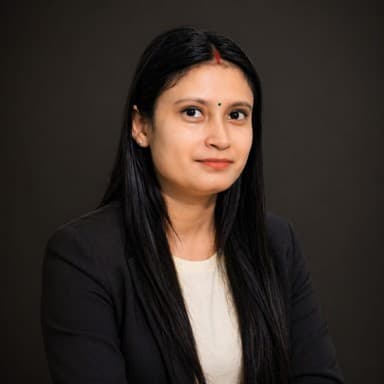
Priyanka Kumari
IB Maths
IB + IGCSE
4rating13 Yrs
Gurugram, All Areas in GurgaonHome / Online / Hybrid
IB Maths TutorIGCSE Maths Tutor
Check availability
Dwarka Expressway, Gurugram (Gurgaon), Haryana
The first IB DP Hindi B tutoring session on Dwarka Expressway should feel less like a Hindi conversation and more like a diagnostic, because that's the gap this subject exposes fastest. A student who speaks fluent, confident Hindi at home with parents or grandparents can still struggle badly with IB DP Hindi B, because the exam asks for formal written registers, structured essays and prescribed-theme vocabulary that spoken, colloquial Hindi doesn't automatically supply. A good first session on Dwarka Expressway, or nearby in Sobha City or Puri Diplomatic Greens, should end with the parent knowing exactly which of these — spoken fluency, written register, or exam technique — is actually the gap, not a generic assurance that the student 'will pick it up'.
School names are shown for local academic context only. IB Gram is an independent tutoring platform and is not affiliated with, endorsed by, or representing any school listed here.
Browse a sample of verified IB and IGCSE tutors for PYP, MYP, DP and IGCSE subjects. Matching considers syllabus fit, HL or SL level, preferred tutoring mode, schedule and the kind of support the student needs.
Explore IB tutor optionsIB Maths
IB + IGCSE

Mathematics
IB + IGCSE

Math AAHL
IB + IGCSE
 Australia
 United States+2 more
Matching for IB DP Hindi B starts with a distinction most parents haven't drawn before calling: spoken fluency and exam-ready written Hindi are two different skills, and a tutor good at teaching one isn't automatically good at the other. A parent on Dwarka Expressway describing a 'weak' student sometimes means a student who can barely follow a Hindi news broadcast; more often, in this corridor, it means a student who speaks Hindi comfortably at home but has never written a structured formal letter or a 300-word opinion piece in Devanagari under time pressure. IB Gram asks which situation applies before proposing a tutor, because the two need almost opposite starting points.
The matching process runs in four stages. First, a short conversation establishes the student's level — HL or SL — their comfort with reading and writing Devanagari script specifically, separate from their spoken comfort, and which of the five prescribed themes the school is currently teaching. Second, IB Gram checks tutor availability against the Dwarka Expressway corridor, since sessions that lose 20 minutes to New Gurgaon's still-developing road network cut directly into a subject that depends on sustained writing practice. Third, a demo session is arranged with a parent present, usually built around one short written task, so the parent can see directly how the tutor corrects register and vocabulary rather than just conversational fluency. Fourth, sessions begin on an agreed schedule, with an honest check-in after the first two or three sessions to confirm the fit is right.
The demo matters more here than for most subjects, because a tutor who is a native or fluent Hindi speaker isn't automatically a strong IB DP Hindi B teacher — the exam rewards a specific formal register, structured argument in Paper 1 text types, and comprehension precision in Paper 2, none of which is the same skill as conversational fluency. A tutor who spends the demo chatting comfortably in Hindi without ever correcting a written sentence for register or structure is showing the wrong skill for what the exam actually tests, however pleasant the conversation feels to sit through. A parent watching for this specifically, rather than simply enjoying hearing their child converse fluently, gets a far more useful read on whether the demo tutor is actually right for the exam ahead.
Fit isn't guaranteed on the first attempt. A tutor well suited to a Sobha City student who is nearly at ease with formal Hindi and mainly needs Paper 2 comprehension practice may be the wrong pace for an ATS Triumph student who is still building basic written vocabulary from a mostly spoken-Hindi home background. When the first match doesn't work, the honest step is a second demo with a tutor pitched at a different starting level, described plainly against what didn't fit — not persisting with a mismatch to avoid the extra conversation. Naming the mismatch clearly the second time around, rather than describing it vaguely again, is usually what gets the next match right on the first try — because a single tutor rarely serves both ends of the spectrum equally well across a full two-year course.
Dwarka Expressway is a newer, still-developing corridor bordered by Palam Vihar to the north, New Gurgaon to the south, and Udyog Vihar within reach to the east — a stretch of Gurugram (Gurgaon), Haryana, where Sector 99, Sector 102, Sector 103 and Sector 104 have filled in quickly with residential towers including Sobha City, Puri Diplomatic Greens, ATS Triumph and Godrej Summit. Families here searching for an IB DP Hindi B tutor are often comparing options against a smaller pool of experienced tutors than an older, more established corridor like Golf Course Road would offer, simply because the area's tutoring market is newer than the buildings themselves. A family here often does better casting a slightly wider net across the corridor than sticking strictly to one society's immediate neighbours.
Road infrastructure along Dwarka Expressway is still being completed in stretches, and that shapes evening scheduling more than parents new to the area expect. A tutor coming from outside the immediate corridor can face genuinely unpredictable travel times — sometimes 20 minutes, sometimes 45, depending on which section of the expressway or connecting road is under work on a given evening. Families in Sobha City and Godrej Summit who've dealt with this tend to prefer a tutor already living or working within Sector 99 through Sector 104, or to move weekday sessions online specifically to avoid the risk, reserving home visits for weekends when the timing pressure is lower. A tutor who names this trade-off upfront, rather than quoting a confident weekday slot without qualification, is usually being realistic rather than optimistic.
School timings add a further layer, since several IB Diploma Programme (DP) schools serving this corridor sit some distance away rather than directly within it, meaning students often finish their commute home later than families closer to central Gurugram. A Class 11 or Class 12 student arriving home near 5:30 pm has less evening runway for a subject like Hindi B, which benefits from sustained writing practice, than a student whose school day ends earlier. Parents in Puri Diplomatic Greens and ATS Triumph often find a longer weekend block works better for full Paper 1 writing practice than a compressed weekday slot squeezed in late. Writing practice interrupted midway rarely produces a usable piece of work, which makes the length of the block almost as important as its frequency.
The corridor's newness cuts both ways. Fewer tutors have built up years of local experience here compared to an established area, but the ones who have tend to know the traffic patterns, the specific societies, and the realistic windows for a workable weekday session — which matters more for Hindi B than for a subject that tolerates a shorter, choppier session, since writing practice under real exam conditions needs an unbroken block rather than a rushed 40 minutes between other commitments. A parent choosing between a newer, locally based tutor and a more established one from further away is often trading proven experience for practical reliability, and it's worth weighing both honestly.
IB DP Hindi B is built around five prescribed themes — identities, experiences, human ingenuity, social organisation, and sharing the planet — and a Higher Level (HL) or Standard Level (SL) student studies these across the two-year Diploma Programme (DP), with HL typically going into greater depth and covering additional material. A tutor working with a Dwarka Expressway student usually starts by mapping which themes the school has already covered, since schools sequence the five themes differently, and repeating a theme the student has already studied in depth wastes a session that could instead build a weaker one. A short mapping conversation in session one usually settles this faster than guessing from the textbook's default chapter order.
Paper 1 tests productive writing across a range of text types — a formal letter, a blog post, an opinion piece, an interview script, among others — and this is where the gap between spoken and written Hindi shows up most clearly. A student who speaks fluent conversational Hindi at home often defaults to spoken-register vocabulary and sentence structure when writing, which reads as informal or imprecise against a formal letter's expected conventions. Learning to switch registers deliberately — choosing tatsam, more Sanskrit-derived vocabulary over the mixed Hindi-English-Punjabi register common in everyday conversation across this corridor — is a trainable skill, not simply a matter of raw fluency. A tutor who keeps a running list of theme-specific formal vocabulary, reviewed and tested each week, tends to build this faster than relying on the student to absorb it passively from reading alone.
Paper 2 tests receptive skills through listening and reading comprehension, and it rewards precision under time pressure rather than general understanding. A student who grasps the gist of a passage but misses a specific detail asked for in a short-answer question loses marks that have nothing to do with overall comprehension ability. The individual oral, assessed separately, is built around a visual stimulus connected to one of the five themes, followed by a discussion, and students who prepare only for the stimulus description, without building fluency in extending the conversation naturally, tend to underperform relative to their actual spoken ability. Practising the follow-up questions specifically, not just the opening description, is usually the difference between a stalled response and a genuinely extended conversation.
This page is maintained by IB Gram, an independent platform with no partnership, tie-up or authorised-centre status through the International Baccalaureate Organization or any school listed here. A tutor who understands both the formal written register Paper 1 demands and the natural conversational fluency the individual oral rewards is covering genuinely different skills, and a family should expect a session plan that treats them separately rather than as one undifferentiated 'Hindi practice' block. Asking a prospective tutor how they'd split time between the two is a reasonable, direct question to raise before the first paid session even properly begins, rather than discovering the answer by accident three or four sessions in.
For most of IB DP Hindi B, yes — comprehension practice, vocabulary building and even written feedback on a Paper 1 draft all work close to as well over a screen as in person. Home tutoring on Dwarka Expressway has one real advantage: a tutor sitting beside the student can hear pronunciation and register shifts in real time during individual oral practice, correcting a slip from formal to conversational tone the moment it happens rather than after reviewing a recording. Online tutoring has the opposite advantage — it isn't affected by which stretch of the expressway is under construction that particular week, which matters more here than in a corridor with settled infrastructure.
A direct comparison for this subject specifically: home sessions suit individual oral practice and any session built around close correction of spoken register, since a tutor in the room catches subtle shifts a video call sometimes flattens. Online sessions suit Paper 2 comprehension drills, vocabulary building through shared documents, and written feedback on Paper 1 drafts, which work perfectly well asynchronously or over a screen share. Hybrid — home sessions for oral practice and register correction, online for comprehension work and writing feedback — is the pattern most families in Sobha City and Puri Diplomatic Greens settle into once they've tried both for a term. A tutor rigid about mode regardless of task tends to under-serve whichever half of the syllabus doesn't suit their preferred format.
The honest limitation: a student with weak Devanagari reading fluency, still sounding out unfamiliar words, usually benefits more from an in-person session where a tutor can point directly at a word on the page than from a screen-shared document where that kind of close, physical guidance is harder to replicate. A student who reads comfortably but struggles specifically with formal register and structure tends to do just as well online, since that correction happens through the writing itself rather than through watching the reading process unfold in real time. Parents sometimes assume the opposite by default, when in practice the mode that helps most depends entirely on which specific skill is lagging.
Families in ATS Triumph and Godrej Summit who've tried both modes over a term generally land on a pattern rather than a fixed rule: more home sessions earlier in the course while reading fluency and register habits are still forming, shifting toward a heavier online mix once those foundations are solid and the priority becomes Paper 1 and Paper 2 exam-technique practice. A tutor unwilling to flex this balance as the student progresses is optimising for their own convenience rather than the student's actual stage in the course. Worth revisiting the split explicitly every few months rather than letting the original arrangement run unquestioned for the entire two-year course without a second thought.
The most common wrong assumption about IB DP Hindi B, repeated across Dwarka Expressway and every other corridor in Gurugram, is that a student who speaks Hindi at home will find the subject easy. Spoken Hindi in most homes here is a genuinely mixed register — Hindi grammar carrying English vocabulary for modern concepts, occasional Punjabi or Haryanvi phrasing, code-switching mid-sentence without a second thought — and none of that prepares a student for the formal, more Sanskritised written register a Paper 1 letter or opinion piece expects. A student can be entirely fluent in conversation and still write an essay that reads, to an examiner, as informal or imprecise.
Vocabulary is the clearest example. Formal written Hindi leans on tatsam words — vocabulary derived closely from Sanskrit — for concepts that spoken Hindi in most Gurugram households would express with an English loanword or a simpler tadbhav equivalent instead. A student writing about 'the environment' or 'government policy' in a Paper 1 response needs the more formal register's vocabulary for these ideas, not the spoken shorthand used at home, and building this vocabulary specifically, theme by theme, tends to move a student's writing score faster than general reading practice does on its own. A short weekly list of ten theme-linked formal words, tested and reused in the next writing task, compounds noticeably over a term.
Connectors and formal sentence structure cause a second, quieter problem. Spoken Hindi conversation rarely uses the more elaborate connecting phrases formal writing expects to link ideas across a paragraph, and students who write in short, simple sentences strung together — accurate but unsophisticated — plateau below where their actual vocabulary and comprehension would otherwise place them. A tutor drilling connector phrases and paragraph-level structure specifically, rather than only correcting individual word choices, tends to close this gap faster than continued general writing practice alone. This is a mechanical fix in the sense that it can be taught explicitly, rather than something that only improves gradually through wider reading over months.
There's a genuine trade-off in how much class time a school can give to this register-switching skill specifically, since most Hindi B classroom time understandably goes toward covering the five themes and preparing students for content questions rather than isolating formal-register writing as its own drill. A tutor working one to one can spend a session purely on register — rewriting a spoken-style paragraph in formal Hindi, sentence by sentence — in a way a classroom covering a full cohort's worth of theme content rarely has room for. This narrow, repeated drilling is unglamorous work, but it's usually what moves a Paper 1 script from merely competent to genuinely fluent-reading in the examiner's eyes.
Several schools serving families along Dwarka Expressway offer the IB Diploma Programme (DP) with Hindi B as a language option, including Lancers International School, Scottish High International School, Pathways World School, GD Goenka World School and The Shri Ram School, Aravali — though not all of them sit directly within the corridor, and commute time to and from school is itself a factor in how much evening study time a student realistically has. None of these schools has any tie-up, partnership or authorised-centre relationship with IB Gram; they are named here only because a family comparing a tutor is usually also weighing what their child's own Hindi B classroom already provides.
Cohort size for Hindi B specifically tends to be smaller than for more commonly chosen Language B options, which can mean either more individual teacher attention or, in some schools, less dedicated classroom time simply because fewer students have chosen the subject. A parent's first useful question to a school, before even considering a tutor, is how many periods a week are allocated to Hindi B relative to other subjects, since that number varies more between schools than families expect and directly shapes how much a tutor needs to cover independently. A school allocating fewer weekly periods to Hindi B than to a more popular Language B choice isn't necessarily providing worse teaching, just less classroom time overall.
Internal school deadlines for the individual oral and Paper 1 practice pieces don't always sit conveniently ahead of the actual exam session, and a school's own internal mock oral, often scheduled months before the real one, can either help or create unnecessary pressure depending on how prepared the student already is. A tutor working with a Dwarka Expressway family typically checks both the school's internal calendar and the real IB exam session dates before proposing a pacing plan, rather than assuming the two line up neatly on their own. A family that shares the school's internal calendar with the tutor at the outset avoids a scramble later, when both deadlines suddenly land in the same fortnight.
Where a school's Hindi B teaching is strong and the cohort is well resourced, a tutor's role is often narrow: drilling formal register specifically, and giving detailed written feedback on Paper 1 drafts at a volume a single teacher covering several IB subjects cannot always provide. Where classroom time for the subject is thinner, the tutor's role expands to cover more direct theme teaching. A parent can usually tell which situation applies by asking the student how much individual written feedback they're getting back on Hindi essays already this term. A vague answer to that question is often itself the clearest sign that a tutor's more detailed, targeted feedback would add real value here.
Fees for an IB DP Hindi B home tutor on Dwarka Expressway depend on the tutor's experience, whether the student needs HL or SL support, session length, and whether sessions run at home or online — there's no single figure that applies evenly, and a source quoting one flat number without first asking about the student's actual level and gap is guessing rather than informing. What predictably moves the number: more experienced tutors with a strong record on formal-register writing correction, and longer or more frequent sessions, cost more than a newer tutor running shorter, less structured check-ins. Location within the corridor plays a smaller but real role too, since a tutor already based near Sector 99 or Sector 102 has less travel overhead to price into the session.
Value is a separate, more useful question than price alone. A tutor who spends a session rewriting a student's spoken-register paragraph into formal written Hindi, sentence by sentence, with clear reasoning for each change, delivers more per session than one who spends the same hour in general conversation practice that never touches the actual exam-tested skill. Families in Sobha City and Puri Diplomatic Greens who've compared tutors across a term tend to judge value by whether Paper 1 writing visibly shifts toward a more formal register within six to eight sessions, not by the headline hourly rate quoted on the first call. That improvement is the number worth tracking, more than any comparison of two tutors' opening quotes.
Session frequency matters differently for this subject than for one built on problem sets. Two 60 to 75-minute sessions a week, sustained over several weeks, tend to build register-switching habits and comprehension speed more durably than one long session, because the gap between sessions gives the student room to attempt independent writing and bring back real, specific mistakes rather than needing everything re-explained from scratch each time. This spacing matters most early in the course, while the habit of writing formally rather than conversationally is still forming and easy to lose. A gap of ten or twelve days between sessions tends to let that habit slip back toward spoken register before it's fully set.
Exact rates depend on tutor availability and are best confirmed directly with IB Gram once a tutor is shortlisted against the student's level, board timeline and schedule; this page deliberately avoids quoting a rupee figure, since doing so before knowing whether the family needs HL depth, SL support, or a short crash course before a specific paper would be closer to marketing than to something a Dwarka Expressway parent can actually plan a term around with any confidence. Asking directly what comparable local families along this corridor have arranged, for a similar level and schedule, tends to give a more honest sense of range than any single quoted figure ever would.
It should feel like a diagnosis, not a lesson, and a parent should come away from it knowing specifically what the gap is — spoken-to-written register, Devanagari reading fluency, comprehension speed, or oral confidence — rather than a general sense that 'the tutor seems nice.' A tutor typically asks the student to write a short paragraph on a familiar topic, then reads it back and points out, specifically, where spoken-register habits crept into the writing, which usually takes less than fifteen minutes and reveals more than a parent's own sense of the problem going in. A good tutor explains this diagnosis back to the parent in plain terms before the session ends, not just to the student alone.
Weeks two and three should track whatever theme the school is currently teaching, reinforced through formal-register writing practice on that same theme rather than a generic vocabulary list unconnected to classroom work. If the class is mid-way through social organisation, the tutor builds formal vocabulary and a practice Paper 1 response around that theme specifically, which keeps the tutoring relevant to what the student is being assessed on at school and avoids the sense that tutoring and classwork are two separate, disconnected efforts pulling in different directions. A student who sees the same theme reinforced twice, once at school and once with the tutor, tends to retain the formal vocabulary noticeably better than one working through it only once.
By week four, most tutors introduce a first individual oral practice run, using a photo or short visual prompt connected to one of the five themes, even if the actual assessment is still months away. This early practice matters because it reveals whether the student's spoken confidence holds up under the specific format of describing a stimulus and then sustaining a structured conversation about it — a different skill from casual conversational fluency, and one that benefits from early, low-stakes practice rather than being left until closer to the exam. A student who only encounters this format for the first time in Class 12 often loses composure less over the content than over the unfamiliarity of the format itself.
The honest caveat: a month reveals whether the fit is right and whether the identified gaps are narrowing, but it won't rebuild years of spoken-only Hindi exposure into confident formal writing if a student is starting seriously only months before exams. In that situation, the first month deliberately narrows to the two or three highest-impact fixes — usually register-switching in writing and individual oral structure — rather than attempting even coverage across all five themes in a compressed window. A parent should expect the tutor to say this plainly in the first conversation, rather than quietly discovering weeks later that the scope was always narrower than hoped, once the exam date is already close.
Getting started works best when the family arrives with a specific description rather than a general one: the student's level, comfort with Devanagari script separate from spoken fluency, and whether the priority is written register, comprehension speed, or oral confidence. Families on Dwarka Expressway who've done this before, say moving from general HL support to focused individual-oral practice closer to the assessment, tend to get a faster, more accurate match the second time simply because they've learned how specific that first description needs to be. A first-time family can shortcut most of that learning curve simply by preparing the same level of detail before making the very first call to IB Gram.
Worth having ready before the first call: which of the five themes the school has covered so far, the most recent written or oral feedback the student has received at school, if any, and whether reading and writing Devanagari is itself a concern separate from spoken fluency. A parent who says 'he speaks Hindi comfortably but writes in a spoken register on Paper 1 drafts' gets matched faster than one who says 'he needs help with Hindi' generally — the specific description shapes which tutor gets shortlisted first and how quickly. Mentioning whether the individual oral or the written papers feels like the bigger worry also helps narrow the shortlist faster.
The demo is the moment to ask direct questions: how the tutor would structure the next four sessions, what they'd want to hear in a first individual oral practice attempt, and how they'd approach building formal vocabulary if the student's spoken Hindi is already strong. A tutor who answers with specifics tied to register and structure, rather than general reassurance about years of teaching experience, is usually the safer choice for a family that wants to see a real shift within a few weeks. A tutor who instead pivots quickly to talking about fees, before the actual teaching approach has even been properly discussed, is worth a second look before any commitment is made.
From there, sessions proceed on whatever schedule suits the family, at home across the Dwarka Expressway corridor or online depending on the week's traffic and construction conditions, with room to shift emphasis as the student's spoken confidence, written register and comprehension speed each develop at their own pace. No tutor can guarantee a specific grade, and IB Gram makes no such claim — what a clear, specific first conversation does is make sure every session that follows is aimed at the actual gap rather than a generic 'Hindi practice' hour. That single early conversation is usually worth more to the eventual outcome than almost anything else that happens afterward, however good the individual sessions turn out to be.
Spoken fluency and exam-ready written Hindi are different skills, and this is the single most common misunderstanding families bring to a first call. Most homes in the Dwarka Expressway corridor use a mixed spoken register — Hindi grammar with English vocabulary and code-switching mid-sentence — which doesn't automatically translate into the more formal, Sanskritised written register Paper 1 expects, or the structured comprehension precision Paper 2 rewards. A student can hold a completely natural conversation and still write an essay that reads as informal to an examiner. A tutor's first job is usually identifying exactly which of these skills, not general 'Hindi ability', actually needs work.
Mostly yes, though travel time here is genuinely less predictable than in a more established corridor, and it's worth planning for that rather than assuming a fixed commute time. Tutors already working within Sector 99 through Sector 104 tend to build in a buffer for whichever stretch of the expressway or connecting road is under work that particular week. Families in Sobha City, Puri Diplomatic Greens, ATS Triumph and Godrej Summit sometimes find online sessions more dependable on weekday evenings specifically for this reason, reserving home visits for weekends when a longer, uninterrupted writing-practice session matters more than commute risk.
Paper 1 tests productive writing across several text types — a formal letter, a blog post, an opinion piece, among others — and rewards register and structure as much as content. Paper 2 tests receptive skills through listening and reading comprehension, rewarding precision under time pressure rather than general understanding of a passage. A student can be strong on one and noticeably weaker on the other — a fluent writer who rushes comprehension questions, or a careful reader who defaults to spoken-register vocabulary when writing — and a tutor should identify which gap applies rather than treating 'Hindi practice' as one undifferentiated skill.
It's workable but not quite equivalent to an in-person session for this particular component. A tutor in the room can catch subtle slips from formal to conversational tone the moment they happen during a practice conversation about the visual stimulus, correction that's slightly harder to deliver as precisely over a video call. For Paper 2 comprehension drills and Paper 1 written feedback, online works just as well as home tutoring. Many Dwarka Expressway families use a hybrid pattern — home sessions specifically for oral practice, online for comprehension and writing feedback — once they've tried both for a term and seen what actually needs the in-person correction.
The parent-attended demo is meant to catch most mismatches early, but if the fit still isn't right after two or three sessions, a second demo with a different tutor is the more useful next step, with the specific issue named clearly — pace, teaching style, or a mismatch between the tutor's strength and whether the student's real gap is spoken confidence, written register, or comprehension speed. Hindi B depends heavily on precise, specific correction, and a student left with a vague or overly gentle tutor for several weeks loses time that's better spent finding a sharper match early on.
No. Lancers International School, Scottish High International School, Pathways World School, GD Goenka World School and The Shri Ram School, Aravali are named only because families comparing a tutor near Dwarka Expressway are usually also weighing what their child's own school's Hindi B classroom already covers. IB Gram holds no partnership, tie-up or authorised-centre arrangement with any of these schools or with the International Baccalaureate Organization, and none of them endorses the tutoring described here. Tutors are matched purely against the student's level, script comfort and identified gap, never through any relationship with a particular school.
Families who've tracked this closely tend to see a noticeable shift in Paper 1 writing — fewer spoken-register word choices, more consistent use of formal connectors — within six to eight sessions, assuming a steady weekly schedule rather than irregular bookings. The shift usually shows up first in vocabulary choices before it shows up in overall structural sophistication, since building a formal vocabulary bank is faster than internalising paragraph-level argument structure. A tutor who can't point to any specific, checkable change in the student's writing by session seven or eight is worth a direct conversation about whether the approach needs adjusting.
Yes, and this is a common request from families whose child writes reasonably well but feels underprepared for the oral's specific format — describing a visual stimulus tied to one of the five themes, then sustaining an extended conversation about it. A tutor can run a focused block of several sessions built entirely around stimulus practice, structured description technique, and extending answers naturally under questioning, rather than a full syllabus-support arrangement. It's worth stating this scope clearly during the demo so the tutor plans sessions specifically around oral technique from the very first meeting.
Yes. Higher Level (HL) students generally study the five themes in greater depth and are expected to produce more sophisticated written and spoken responses, so HL sessions tend to spend more time on nuanced register and argument structure. Standard Level (SL) students typically need a stronger focus on consistent accuracy and comprehension speed before layering in more advanced structural elements. A tutor comfortable with both levels can usually flex between them, but it's worth confirming during the demo that the tutor has recent experience at the specific level your child is studying right now.
It's workable, but the plan shifts from broad coverage to triage. A tutor typically identifies the two or three highest-impact gaps first — commonly written register and individual oral structure — and drills those intensively rather than attempting even coverage across all five themes with limited time remaining. Students starting this late along the Dwarka Expressway corridor tend to respond better to two or three shorter weekly sessions than one long session, since the spaced repetition builds writing and speaking habits faster than a single intensive block can manage on its own.
Speaking more Hindi at home helps general comfort with the language but doesn't specifically build the formal written register or comprehension precision the exam tests — those need deliberate, structured practice instead. A reasonable test is whether your child can take a piece of their own writing and identify, unprompted, where a word choice or sentence reads as too conversational for a formal letter or opinion piece. If they can't yet make that distinction on their own, a tutor's role is teaching them to hear that difference, which tends to happen faster with direct, targeted correction than through general home conversation alone.
If your Dwarka Expressway family is trying to work out whether the gap is spoken confidence, written register, or exam technique for IB DP Hindi B, describe what you're seeing and IB Gram will shortlist a tutor with matching recent experience. A parent-attended demo comes first, so you can judge the fit directly before committing to a schedule.
Book a free academic consultation