Compare
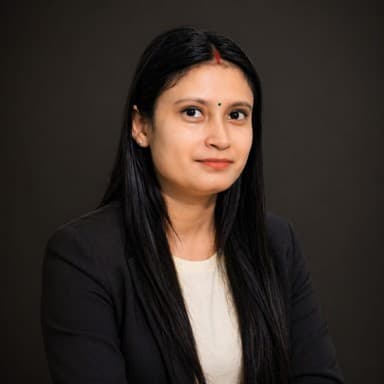
Priyanka Kumari
IB Maths
IB + IGCSE
4rating13 Yrs
Gurugram, All Areas in GurgaonHome / Online / Hybrid
IB Maths TutorIGCSE Maths Tutor
Check availability
Dwarka Expressway, Gurugram (Gurgaon), Haryana
An IB DP Computer Science home tutor in Dwarka Expressway Gurgaon should be judged on one thing first: can they walk your child through the Internal Assessment (IA) product and its documentation, not just tutor the syllabus in general terms. Two candidates can look identical on paper — both engineers, both claiming International Baccalaureate (IB) experience — and still differ enormously on whether they can debug pseudocode live or explain why a written solution failed the criteria. IB Gram works across the Dwarka Expressway corridor, from Sector 99 through to Sobha City and Godrej Summit, matching families with tutors screened specifically for Higher Level (HL) computer organisation, networks and the IA, and every match opens with a parent-attended demo before any fees are discussed.
School names are shown for local academic context only. IB Gram is an independent tutoring platform and is not affiliated with, endorsed by, or representing any school listed here.
Browse a sample of verified IB and IGCSE tutors for PYP, MYP, DP and IGCSE subjects. Matching considers syllabus fit, HL or SL level, preferred tutoring mode, schedule and the kind of support the student needs.
Explore IB tutor optionsIB Maths
IB + IGCSE

Mathematics
IB + IGCSE
Math AAHL
IB + IGCSE
 Australia
 United States+2 more
The Dwarka Expressway corridor, in Gurugram (Gurgaon), Haryana, has grown fast enough that most families here moved in within the last five to seven years, which means local tutoring options are still catching up in places. If you live in Sobha City, Puri Diplomatic Greens, ATS Triumph or Godrej Summit — or anywhere across Sector 99, 102, 103 or 104 — you already know there isn't a cluster of established IB coaching centres nearby the way there is in older parts of Gurugram. That's precisely why home tutoring dominates here: a tutor travels to your flat, works around your child's school hours, and you're not driving thirty minutes each way for a one-hour session on a school night.
Evening traffic on the Dwarka Expressway itself can be unpredictable — an accident near Sector 88 or a stalled flyover section can turn a twenty-minute drive into fifty, and a tutor stuck in that is a session shortened or postponed. Families searching for an IB DP Computer Science tutor in Dwarka Expressway sometimes assume home visits are always the smoother option; they're not, particularly on a Friday evening when the corridor is at its worst. Being upfront about this matters more than pretending every 6 pm slot will run on time. We ask parents scheduling home sessions to build in a buffer, or to keep a standing online session as backup for the weeks traffic is bad.
Palam Vihar and New Gurgaon sit close enough that we place tutors across both without much change in travel time, and a handful of our Computer Science tutors also cover Udyog Vihar on their way through for evening sessions. What we don't do is promise a tutor lives around the corner — most travel in from elsewhere in Gurugram, same as any specialist subject tutor would. What we do promise is that the first session is a demo with you present, so you can see how they explain a recursive function or debug a piece of pseudocode before any commitment is made.
A family searching for an IB DP Computer Science tutor near Palam Vihar has a slightly wider practical pool than one insisting on Sobha City specifically, simply because tutors anchored around Palam Vihar and New Gurgaon can extend a weekday circuit into either direction without the same expressway crossing that eats into a Sector 99 or Sector 104 evening. This is also true in reverse: an IB tutor New Gurgaon Gurgaon search often surfaces the same shortlist as a Dwarka Expressway one, since the two areas share tutors more often than families assume from the map alone.
Several IB World Schools sit within a reasonable drive of the Dwarka Expressway corridor rather than inside it — Pathways World School and The Shri Ram School, Aravali are the two most families here mention, with GD Goenka World School, Scottish High International School and Lancers International School also feeding students into our tutor roster. None of this means IB Gram has any tie to these schools. We are an independent tutor-matching platform, not affiliated with, endorsed by or representing any school named on this page, and we'd rather say that plainly than let a parent assume otherwise.
IB coordinators at these schools carry a heavy load during IA season — they're managing internal assessments across six subjects for an entire cohort, not just computer science, so the individual attention a tutor gives your child's solution and documentation is different in kind, not just in quantity. A school teacher might see your child's IA draft twice before submission. A tutor working with them weekly through the Dwarka Expressway sessions sees every iteration, catches a broken success criterion before it becomes a lost mark, and can sit with the actual code rather than a description of it in a parents' evening.
Not every school here builds the same programming foundation before the Diploma starts. A student coming from a school with a strong MYP Design strand usually arrives already comfortable in Python; one who switched schools mid-way, or whose MYP course leaned more toward theory than code, can be starting HL Computer Science with genuine gaps in syntax while classmates are already writing working programs. A good tutor establishes which of those two your child is within the first session, rather than assuming a Grade 11 IB student is a Grade 11 IB student regardless of background.
Families searching for the best IB DP Computer Science tutor near Dwarka Expressway often ask which school pattern predicts an easier start, and the honest answer is that it has less to do with the school's overall reputation than with how that specific school structures its pre-DP Design or ICT strand in Grades 9 and 10. A school that treats Design as a serious coding subject tends to send students into HL Computer Science already comfortable with variables, loops and functions; one that treats it as a lighter elective sends students in needing that groundwork built from close to zero, regardless of how strong the school otherwise is academically.
The Diploma Programme (DP) Computer Science course runs on four core topics common to both Standard Level (SL) and Higher Level (HL) — system fundamentals, computer organisation, networks, and computational thinking with problem-solving and programming — before HL students add resource management, control, and abstract data structures on top. Paper 1 tests all candidates on a pre-released case study they've had weeks to study in advance; Paper 2 is entirely programming logic and problem-solving, no case study involved; and Paper 3, sat by HL students only, returns to that same case study at greater depth. A tutor teaching to this needs to hold all three papers' demands in their head at once, not just the topic list.
Object-oriented programming runs through the syllabus from the SL core onward, and it's where a lot of otherwise capable students lose marks — not because they can't write a class, but because IB questions expect pseudocode answers in a very specific notation, and a student who's only ever coded in real Python syntax freezes when asked to express the same logic in the exam's pseudocode conventions. This is worth naming directly, because it's fixable with deliberate practice, and it is not the same skill as being good at programming. We drill pseudocode translation as its own exercise, separate from writing runnable code, from early in Year 12.
The Internal Assessment is a working solution built for a genuine client, backed by a written record covering planning, development and evaluation against the assessment criteria, marked on the same underlying IB 1-7 grade scale as the written papers once combined into the final subject grade. Most students treat it as a coding project first and a documentation exercise second, which is backwards, because the record of tasks and the evaluation against success criteria is graded as rigorously as the product itself. The single biggest mistake we see on the Dwarka Expressway corridor — and everywhere else — is starting the IA in December of Year 13 instead of the July before, leaving no time to test the solution properly against its own success criteria before the deadline.
Past-paper practice matters more for Paper 2 than students expect, since the format rewards showing method even when the final answer is wrong, and a student who only ever practises Paper 1's shorter questions builds the wrong exam muscle entirely. A structured programme of IB DP Computer Science past paper practice in Gurgaon, split roughly evenly across all three papers rather than weighted toward whichever feels easiest, tends to expose weak spots months before mocks do, which is the whole point of starting early.
It trips up strong coders specifically because IB rewards showing the reasoning, not just the correct final answer, which is the opposite of how most self-taught programmers judge their own work. Some of the strongest coders we tutor struggle with IB Computer Science initially, and that surprises parents more than a weak coder struggling. A student who's built apps independently, or done well in school coding competitions, is used to being judged on whether the program runs. IB Paper 2 gives partial credit for pseudocode logic even when a final answer is wrong, and takes marks away for a correct-looking answer that skips the reasoning steps the mark scheme wants to see written out. That's a different discipline from shipping working code, and it takes most students a full term to unlearn the habit of jumping straight to a solution without showing the intermediate steps.
For a student newer to programming, the difficulty runs the other way: computer organisation and networks can feel like memorising facts about hardware that have nothing to do with the programming they signed up for, and motivation drops in the months before the subject stops feeling abstract and starts connecting. HL is a genuinely heavier load than SL here — the extra topics on abstract data structures alone can take a struggling student from a comfortable 5 to a stressed 4 if the level choice was made on ambition rather than an honest read of where they stood at the end of Year 11. We say this even when it isn't what a parent wants to hear.
There's also a plain time-pressure problem that has nothing to do with understanding the content. Paper 2 gives roughly ninety minutes for problems that reward careful, unhurried pseudocode tracing, and a student who understands every concept but reads slowly under pressure will still lose marks to the clock. This is exactly the kind of gap that's invisible on a tutor's CV and only shows up in how they run a timed practice paper — which is why comparing two equally qualified-looking tutors means asking to see one actually proctor a past paper under time, not just describe their teaching philosophy.
A scenario specific to this corridor: a student who transfers into a Dwarka Expressway school partway through Grade 11, often because the family relocated for the new construction here, can lose several weeks of continuity right when OOP or networks is being taught, and catching up alone from textbook notes rarely closes that gap before it compounds into the next topic. Families in this position tend to underestimate how much a short, focused catch-up block helps compared with waiting to see if the student closes the gap independently over a term.
The first two sessions are diagnostic, not instructional — before touching new content, a tutor working through IB Gram sits with your child's most recent test paper, current IA progress if any exists, and a short live coding exercise to see where the actual gaps sit versus where the school report says they sit. Those aren't always the same thing. A student can be marked 'satisfactory' in class and still be shaky on translating between Python and IB pseudocode notation, because classroom assessment rarely isolates that specific skill the way a one-to-one session can in twenty minutes.
By the third session, most families have settled into a weekly rhythm — usually one 90-minute session focused on syllabus content and a shorter session closer to the weekend for IA work, doubt-solving or past-paper review, timed around school pickup and the evening traffic pattern along the expressway. We don't lock this schedule in permanently; exam term looks different from the run-up to mocks, and a tutor who refuses to adjust frequency as deadlines approach is doing your child a disservice. What we do fix early is the mode — home or online — because switching that back and forth mid-month makes it harder to build momentum.
By the end of the first month, you should be able to see something concrete: a corrected pseudocode habit, a first IA planning document with a defined client and success criteria, or at minimum a clear list of which syllabus topics are solid and which need rebuilding. We don't promise a grade jump in four weeks — nobody honestly can, this early — but we do promise a written note from the tutor to you at the one-month mark, not just a verbal 'it's going well' on the doorstep. If it isn't going well, that conversation should happen at week two, not week eight.
The weekend session mentioned above is what most Dwarka Expressway families end up calling their IB DP Computer Science doubt solving classes for Dwarka Expressway students, since it's the slot where a student brings whatever specific question piled up during the week rather than following a fixed lesson plan. This format works particularly well for students juggling several Group 4 or Group 6 subjects at once, where a rigid weekly syllabus session would waste time re-teaching something the student already has solid, at the cost of the one thing they actually got stuck on.
Matching starts with the specifics, not a general request for 'an IB Computer Science tutor.' We ask what level — HL or SL — where the IA stands if a session or two has already happened at school, and which exam session your child is sitting, May or November, because a February start for a May exam is a very different conversation from a February start for the following November. From there we shortlist tutors screened specifically against the DP Computer Science syllabus, not simply anyone with a computer science degree, since the two overlap less than most parents assume.
This is the question we get most from Dwarka Expressway parents comparing two shortlisted tutors who both look strong: what actually separates them? Ask each one to mark a Paper 2 response you show them cold, and listen to whether they talk about the mark scheme's method marks or only whether the final output is correct. Ask how they'd structure an IA timeline from a July start. A tutor who answers both in specific, syllabus-literal language — criteria, success criteria, method marks, case study — is operating from real experience with this exact course, not general programming competence dressed up as IB expertise.
Once you've chosen, the first paid session is preceded by a free demo with you in the room, not in another room on your phone. If the fit isn't right after that, you tell us and we shortlist again at no extra matching cost — this happens occasionally, and it's a normal part of finding the right pairing rather than a failure of the process. Tutor availability for a specific evening slot depends on their existing schedule and can't be guaranteed until we've checked it directly, which is the one part of this we can't shortcut for speed.
Matching for this corridor also asks specifically about mode preference upfront, because a one-to-one IB DP Computer Science tutor in Gurgaon willing to travel the full length of the expressway on a weekday is a narrower pool than one available for online sessions, and being clear about which matters more to your family — a physical presence or a wider choice of subject-literal tutors — changes the shortlist meaningfully rather than marginally.
Online tutoring is good enough for most of IB DP Computer Science, but not for the very first sessions, where a home visit still has a real edge. A tutor sitting next to your child's actual laptop, looking at their actual IDE and actual error messages, catches setup problems — a misconfigured Python environment, a version mismatch between what's taught at school and what's installed at home — that are genuinely harder to diagnose over a shared screen. For a subject this hands-on early on, that's not a small thing. Several of the newer towers along the Dwarka Expressway corridor are still finishing common-area work, and a tutor who has been inside a few of these societies before knows realistically how long security clearance and lift access add to a visit.
Online works better than most parents expect for this particular subject, mainly because screen-sharing an IDE is a near-perfect substitute for sitting beside one — arguably better, since the tutor can take remote control and demonstrate a fix directly inside the code rather than pointing at a screen. It also opens up a wider pool of tutors who aren't geographically tied to the Dwarka Expressway corridor, which matters more for a niche HL subject than it does for something like maths, where the local pool is naturally larger. IA documentation review, specifically, tends to go faster online, where both of you can edit the same document live.
Most families here end up with a hybrid pattern without planning it that way: a home session when a new topic needs working through slowly with someone physically present, online for IA check-ins and past-paper timing drills where the shared screen genuinely does the job better. Pick purely by habit or convenience and you'll probably default to whichever mode you tried first, which isn't necessarily the one that serves this subject best. We'd rather you try both in the first fortnight and decide from there than commit to one mode on our recommendation alone.
Stated plainly, as a three-way comparison: home suits the first setup sessions and any moment where a tutor needs to watch a student's reasoning unfold on paper in real time; online suits IA documentation review, case study discussion and timed past-paper drills, and reaches a wider pool of subject-literal HL tutors; and a hybrid mix — one or two home sessions early, online for the rest — is what most Dwarka Expressway families settle into once they've actually tried both rather than assumed one in advance.
Fees for an IB DP Computer Science tutor vary by level, by how close the exam session is, and by the tutor's own experience with this specific syllabus — an HL tutor who has taken multiple cohorts through the IA charges differently from someone newly qualified, and that difference is usually justified rather than arbitrary. Session length matters too: a 60-minute slot focused on a single topic costs differently from a 90-minute session that includes IA supervision time. We won't quote a number here because it genuinely depends on these variables, and a flat rate that ignores them would be misleading rather than helpful.
What you're paying for, practically, is fewer wasted hours — a tutor who already knows the IA criteria inside out doesn't burn two sessions figuring out the assessment structure before actually helping your child use it. We can't and won't promise a particular grade; no honest tutor can guarantee a 6 or a 7 on the International Baccalaureate's 1-7 grade scale, because too much depends on the student's own consistency between sessions, not just the quality of the teaching. What we can say is that a subject-literal tutor, one who has actually marked IB-style pseudocode before, gets more done per session than a generalist, which is where the value shows up over a full year rather than in any single class.
If you're looking at a short IB DP Computer Science crash course in Gurugram before mocks rather than year-long support, expect the per-session rate to run higher, since a compressed timeline concentrates a tutor's preparation into less calendar time for the same depth of coverage. We ask every matched tutor to state their rate structure to you directly and in writing before the first paid session, not after a few weeks of goodwill sessions have made the conversation awkward. If a rate ever feels vague or shifts without explanation, that's worth raising with us directly rather than assuming it's normal.
Families weighing IB DP Computer Science home tuition in Gurgaon against a fully online arrangement sometimes assume online is automatically cheaper; it can be, but the gap is usually smaller than for subjects needing lab equipment or a physical whiteboard, since most of what a Computer Science tutor does — screen, code, documentation — translates to video with little loss. The bigger cost lever remains whether the tutor's time is going toward the IA specifically, not the mode of delivery.
Getting started is a short process: tell us the level, the exam session, and roughly where things stand with the IA, if it's begun; we shortlist two or three tutors who fit both the syllabus need and your preferred mode of home or online; you sit in on a free demo with each, or just one if the first feels right; and you confirm the weekly slot once you've seen them teach, not before. Most families move from first enquiry to a confirmed first regular session within a week, though that depends on tutor availability for your specific evenings.
Timing matters more for this subject than parents often assume going in. A student starting HL Computer Science support in September of Year 12 has a full runway to build pseudocode fluency before it's tested under pressure; one starting in the January of Year 13, with the IA still not begun, is playing catch-up on two fronts simultaneously. We'll still take on a late start — turning a family away because the timing isn't ideal doesn't serve anyone — but we'll say clearly what's realistic for that timeline rather than promising the same outcome as a student who started a year earlier.
If you're weighing an IB home tutor in Dwarka Expressway against a wider search across Gurugram, the honest advice is to start local for the home option but stay open to online across the city for HL specifically, since it's a narrower specialism than SL and the right fit matters more than the address on a map. Reach out with your child's level and current standing, and we'll come back with a shortlist built around that, not a generic roster.
It's a small difference in approach, but it's the gap between a page that markets to you and a service built around your child's actual syllabus — the same reason families comparing us for IB DP Computer Science tuition in Dwarka Expressway, Gurgaon, or for the best IB DP Computer Science tutor near Dwarka Expressway, tend to stay once they've seen the first demo rather than shopped further.
Yes, tutors are matched to your society and to nearby options across Sector 99 through 104, but weekday evening travel time on the Dwarka Expressway corridor depends on traffic that day, not just distance on a map. We ask tutors covering this stretch to confirm a realistic arrival window rather than a fixed slot during peak hours, and we recommend keeping one online session in rotation as backup for weeks when the corridor is particularly bad. Availability for a specific evening is subject to the tutor's own schedule and can't be promised until we check it directly.
Start with a diagnostic session rather than jumping into new topics. Being fluent in real Python doesn't automatically transfer to the IB's own pseudocode notation, which is tested heavily on Paper 2, and a student who's only coded independently often needs several sessions of deliberate translation practice before it feels natural. This is actually a faster fix than building programming ability from nothing, since the underlying logic is already there. Most students close this specific gap within four to six sessions of focused practice, though the exact pace depends on how much independent practice happens between sessions.
Tell us and we'll shortlist again at no extra matching cost. This isn't rare enough that you should feel awkward raising it — teaching style mismatches happen even between two well-qualified tutors and a particular student, especially in a subject as technical as computer science where explanation style matters as much as knowledge. We'd rather hear about a mismatch after two sessions than after two months of a child quietly losing confidence. The replacement process doesn't reset your billing or restart the search from scratch; it usually moves faster the second time because we already know what didn't work.
Better than most parents expect, largely because screen-sharing an IDE is close to sitting beside one, and a tutor can remote into the code to demonstrate a fix directly rather than describing it verbally. The one thing online genuinely loses is a tutor's ability to glance at your child's body language during a live paper — whether they're stuck or just thinking — which is a small but real signal in a home session. For syllabus content, IA documentation and past-paper practice specifically, online performs as well as home tutoring for this subject, based on what we see across matched families.
Raise it at the one-month written check-in, or earlier if you're already concerned — don't wait for us to notice. Slow progress has a few common causes: a level mismatch between HL and SL that wasn't caught early, inconsistent practice between sessions, or a teaching style that isn't landing, and the right fix depends on which of those it actually is. We'll have that conversation honestly rather than defending the tutor by default, and if a level change or a tutor change is the right call, we'll say so even though it's a harder conversation than just continuing as-is.
Most families come to us for exactly this — general school support tends to focus on exam papers, and the IA gets squeezed into whatever time is left. A tutor experienced with this syllabus can work through client selection, success criteria, the development record and the final evaluation with your child in a structured way across several months rather than a rushed few weeks. This only works if it starts early enough; a tutor brought in during the final month before submission can tidy documentation but can't rebuild a solution that was never properly planned against its own criteria.
No. IB Gram is an independent tutor-matching platform and has no affiliation with, endorsement from, or formal relationship to Pathways World School, The Shri Ram School Aravali, GD Goenka World School, Scottish High International School, Lancers International School, or any other school named on this page. We reference these schools only because families researching this area ask about them, and naming the real school cluster nearby is more useful than pretending it doesn't matter. We're also not affiliated with the International Baccalaureate Organization itself — the syllabus knowledge comes from tutors' own teaching experience with the DP curriculum.
It depends on level, session length and the tutor's experience with this specific syllabus, and we deliberately don't post a flat number because doing so would hide more than it reveals — an HL tutor experienced with multiple IA cohorts is a different rate than someone newly qualified, for good reason. What we do is have the matched tutor state their rate structure to you directly, in writing, before any paid session begins, so there's no ambiguity once sessions are underway. If you want a ballpark before going through the matching process, ask us directly and we'll give you a realistic range based on your child's specifics.
Usually yes, though it is worth flagging to us upfront if your society still has active construction, since security clearance and lift access can add real time to a visit that a tutor coming from further away needs to plan around. Tutors already familiar with the newer Sobha City, Puri Diplomatic Greens or ATS Triumph towers tend to build that buffer in automatically. If your building is genuinely difficult to access on short notice, an online arrangement with occasional home sessions once access settles is a reasonable middle ground.
Yes, and it is worth confirming directly rather than assuming general IB experience covers it. Paper 1 and Paper 3 are both set against a case study that is released fresh and retired after one exam session, so a tutor working from last year's material is preparing your child for content that will not appear on the paper. Ask any shortlisted tutor whether they have read the current release closely, not just whether they have taught the subject before.
By asking each one to demonstrate rather than describe — marking a Paper 2 response cold, or outlining how they would structure an IA timeline from a July start. A tutor who answers in specific, syllabus-literal terms is operating from real experience with this exact course, not general programming competence presented as IB expertise. The parent-attended demo is where you get to see this difference directly, which is more reliable than comparing two written profiles side by side.
If you're ready to start, tell us your child's level, exam session and where the IA currently stands, and we'll shortlist tutors matched to the Dwarka Expressway corridor and screened for this exact syllabus, not a general computer science background. You'll see a free demo before anything is confirmed. From there, most families have a regular weekly slot booked within the week.
Book a free academic consultation