Compare
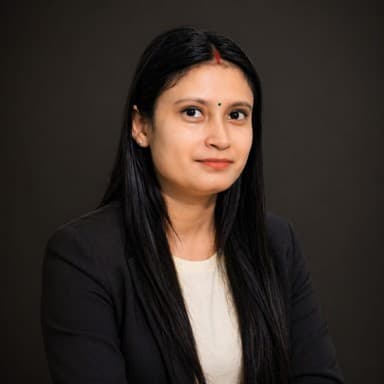
Priyanka Kumari
IB Maths
IB + IGCSE
4rating13 Yrs
Gurugram, All Areas in GurgaonHome / Online / Hybrid
IB Maths TutorIGCSE Maths Tutor
Check availability
Two things bring most Diploma families to one-to-one help: a Higher Level subject that has pulled away from the student, and a predicted grade that arrived lower than expected. This page is about both. Higher Level carries 240 recommended teaching hours against 150 at Standard Level, and that difference is usually where the trouble sits.
Matched by programme, subject, level, weak areas and your school's calendar.
Math AA, Math AI, Physics, Chemistry, Economics, English and more, to the current syllabus.
Online worldwide around school hours, with home and hybrid options where tutors are local.
Clear updates on what was covered, what needs practice and the next step.
IBDP private tutors in India are usually hired for one of two reasons: a Higher Level subject has moved beyond what the student can follow in class, or a predicted grade has come back below what a university offer needs. Most families start with home tuition, a tutor at the dining table on a weekday evening once school and CAS commitments are done. Higher Level is not Standard Level with more homework. It is 240 recommended teaching hours against 150, and the extra content is examined alongside everything else. A predicted grade, meanwhile, is formed by the school, not by you and not by a tutor. What a tutor can change is the evidence the school is looking at.
Start with the subject and the level, not the programme. A request that says "DP help" produces a broad shortlist and a slow start. A request that says "Physics HL, DP2, Paper 2 extended response, mocks in January" produces a short one. When you send a query or book a free consultation, IB Gram asks about the board, the syllabus, the level, the school calendar, your location and the schedule you can actually hold. Those six answers do most of the filtering. Level is the filter families skip. A tutor who is comfortable with Chemistry at Standard Level may be genuinely out of depth in the Additional Higher Level content, and the gap only surfaces in the fourth session, when the student brings a question the tutor cannot take apart on the spot. So the shortlist for a Higher Level subject is built from people who have taught that subject at that level, and the trial tests exactly that. IBDP private tutors in India are matched on availability as much as on subject. A Higher Level session that runs ninety minutes or two hours needs a slot that survives a full Diploma week. If the student has Creativity, Activity, Service (CAS) on two evenings and an internal assessment draft due, a Saturday morning block is more honest than an eight o'clock Tuesday that will be cancelled twice a month. Profiles are verified before they go live, a demo or trial session can be arranged before you commit, and if the fit is wrong you can ask for a different match. One more thing families rarely think to include. Send the predicted grade if one has been issued, and say what it was based on. A tutor who knows which evidence the school is weighing works differently from one who is guessing.
1. Send the subject, the level, the year group and your locality in one message.
2. Add the current grade, the predicted grade if issued, and the mock dates.
3. IB Gram shortlists verified profiles that have taught that subject at Higher Level.
4. Run a trial session on a topic the student has already failed once.
5. Agree the weekly slot around CAS, IA deadlines and school timings before paying.
Browse a sample of verified IB and IGCSE tutors for PYP, MYP, DP and IGCSE subjects. Matching considers syllabus fit, HL or SL level, preferred tutoring mode, schedule and the kind of support the student needs.
Explore IB tutor optionsIB Maths
IB + IGCSE

Mathematics
IB + IGCSE
Math AAHL
IB + IGCSE
 Australia
 United States+2 more
The Diploma Programme (DP) runs across two years, DP1 and DP2, with six subjects drawn from six groups. Three or four are taken at Higher Level (HL) and the rest at Standard Level (SL). The International Baccalaureate (IB) sets 240 recommended teaching hours for an HL subject against 150 for an SL one. Ninety hours of difference, per subject, inside the same two years. Those ninety hours are Additional Higher Level (AHL) content. In the DP sciences the assessment structure is shared: HL and SL sit the same shape of paper and complete the same scientific investigation. The extra is content, and it is examined alongside everything else rather than in a separate paper of its own. That is why a Higher Level student who falls behind does not fall behind evenly. They fall behind on the AHL topics specifically, while the common core still looks respectable in a class test. Now the harder case. A student picks three HLs in DP1 for reasons that made sense at the time: a parent's expectation, a degree they thought they wanted, friends in the same set. By the second term of DP1 one of the three is clearly not working, and the other two are being starved to keep it alive. Three options exist. Keep all three and accept a lower grade in one. Move the failing subject to Standard Level, if the school's timetable and the IB's deadlines allow it. Or change subject entirely, which depends on what the school can timetable. Only the DP coordinator can say which is open, and until when. Dropping an HL to SL is the right advice more often than pride allows. It is right when one Higher Level grade is dragging two other subjects down with it, when the degree the student is heading towards does not require that subject at HL, and when enough of DP1 or early DP2 remains for the change to settle. It is usually wrong late in DP2, wrong when the university course explicitly asks for that subject at Higher Level, and wrong when the real problem is a study-habit issue that would follow the student into SL anyway.
HL: 240 recommended teaching hours per subject, against 150 hours at SL
Three or four subjects at HL; the remainder taken at Standard Level
The extra hours are Additional Higher Level content, examined alongside the core
Sciences: HL and SL share the paper structure and the scientific investigation
Before dropping to SL, get the university's level requirement in writing
Only the DP coordinator can confirm whether a level change is still possible
In the DP sciences, AHL material is usually met late in DP1 or early in DP2, by which point the student has built a habit of study on the common core. The habit is the problem. A topic that was answerable in three lines starts demanding a full extended response in Paper 2, and the student keeps writing three lines. Tutors see this constantly in IB Physics and IB Chemistry: the arithmetic is fine, the explanation is thin, and the command term was "explain" or "evaluate" rather than "calculate". Paper 1 splits into 1A multiple choice and 1B data-based questions, and a student can hold a decent 1A score while 1B and Paper 2 quietly decide the grade. IB Biology carries a different load again: there is more to hold, and extended responses reward the student who organises an answer before writing it. Mathematics is its own decision. DP Mathematics comes as two subjects, Analysis and Approaches (AA) and Applications and Interpretation (AI), each available at HL and SL. AA is algebraic and proof-heavy. AI is modelling and statistics-heavy, with technology used throughout. Students heading for engineering or economics degrees are often steered towards AA, but the right choice depends on the degree and on the student, and the school's DP coordinator makes the final placement. A student strong at procedure and weak at proof will feel AA HL in a way AA SL never showed them. IB Economics and IB English A also run at both levels; ask the subject teacher what the Higher Level components are there. One part of the Diploma does not change with level at all, and it is worth knowing. The scientific investigation is the same internal assessment for HL and SL students: 20% of the subject grade, marked on Research design, Data analysis, Conclusion and Evaluation at six marks each, with a maximum of 3,000 words. Students may investigate in groups of up to three, but each writes an individual report. So an HL student can bank the same twenty per cent as an SL classmate, on identical criteria. When the AHL content is going badly, that is often where the cheapest marks are sitting.
AHL content stacks on the common core, usually late in DP1
Paper 1 has 1A multiple choice and 1B data-based questions
Paper 2 extended responses punish three-line answers trained on the common core
Mathematics AA is algebraic and proof-heavy; AI is modelling and statistics-heavy
The scientific investigation is identical at HL and SL: 20% of the grade
Four criteria at six marks each, maximum 3,000 words, individual report
IBDP private tutors in India are not spread evenly, and Higher Level supply thins by subject rather than by city. A family searching for an IBDP private tutor in Delhi will find people for Mathematics and Economics within a short radius of South Delhi, Vasant Kunj, Chanakyapuri or Golf Course Road in Gurugram (Gurgaon). The same family searching for HL Chemistry with real AHL depth may end up looking at Dwarka, Noida, Sector 128 Noida or Greater Noida, and weekday evening traffic between Ghaziabad or Faridabad and the far side of Delhi NCR can stretch a short trip into an unusable one. In the Mumbai Metropolitan Region the pattern repeats along the rail and road lines. A tutor living in Andheri or Powai can hold a weekday slot in Juhu or Bandra; the same person crossing to Worli, Lower Parel or Malabar Hill in the evening is a different proposition. Families in Navi Mumbai, Vashi, Thane and Kharghar often run a hybrid week for this reason, and a search for an IBDP private tutor in Mumbai frequently ends with one home session and one online session rather than two of either. Bengaluru splits the same way. Whitefield, Sarjapur Road and Electronic City sit far enough from Indiranagar, Koramangala, HSR Layout, Hebbal, Yelahanka and Jayanagar that a parent looking for an IBDP private tutor in Bangalore should decide early whether proximity or Higher Level depth wins. In Hyderabad, Gachibowli, HITEC City, Madhapur, Kondapur and the Financial District form one cluster, with Jubilee Hills, Banjara Hills and Secunderabad on the far side of the evening peak. An IBDP private tutor in Hyderabad who lives in Kokapet suits a family there and suits a family in Secunderabad badly. Beyond the metros, northern India beyond Delhi NCR is where the Higher Level problem is sharpest. Chandigarh, Mohali and Panchkula have an international school population without the tutor density to match it, and Jaipur, Lucknow, Dehradun, Amritsar and Ludhiana have less again. An IBDP private tutor in Chennai, in Pune, in Kolkata or in Ahmedabad is easier to find for a common Higher Level subject than for a rare one. For those families, a private IBDP tutor near me is the wrong search. The right one is an IBDP HL private tutor who teaches online, wherever they happen to live.
Delhi NCR: South Delhi, Vasant Kunj, Dwarka, Gurugram (Gurgaon), Noida, Faridabad, Ghaziabad
Mumbai Metropolitan Region: Bandra, Juhu, Andheri, Powai, Worli, Navi Mumbai, Thane, Kharghar
Bengaluru: Whitefield, Sarjapur Road, Indiranagar, Koramangala, HSR Layout, Yelahanka, Electronic City
Hyderabad: Gachibowli, HITEC City, Madhapur, Kondapur, Jubilee Hills, Banjara Hills, Secunderabad
Northern India: Chandigarh, Mohali, Panchkula, Jaipur, Lucknow, Dehradun, Amritsar, Ludhiana
The Indian academic year runs roughly April to March, and IB schools in India almost all enter candidates for the May session. November exists and is used by a small minority of schools and by retake candidates. May results are released in early July. That calendar is the frame for everything on this page: a Higher Level problem noticed in DP1 has room to be fixed, and the same problem noticed after the DP2 mocks has very little. Each school sets its own DP2 mock examination dates, usually several months before May. Mocks are where the Higher Level gap becomes visible to everyone at once, because the paper is long, the AHL content is in it, and nothing can be looked up. Families at schools such as Dhirubhai Ambani International School, Oberoi International School, Ecole Mondiale World School, Pathways World School, Stonehill International School, Indus International School, Oakridge International School, Mahindra International School, Good Shepherd International School and The International School Bangalore each work to their own internal deadlines, and those dates are what a tutor should be told first. IB Gram is an independent platform and is not affiliated with any school named here, the International Baccalaureate, Cambridge International Education or Pearson Edexcel. What the calendar means in practice is that the useful conversation with the school happens before the mock, not after it. Ask the subject teacher what the student is currently working at in Higher Level terms and what would have to change to move a band. Ask the DP coordinator when predictions are finalised at your school, because schools differ and no tutoring page can tell you that date. Past papers, markschemes and subject reports come through the school or the IB's official channels, so ask what will be released and when. And plan the home tuition slot around the school's own revision timetable rather than against it. A DP2 student sitting in a home session three evenings a week during an exam term is not revising. They are attending.
Indian academic year runs roughly April to March; May is the standard session
November is used by a small minority of schools and by retake candidates
May results are released in early July
Each school sets its own DP2 mock dates, usually several months before May
Ask the DP coordinator when your school finalises predicted grades
For a Higher Level subject, home tuition wins on the things that are hard to see through a screen: the student's working on paper, the moment they stop and look away, the past-paper question they quietly skipped. Online wins on choice of tutor. Hybrid is what most DP2 families in India eventually settle on, and it is not a compromise so much as a sensible reading of the week. Take the three honestly. A home tutor in the room can watch a student attempt a Paper 2 extended response under time and intervene at the sentence where the reasoning breaks, not ten minutes later when the answer is finished and the error has hardened. That is worth a great deal in a subject where AHL content is being applied rather than recalled. But a home tutor is drawn from whoever can reach your locality on a weekday evening, and for a rare Higher Level subject that pool can be very small. Online reverses the trade. A specialist who has taught the subject at Higher Level for years may live in another city entirely, and for a family in Dehradun or Ludhiana that is the difference between a real option and none. The cost is real too: annotation on a shared screen is slower than a pencil on the student's own page, and a tired DP2 student at nine in the evening holds attention better in a room than on a call. Hybrid takes one of each. One home session a week for the work that needs paper and presence, one online session for the second subject or for a specialist you could not otherwise reach. It also survives the monsoon, an exam term and a tutor's own travel in a way that two home sessions do not. IBDP private tutors in India increasingly work this way by default, and it is reasonable to ask for it from the start.
Home classes: presence, paper, and the tutor sees the actual working
Online: reach a genuine Higher Level specialist living in another city
Hybrid: one home session weekly plus one online, common among DP2 families
Home visits lose most often to traffic, monsoon and exam-term timetables
Online loses to late-evening fatigue and slower live annotation
Four formats, one question: how much of the hour goes on your child's specific Higher Level gap? One-to-one at home spends all of it and costs the most per hour. A small online group spends part of it and gives the student other people's questions, which is genuinely useful in a discussion-heavy subject. A large batch spends almost none of it, but covers content cheaply and suits a student who simply missed a term of school.
| What matters | One-to-one tuition at home | One-to-one tuition online | A small online group class | A large classroom batch |
|---|---|---|---|---|
| Attention on one HL topic | Every minute goes on this student's own AHL gaps and their own working | The same focus, but the tutor reads the page through a camera or a scan | Shared between a few students, so your gap gets part of the hour | Almost none; the batch moves at syllabus pace, not the student's pace |
| Depth at Higher Level | Depends on whether the local tutor has taught AHL content, not only SL | Widest choice of genuine Higher Level specialists, including in other cities | Workable when every student is at Higher Level in the same subject | Often pitched where HL and SL students can both follow, suiting neither |
| Seeing written working | Direct: the tutor watches the pencil and stops the error as it forms | Possible with a tablet or document camera, but slower and easier to skip | Limited; the tutor sees submitted work rather than work in progress | Rarely; written work is collected and returned late, if at all |
| Travel and evening timings | The tutor absorbs the traffic, so the radius stays small in Bengaluru or Mumbai | No travel either way, which is why exam-term slots tend to survive | No travel, but a fixed hour that everyone in the group must hold | The student travels, losing study hours to the commute twice a week |
| Work on predicted-grade evidence | Can work directly on the mock script and the next assessed piece | The same, provided the family scans and shares the marked script | Generic exam technique rather than this student's own mock | No view of any individual student's evidence at all |
| Feedback to parents | You see the session and can ask at the door afterwards | Written notes or a short call; you hear less of the lesson itself | Periodic and brief, shared across the whole group | Usually a test score, with little explanation behind it |
| Cost structure | Highest per hour, with the tutor's travel priced into the rate | Lower than a home visit with the same tutor, since nobody travels | Split across the group, so lower per student per hour | Lowest per hour of the four, which is the honest case for it |
| Who it suits | A DP2 student with one broken Higher Level subject and a fixed free evening | A family outside the metros, or one needing a rare Higher Level specialist | Motivated students at one level who learn from other people's questions | A student who missed a term of school and needs content covered fast |
Check that they have taught the subject at Higher Level, not merely the subject. Ask which AHL topics they have taught most recently and to whom. Ask how they would mark one extended response against its command term. Somebody who answers those three in specifics has taught Higher Level; somebody who answers in generalities has taught Standard Level and read the Higher Level guide. IBDP private tutors in India listed on IB Gram have their profiles verified before they go live, and that covers identity together with the qualifications and teaching experience a tutor claims. What verification cannot do is tell you whether this person will hold a sixteen-year-old's attention for two hours on a Thursday. That is what the trial is for, and a trial should run on a topic the student has already failed, not on a fresh one where everything still looks fine. There is one check specific to predicted grades that families almost never make. Ask the tutor directly what they believe they can and cannot influence about a prediction. The honest answer is that they cannot influence it at all and can only change the work the school sees. Anyone who suggests otherwise, or who offers to speak to the school on your behalf about a grade, has told you something useful about how they work. Ask about materials too. Past papers, markschemes and subject reports come through the school or the IB's official channels and show how marks are awarded, and a tutor should be working from those rather than from a private question bank of unknown origin. Then check the practical side: gate entry at your society, whether the person is comfortable holding a weekday evening slot through an exam term, and exactly what happens to a missed home session.
Ask which AHL topics they taught most recently, and at which level
Ask them to mark one extended response against its command term
Run the trial on a topic the student has already failed once
Materials should come through the school or the IB's official channels
Ask what they claim they can influence about a predicted grade
A predicted grade is the school's judgement of the grade a student is likely to achieve in the May session, expressed on the same 1 to 7 scale as the final grade. It is formed by the subject teacher and submitted by the school through the DP coordinator. It is not formed by a tutor, not negotiated by a parent, and not something IB Gram or any other platform takes any part in. What goes into it varies by school, which is exactly why the only reliable source on your child's prediction is your child's school. In most cases the teacher is weighing evidence you can also see: classwork, unit tests, the DP2 mock script, drafts of the internal assessment, and how the student handles command terms under timed conditions. Command terms matter here more than families expect. Define, describe, explain, evaluate, discuss and to what extent each set a different depth of answer, and a student who writes past the term is read as not yet secure at Higher Level. If you do not know which evidence your school weighs most, ask the coordinator. Here is the part families misread. A low prediction in a Higher Level subject is usually not a judgement about intelligence or effort. It is a statement that the most recent Higher-Level-standard evidence does not support a higher number. The mock script is a document sitting in a file, and it says what it says. So the useful question is never whether the prediction can be raised. It is what the next piece of evidence would have to look like, and whether there is time for that piece to exist before the school closes its list. Sometimes there is not, and then the honest answer is that this year's prediction is what it is. The work from that point is for May, where the grade is decided by external papers and the internal assessment.
The subject teacher forms the prediction; the school submits it
It uses the same 1 to 7 scale as the final subject grade
Evidence usually includes classwork, unit tests, mock scripts and IA drafts
No tutor and no platform takes any part in forming it
Ask your DP coordinator which evidence your school weighs most heavily
A tutor cannot change a predicted grade. They can change the work a prediction is made from, and only where there is time for new work to exist before the school decides. That is the whole honest answer, and any claim beyond it is worth scrutinising. What shifts first is not the grade. It is the shape of the student's answers. Within three or four sessions a decent Higher Level tutor should have the student distinguishing what "explain" asks for from what "evaluate" or "to what extent" asks for, and writing to the command term instead of around it. Marks follow that, but with a lag, and the lag runs longer at Higher Level than at Standard Level because the AHL content still has to be learned underneath the technique. Set a review point at six to eight weeks, and judge it against evidence rather than feeling. A marked past-paper question at the start, the same standard of question at the end, both marked against the official markscheme. If nothing has moved and the student is genuinely doing the work between sessions, change something: the tutor, the mode, or the number of subjects being tutored at once. A DP2 student in home tuition for four subjects is not receiving four subjects' worth of help. They are receiving four interruptions. And the limits, plainly. No tutor can guarantee a grade, at Higher Level or anywhere else. A student starting in February of DP2 with three weak HLs has a narrower set of outcomes than one starting in DP1, and anyone who says otherwise is selling. Tutoring also cannot fix sleep, a week with no free evenings, or a subject the student actively dislikes at Higher Level depth. Sometimes the right advice is fewer commitments rather than more hours.
1. Week one: mark one full past-paper question together against the official markscheme.
2. Weeks two to four: rebuild the two AHL topics the mock showed as weakest.
3. Weeks five to seven: one timed extended response weekly, marked to the command term.
4. Week eight: sit a full paper under exam conditions and compare against week one.
5. Weeks nine to twelve: rotate remaining weak topics and hand marking to the student.
Send four things and you will get a usable shortlist on the first pass: the subject and the level, the school and its DP2 mock dates, the current grade along with the predicted grade if one has been issued, and the two or three evening slots you can genuinely hold. Add your locality, so that the home tuition option is a real one rather than a theoretical one. Then the consultation. IB Gram asks about the board, the syllabus, the level, the school calendar, your location and the schedule, shortlists tutors whose profiles are verified and who match those needs, and arranges a demo or trial session before the family commits. Families approaching IBDP private tutors in India during a DP2 exam term should expect a rare Higher Level subject to take longer to place than a common one, and availability always depends on the tutor's own schedule and the level you need. The first session should not be teaching. It should be diagnosis. A good Higher Level tutor will ask the student to attempt one past-paper question cold, will read the mock script if you have it, and will come out of that hour naming two or three specific topics rather than proposing to revise the syllabus. Bring the marked mock, the internal assessment feedback if any exists, and the most recent report. One honest note before you book anything. If the student's real problem is carrying three Higher Level subjects, CAS and an internal assessment deadline in the same fortnight, adding home classes this month may be the wrong move. Fix the week first. Then bring in a tutor, with something specific for that person to do.
Send subject, level, current grade, predicted grade and your locality
Include the school's DP2 mock dates and any internal assessment deadlines
Name two or three weekday evening slots the family can genuinely hold
Bring the marked mock script and the latest report to the first session
Ask for a trial before committing, and for a different match if fit is wrong
IB Gram is an independent tutoring platform and is not officially affiliated with any school named on this page, the International Baccalaureate, Cambridge International Education or Pearson Edexcel.
No. A predicted grade is formed by the subject teacher and submitted by the school through the DP coordinator, and a tutor sits entirely outside that process. What a tutor can do is change the work the school is looking at, which only helps if a piece of assessed work is still to come before predictions are finalised. Ask your coordinator when that point falls at your school, because it varies. After it, the target is the May session itself rather than the prediction.
Content volume and the depth of reasoning expected, rather than difficulty in the abstract. The IB sets 240 recommended teaching hours for a Higher Level subject against 150 at Standard Level, and that extra time is filled with Additional Higher Level content. In the DP sciences the paper structure is shared across both levels, so a Higher Level paper can look familiar while drawing on a much larger pool and asking for longer chains of reasoning in the Paper 2 extended responses.
There are three, and the school controls all of them. Keep the subject at Higher Level and accept a lower grade there while protecting the other two. Move it to Standard Level, if the timetable and the IB's deadlines still allow it. Or change the subject entirely, which is the rarest outcome and depends on what the school can timetable. Book a conversation with the DP coordinator before speaking to anyone else, including a tutor, because only the coordinator knows which door is still open.
Often yes, and the only person who can answer is your school's DP coordinator, since the school submits any change and the IB sets the deadlines. As a rough rule, a level change made early in DP1 settles easily, one made in the first term of DP2 is difficult but sometimes possible, and one attempted close to the May session usually is not. If the change is closed, protect the other five subjects and target the externally assessed papers in the failing one.
Usually only if they already live close by. Evening traffic in the Mumbai Metropolitan Region can stretch a short trip badly, and a tutor crossing from Andheri to Worli twice a week during an exam term will start rescheduling. The arrangement families in Powai, Bandra and Thane tend to land on is a hybrid week: one home session at a time the tutor can reliably reach you, and one online session for work that does not need paper and presence.
Plan for a term and judge it at six to eight weeks. The shape of the student's answers should change first, usually within three or four sessions, as they begin writing to the command term rather than around it. Marks move later, because the Additional Higher Level content underneath still has to be learned. If a marked past-paper question at week eight looks like the one from week one, and the student has done the work between sessions, change something.
In the house yes, in the room no. A sixteen-year-old working on an Additional Higher Level topic will perform for an audience rather than admit confusion, and admitting confusion is the entire point of the hour. Set the session at a table with good light and no television, be available for a two-minute conversation at the end, and read the tutor's notes. For a much younger student the answer is different, but not for DP2.
For the common core, a strong Standard Level tutor is often fine. For the Additional Higher Level content they usually are not, and the gap shows up several sessions in, when the student brings a question the tutor cannot take apart on the spot. Ask any candidate which AHL topics they have taught most recently and to whom. Specific answers mean they have taught Higher Level. General ones mean they have read the guide.
Search online rather than nearby. Chandigarh, Mohali, Panchkula, Jaipur, Lucknow and Dehradun have international school populations without matching tutor density, and for a rare Higher Level subject the local pool may be empty rather than merely small. An online specialist in another city beats a nearby generalist who has only taught the subject at Standard Level. If you want presence too, keep one local home session for a subject the local pool can genuinely cover.
By the hour, by the level and by the mode, with no single rate across the country. A Higher Level subject typically sits above the same subject at Standard Level because of preparation and marking time, a home visit prices in the tutor's travel, and an online session with the same person usually does not. Exam-term slots are scarcer than DP1 slots. Ask for the structure in writing before the trial, including what happens to a session cancelled at short notice.
Start now, with the mock script in hand. That marked script is the single most useful document a tutor can read, because it shows which Additional Higher Level topics failed, whether the loss was content or command term, and whether the student simply ran out of time. Waiting costs weeks you do not have before May. Bring the script, the markscheme if the school released it, and the subject teacher's written comments to the first home session.
Yes, within limits the IB sets and your school enforces. The internal assessment in the DP sciences is worth 20% and is marked on Research design, Data analysis, Conclusion and Evaluation, six marks each, inside a 3,000 word maximum. A tutor may teach what each criterion asks for, discuss a draft the student has already written, and ask hard questions about the data. A tutor may not design the investigation, write text, or edit the submission.
Send one message with the subject, the level, the mock dates and the evening slots you can hold. IB Gram will ask about the board, syllabus, level, school calendar, location and schedule, then shortlist verified tutors who match those needs. A demo or trial session can be arranged before you commit, subject to availability, and if the fit is wrong you can ask for a different match.
Book a Free Consultation