Compare
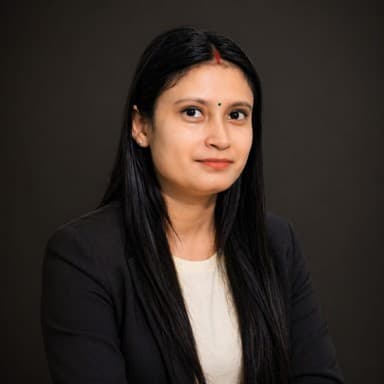
Priyanka Kumari
IB Maths
IB + IGCSE
4rating13 Yrs
Gurugram, All Areas in GurgaonHome / Online / Hybrid
IB Maths TutorIGCSE Maths Tutor
Check availability
If your city has no IB teacher for the subject your child needs, the shortage is real and it is geographic. Online teaching does not fix everything, but it changes who is reachable on a Tuesday evening. This page is about that trade, and what you pay for it.
Matched by programme, subject, level, weak areas and your school's calendar.
Math AA, Math AI, Physics, Chemistry, Economics, English and more, to the current syllabus.
Online worldwide around school hours, with home and hybrid options where tutors are local.
Clear updates on what was covered, what needs practice and the next step.
IB online teachers in India exist mainly to solve a supply problem: outside Delhi NCR, Mumbai, Bengaluru, Hyderabad, Chennai and Pune, the number of people who have actually taught a given Higher Level subject drops sharply, and in plenty of cities it reaches zero. A family in Kochi or Raipur is rarely choosing between a good local teacher and a remote one. They are choosing between a specialist on a screen and nobody. That changes how the option should be judged. What matters is which subjects are genuinely scarce where you live, what a screen costs a fourteen-year-old on a school night, where a home tutor still wins, and how a weekly schedule survives a teacher sitting in another time zone.
You send a query or book a free consultation, IB Gram asks which board, programme, subject and level the student is on, what the school calendar looks like and where you are, then shortlists verified tutor profiles that fit. For a remote request, your location works differently: it fixes the hours that are possible, not the radius. A demo session can be arranged before the family commits to anything. The second question decides the match. Not which subject, but which part of it. A DP1 student in Nashik who cannot see how to begin a Mathematics Applications and Interpretation (AI) modelling task needs a different teacher from a DP2 student in Guwahati whose Economics answers never quite reach the command term. Bring a recent marked script to the consultation and the shortlist gets shorter and sharper in the same move. Time is the third question, and remotely it is the hard one. Say plainly which evenings survive school, travel and sleep, and say which ones only look free. If the one person who has taught your child's exact course works from a different time zone, you will be offered slots that sit early in the morning or late at night for somebody, and one of the two households absorbs that cost every week. Better to see it before the first session than in the fourth. Then you test the match. Watch the demo for whether the teacher makes the student work or simply performs at them. Ask them to open a past paper and mark one answer aloud, with the criterion visible on screen. Ask what they would do with an internal assessment draft, and listen for whether the answer contains any limits at all. If the fit is wrong, ask for a different match, subject to availability.
1. Send a query or book a free consultation, naming the subject and level.
2. Share a recent marked script so the gap is diagnosed, not guessed at.
3. State which evenings genuinely survive school, travel and sleep.
4. Take a demo and watch who is doing the thinking on screen.
5. Ask for a different match if the fit is wrong, subject to availability.
Browse a sample of verified IB and IGCSE tutors for PYP, MYP, DP and IGCSE subjects. Matching considers syllabus fit, HL or SL level, preferred tutoring mode, schedule and the kind of support the student needs.
Explore IB tutor optionsIB Maths
IB + IGCSE

Mathematics
IB + IGCSE

Math AAHL
IB + IGCSE
 Australia
 United States+2 more
The younger the student, the less a screen carries on its own. That is the honest ordering, and it should shape what you buy. A Diploma Programme (DP) student can work productively with a teacher they will never meet in person. A Primary Years Programme (PYP) child usually cannot, and a Middle Years Programme (MYP) student sits between the two, depending on the subject and on the child rather than on the technology. The DP is where remote teaching earns its place. A student takes six subjects from six groups, three or four at Higher Level (HL, 240 recommended teaching hours) and the rest at Standard Level (SL, 150 hours), each graded 1 to 7. Theory of Knowledge (TOK) and the Extended Essay (EE) add up to 3 more points, so 45 is the maximum and 24 the minimum for the diploma, subject to the IB's failing conditions, and Creativity, Activity, Service (CAS) must also be completed. Those are specialised hours. The person who has taught them before is often not in your city. In the MYP the calculation shifts. Language Acquisition runs in phases 1 to 6, and a student in phase 2 who needs steady spoken practice can do a great deal of it on a call, because talking is the whole task. A student who needs somebody to notice that they stopped writing four minutes ago is harder to serve that way. For PYP children, keep expectations small and sessions short. A young child works better with an adult in the room, and where that is possible a home tutor is the better first choice. Where it is not, keep remote sessions brief, frequent and built around reading aloud and talking rather than worksheets.
DP: six subjects from six groups, three or four at Higher Level
HL is 240 recommended teaching hours, SL 150, each graded 1 to 7
TOK and the Extended Essay add up to 3 points, with 45 the maximum
MYP Language Acquisition runs in phases 1 to 6
Younger children need shorter, more frequent remote sessions
For PYP, an adult in the room beats a bigger screen every time
Scarcity is not spread evenly. Mathematics Analysis and Approaches (AA) at Higher Level, Physics and Chemistry at Higher Level, Economics, Theory of Knowledge and Extended Essay supervision are the hardest to staff locally once you leave the six big clusters. English B is the quiet one nobody expects to be scarce, and often is. Start with Mathematics, because the confusion there costs families the most. DP Mathematics is two different subjects, each offered at both levels. Analysis and Approaches is algebraic and proof-heavy. Applications and Interpretation is modelling and statistics-heavy, with technology used throughout. A capable local mathematics teacher who has taught Class 12 boards for years can usually help an AA student through calculus, and will often be genuinely lost on an AI modelling task, because the technology use and the statistical framing are not part of what they have taught. Students heading for engineering or economics degrees are often steered towards AA, though the right choice depends on the degree and the student, and the school's DP coordinator makes the final placement. Then the languages. A student whose first language is not English takes Language Acquisition: English B at SL or HL, or English ab initio at SL for genuine beginners. English B is built around five themes, Identities, Experiences, Human ingenuity, Social organization and Sharing the planet, and it is assessed through Paper 1, a writing task, Paper 2, listening and reading, and the individual oral, with two literary works added at HL. There is no IB subject called ESL, whatever a search result says. Parents who type that usually mean this, and the teacher they need has taught the individual oral before.
Mathematics AA is algebraic and proof-heavy at both levels
Mathematics AI is modelling and statistics-heavy, with technology throughout
HL Physics, HL Chemistry and Economics are thinly staffed outside the metros
English B: Paper 1 writing, Paper 2 listening and reading, individual oral
English ab initio is SL only, for genuine beginners
The IB has no subject called ESL, though parents search for it
Draw the map honestly and the case makes itself. IB online teachers in India are hired for two quite different reasons, and geography decides which reason applies to you. Families searching for an IB online teacher in Mumbai, an IB online teacher in Delhi or an IB online teacher in Bangalore usually do have local choices and are going remote for the specific subject or the specific hour. Everybody else is going remote because the alternative is nothing. Across southern India beyond Bengaluru and Chennai, in Kochi, Thiruvananthapuram, Coimbatore, Mysuru, Mangaluru, Visakhapatnam, Vijayawada and Madurai, there are strong general tutors in every neighbourhood and very few people who have taught an IB Higher Level course. The same is true across central and western India, in Indore, Bhopal, Nagpur, Raipur, Jabalpur, Nashik, Aurangabad and Goa. A parent in Jabalpur is not being difficult when they say there is nobody; there is genuinely nobody for that subject, and a search for a remote IB teacher is the rational next step. In Kolkata and eastern India the picture is mixed. Salt Lake, New Town, Rajarhat, Ballygunge and Alipore have some depth, and an IB online teacher in Kolkata is often chosen for a single scarce subject rather than for everything. Move out to Bhubaneswar, Guwahati, Ranchi or Patna and depth disappears quickly. Across northern India beyond Delhi NCR, Chandigarh, Mohali and Panchkula hold a little supply between them, while Jaipur, Lucknow, Dehradun, Amritsar, Ludhiana and Kanpur mostly do not. Gujarat deserves its own paragraph because the searches are heavy and the supply is thin. Ahmedabad, Satellite, Bodakdev and the corridor along SG Highway generate steady demand, as do Gandhinagar, Surat, Vadodara and Rajkot, and an IB online teacher in Ahmedabad will frequently be teaching a student whose school has one section of the programme. Compare that with an IB online teacher in Hyderabad, in Chennai or in Pune, where a family can usually find somebody in Gachibowli, in Adyar or in Koregaon Park, and where online is chosen for convenience rather than survival. Powai parents often want both: a tutor at home for routine work and an online IB faculty member for the hardest paper.
Kochi, Coimbatore, Mysuru, Madurai: strong general tutors, almost no IB specialists
Indore, Bhopal, Jabalpur, Raipur: remote teaching is usually the only route
Kolkata holds some depth; Guwahati, Ranchi and Patna do not
Chandigarh and Mohali have a little supply, Jaipur and Kanpur have less
Ahmedabad, Surat, Vadodara and Rajkot: heavy demand, thin local staffing
In Hyderabad, Chennai and Pune, remote is a convenience rather than a necessity
The Indian academic year runs roughly April to March, examination sessions fall in May and November, and schools in India overwhelmingly enter candidates for May. Results are released in early July. A remote teacher who does not have those dates in front of them will plan against the wrong year, and a teacher living abroad will plan against their own school calendar unless you correct them in the first week. Give the teacher your child's internal deadlines, not the IB's. Schools set their own coursework dates well ahead of the board, and they set mock examinations, predicted grade decisions and Extended Essay checkpoints on a calendar the teacher has no way of guessing from another country. Send the school diary. Ask for the term plan to be written against those dates rather than against a generic sequence of topics. Time zones then decide what the week can actually hold. A teacher whose working day begins several hours after yours will be offered your child's late evening, which is the worst hour for a tired MYP student and only just workable for a DP2 student in February. A teacher ahead of India can take an early morning slot before school, which suits some students remarkably well and ruins the day for others. Try both for a fortnight before fixing the timetable, and protect one evening a week with no session at all. A note on schools themselves. IB Gram is an independent tutoring platform and is not affiliated with any school, the International Baccalaureate, Cambridge International Education or Pearson Edexcel. Teachers may have taught students from schools you recognise, which tells you something about the rhythm they are used to and nothing about any relationship. Confirm every date with your child's coordinator.
Exam sessions run in May and November; Indian schools mostly enter May
May results are released in early July
The school's own coursework deadlines fall before the IB's
Send the school diary to the teacher in week one
Trial an early morning and a late evening slot before fixing either
If a qualified specialist lives near you, home tuition is usually the better buy. If one does not, remote teaching is not a compromise, it is the only version of the thing that exists. Hybrid, which most families arrive at eventually, puts a local tutor at the desk for routine work and a specialist on the screen for the part nobody nearby can teach. For most families beyond the metros, IB online teachers in India are the reach half of that plan rather than the whole of it. Home classes carry information a screen loses. The tutor sees the desk, the phone face down beside it, the unopened textbook, the three pages of notes that were supposed to be six. They also see a student go quiet in a way that does not register on a video call. For MYP students and for any student whose real problem is organisation rather than content, that visibility is worth more than subject depth, and a good local home tutor beats a distant specialist comfortably. Remote teaching wins on reach and on the calendar. A session can run the evening before a deadline without anyone crossing a city. Annotated past papers, shared documents and recorded explanations are genuinely better than the paper equivalents, provided the teacher is fluent with the tools rather than fighting them. What it cannot do is notice the room. Hybrid is the quiet answer for most families outside the metros. One home tutor, weekly, for the subject the student is behind in and for the habit of sitting down at the same hour. One online specialist, weekly or fortnightly, for HL Physics or for Extended Essay supervision. A family in Vijayawada or Ranchi can build that in a week. Run it for a month, look at the student's own marked work, then drop whichever half is not earning its hour.
Home tuition wins when the problem is habit, organisation or attention
Remote teaching wins when the problem is a scarce subject or a tight week
Hybrid: a home tutor for routine work, a specialist online for the hard paper
A screen loses the room; it does not lose the mark scheme
Review after a month and drop the half that is not earning its hour
Four formats, and the right one depends mostly on what your city can actually supply. A home tutor buys presence, a remote specialist buys reach, a batch buys structure at a lower cost per hour, and a recorded course buys availability at any hour. The question that settles it is whether the problem is the subject, which travels well across a screen, or the student's working habits, which do not.
| What matters | One-to-one home tutor | One-to-one online tutor | Coaching or tuition centre batch | Recorded self-study course |
|---|---|---|---|---|
| Reach to a subject specialist | Limited to whoever lives within a reasonable drive of your house | The widest reach of the four, which is the entire argument for it | Limited to whoever the centre has hired for that term | Wide, but fixed at the moment the course was recorded |
| Noticing that a student has drifted | Immediate; the tutor sees the desk, the phone and the body language | Delayed; a quiet student can hide behind a small video window | Weak; a batch teacher watches the room, not the individual | Absent, unless a parent checks the progress log themselves |
| Fit to the exact course and level | Good, if a local tutor happens to know AA, AI or English B | Best, because you can insist on the exact course and level | Works when the batch shares a level, breaks when it does not | Whatever was recorded; check the course before you buy |
| Travel and the weekday evening | The tutor travels, which limits how many evening slots exist | No travel, so a session can run the night before a deadline | Two trips for the student, the hidden cost outside the metros | No travel and no fixed hour at all |
| Time zones and scheduling | Local hours only, which keeps school nights sane | Wider choice, but a teacher abroad may only offer awkward hours | A fixed timetable decided before your child enrolled | Any hour, including the night before the test |
| Coursework support within the rules | Skills taught and reasoning questioned, with the student writing | Same limits, and screen sharing makes criterion review straightforward | General guidance only; no batch reads every draft closely | Explains criteria well, cannot respond to this student's draft |
| Dependence on power and connectivity | None worth mentioning once the tutor has arrived | Complete; agree in advance what a dropped session costs | None during the class, though the trip can still fail | Downloadable in some cases, otherwise the same dependence |
| Cost structure | Highest per hour, since travel time is part of what you fund | Lower than an equivalent home tutor, with no travel to pay for | Lowest per hour of the taught options, which is its real strength | Cheapest of all, paid once, with no teacher attached |
| Revisiting an explanation later | Only through the student's own notes from the session | Recordings and annotated files, if agreed at the start | Handouts and test papers, rarely the explanation itself | Always available and replayable, which is the point of it |
Check three things: that the person is who the profile says, that they have taught this exact course rather than something adjacent, and that somebody answers when things go wrong. Distance makes all three more important, not less, because you will never run into this teacher at the gate. On IB Gram, profiles are verified before they go live, which means identity and claimed teaching background are checked. It does not mean anyone has sat through every lesson, and no honest platform will claim otherwise. Verification narrows the list to plausible people. The demo is where you get evidence, and the first month is where you get proof. The subject questions are specific, and they are the ones a general tutor cannot answer smoothly. Which level have you taught, and for how many cohorts? Have you taught Analysis and Approaches or Applications and Interpretation, or both? For English B, walk me through how you prepare a student for the individual oral. For an Extended Essay, what do you do when a student's research question is too broad? A teacher who has done the work answers in specifics and examples. A teacher who has not answers in adjectives. Then the operational questions, which families skip and regret. Who do you contact if the teacher stops replying? What happens to a paid session when the power goes out at your end, or the teacher's connection fails at theirs? Is the session recorded, and who keeps the recording? Will you get a short written note after each session, and does anybody read it? Settle these in writing during the first week, while everybody is still enthusiastic.
Ask which course and level they have taught, and for how many cohorts
Ask a syllabus-specific question and listen for specifics, not adjectives
Agree what happens when a connection or the power fails mid-session
Ask whether sessions are recorded and who keeps the recording
Ask for a short written note after each session, and actually read it
Before a specialist could be reached on a screen, families in smaller cities had four options and all of them were bad. They travelled. A parent in Nagpur or Vadodara put a child on a train or a flight to a metro every second weekend for a run of sessions, which cost the weekend, the money and most of the student's independent study time. Or they leaned on the school, asking a teacher to take extra hours after class, which works when the teacher has the hours and fails when the school has one section and one teacher for the subject. Or they made do. An engineering graduate in the family took the mathematics, a retired professor took the physics, and nobody in the house had seen an IB mark scheme. The content was often taught well. The assessment was taught not at all, and the student lost marks on command terms and criteria while getting the science right. The fourth option was the quietest and the most expensive. Families changed the child's subjects to whatever the school could staff properly, or moved the child to a hostel in another city, or left the programme. Subject choice was being set by local labour supply rather than by what the student wanted to study. What changes when a specialist elsewhere becomes reachable is narrow but real: the constraint moves from geography to timetable. A student in Dehradun can keep Higher Level Chemistry because somebody who has taught it is available at eight on a Wednesday. The teacher competes on evidence rather than on proximity, so the shortlist gets better as it gets longer. And a family stops paying for travel and starts paying for teaching, which is the only part that was ever worth buying. IB online teachers in India did not make the teaching better. They made it reachable, which for a student in Jabalpur or Madurai is the difference that counts.
Weekend travel to a metro cost the weekend and the independent study
School teachers taking extra hours works only where the hours exist
A family member teaching content rarely teaches the mark scheme
Subject choice used to be set by local staffing, not by the student
Reach moves the constraint from geography to the weekly timetable
Reach is bought with attention, and that is the trade nobody advertises. A student who is tired at nine in the evening is easier to lose on a call than across a table, and the teacher has fewer ways to notice. Judge the arrangement on the student's own marked work after about six weeks, not on how the sessions feel while they are running. There are practical costs before that. A session needs a quiet room, a device better than a phone, a stable connection and somewhere to write that is not the same surface as the screen. Power cuts and patchy connectivity are real in a lot of Indian towns, so agree the rule for a dropped session before it happens. A student who has to take sessions in a shared living room with the television on will not concentrate, whoever is teaching. Then the things distance cannot repair. No teacher can guarantee a grade, and a remote one has less leverage over the work done between sessions, which is where most of the improvement actually happens. Accountability has to be built deliberately: a specific task each week, sent before the next session, checked at the start of it. If a student is not doing that work, more hours on the screen will not help and may make things worse by creating the impression that somebody else is handling it. And some students simply need a person in the room. A young child, a student with attention difficulties, a student in real distress about school. For them a home tutor two evenings a week is better than the best specialist in the country on a screen, and it is worth saying so plainly rather than selling the reach.
Judge on marked work after about six weeks, not on how sessions feel
A quiet room, a real device and a stable connection are the minimum
Agree in advance what happens when the power or the connection fails
No teacher can guarantee a grade, and distance weakens accountability
Some students need a person in the room, and should have one
Before you enquire, gather four things: the last school report with its criterion comments, one recent marked script, the school's deadline calendar for the term, and an honest list of the evenings that are genuinely free rather than theoretically free. Those four make the difference between a shortlist and a guess. When you send a query or book a free consultation, IB Gram asks about board, programme, subject, level, the school calendar, your location and your schedule, then shortlists verified tutors who match, subject to availability. Say at that point whether you would also consider a home tutor locally for routine work, because a hybrid plan is often cheaper in hours and better in outcome than a single remote teacher carrying everything. Most families who end up with IB online teachers in India arrive by that route rather than by choosing a screen on principle. The first session should be diagnosis, not a lecture. A good teacher shares a past paper, asks the student to attempt one question live, and then asks why they chose that method. They read one marked answer against the criterion with the student watching. They finish by naming one task for the coming week and the point of it. You should be able to read the session note afterwards and know exactly what happened. By week four you want three things in place: a fixed slot that survives school and sleep, a task cycle the student actually completes, and one piece of work where the school's comment and the teacher's prediction agree. If any of the three is missing, say so and ask for a different match. Doing that in week four is straightforward. Doing it in February of DP2 is not.
Gather the last report, one marked script and the school deadline calendar
List the evenings that are genuinely free, not theoretically free
Ask about a hybrid plan with a local tutor for routine work
Expect diagnosis in session one, not a lecture on the topic
By week four: a fixed slot, a task cycle and one piece of agreeing evidence
IB Gram is an independent tutoring platform and is not officially affiliated with any school named on this page, the International Baccalaureate, Cambridge International Education or Pearson Edexcel.
For a Diploma Programme student, usually yes, and for a young child, usually no. The variable is not the technology but how much of the problem is content and how much is habit. A DP2 student who needs somebody to pull apart their Economics answers loses almost nothing on a screen. A Grade 6 student who needs an adult to notice they have stopped working loses a great deal. Match the format to the problem rather than to the convenience.
Start with the ones your city is least likely to staff: Higher Level Mathematics in either Analysis and Approaches or Applications and Interpretation, Higher Level Physics and Chemistry, Economics, Theory of Knowledge and Extended Essay supervision. English B is the surprise on the list, because families assume any English teacher can cover it and the individual oral catches them out. For foundational work in younger years, a good local tutor is usually easier and better.
It works when the slot is chosen honestly and reviewed after a fortnight. A teacher whose day starts later than yours will offer your child a late evening, which is survivable for a DP student in short bursts and poor for anyone younger. A teacher ahead of India can take a slot before school, which suits some students and wrecks the school day for others. Trial both, keep one evening free of sessions, and do not let a good teacher in a bad slot run for a full term.
Start by separating the subject problem from the study problem. Hire locally for the second: a general tutor who can sit at the desk two evenings a week and hold the routine. Hire remotely for the first: somebody who has taught that exact course and level. This is the pattern that works across Kochi, Vijayawada, Madurai and Visakhapatnam, and it usually costs less than sending a student to a metro for weekend classes.
A quiet room with a door, a laptop or tablet rather than a phone, a stable connection, and a writing surface that is not the screen itself. A cheap graphics tablet helps enormously in Mathematics and the sciences, because the student can show working rather than describing it. Agree beforehand what happens if the power goes out in Bhopal or the connection drops in Guwahati, since that conversation is much easier before the first missed session than after it.
Very often, yes, and this hybrid pattern is underused. The online specialist handles the subject content and the assessment technique. The home tutor holds the routine: a fixed hour at the desk, homework actually started, notes organised before the week runs away. Families in Ranchi, Nashik and Rajkot frequently find that the local tutor makes the remote sessions worth more, because the student arrives at them having done the work.
Shorten the sessions and change what happens in them before you change the teacher. Forty minutes of active work beats ninety minutes of watching, and a middle-years student should be writing, talking or solving something for most of the call. Ask the teacher to use shared annotation so the student is holding the pen. Move the slot earlier if you can. If none of that helps within a month, the format is wrong for this child and a home tutor is the better answer.
No, and this distinction matters. The school appoints the supervisor, and the school submits the work. An online teacher can help the student narrow a research question, plan a reading schedule, discuss method and ask hard questions about the argument. They cannot write, rewrite or edit any part of it. If anybody offers to tidy up the draft, stop there; the work has to be the student's own and the school runs it through similarity checking.
Verify the person, the course experience and the fallback plan. Platform verification covers identity and claimed teaching background, and is a filter rather than a promise. Ask course-specific questions and listen for whether the answers contain real detail. Then ask the operational ones: who you contact if the teacher disappears, what a dropped session costs, whether sessions are recorded. A teacher who has done this before will have ready answers to all of it.
Rarely as the main arrangement, though it can work in small doses. Young children need an adult present, short sessions and a lot of talking, and most of what helps them at that age is reading together, number confidence and routine rather than subject expertise. If you are in a city with no IB specialist, that is fine, because a primary child does not need one. A patient local home tutor, or a parent with twenty minutes each evening, does more.
Whatever you agreed in writing during the first week, which is why the agreement matters. The common arrangements are a rescheduled remainder, a credited part-session, or a short extension to the next one. Decide also who calls whom, so five minutes are not lost to both sides waiting. Power cuts and connection drops are a normal part of the year in many Indian towns, and a teacher who has taught here before will not be surprised by the question.
Look for process changes in weeks two to four and evidence in the marked work by about week six. Early signs are a student who can say what a question is asking before answering it, drafts started earlier, and notes organised by criterion rather than by date. If the folder looks the same after six weeks, the problem is the match, the diagnosis or the slot, and adding hours will not fix any of the three. Ask for a different match instead.
Send a query or book a free consultation, and say two things clearly: the exact course and level your child is on, and the hours that genuinely survive school and sleep. IB Gram will ask about board, programme, location and schedule, then shortlist verified tutors who fit, subject to availability. Take the demo, watch who does the thinking, and ask for a different match if it is not right.
Book a Free Consultation