Compare
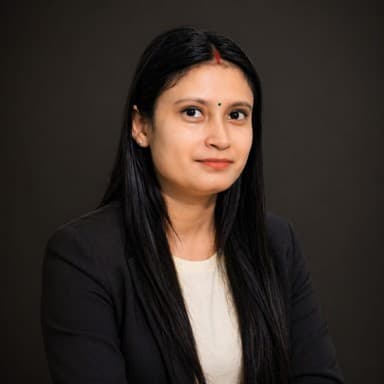
Priyanka Kumari
IB Maths
IB + IGCSE
4rating13 Yrs
Gurugram, All Areas in GurgaonHome / Online / Hybrid
IB Maths TutorIGCSE Maths Tutor
Check availability
Gurgaon
A one-to-one IB Physics tutor works with a single student, at HL or SL, through the five DP themes and the data booklet the exam actually uses. Lessons run at home across Gurgaon, online, or a mix of both, and are marked against real mark schemes, not generic worksheets.
Matched by programme, subject, level, weak areas and your school's calendar.
Math AA, Math AI, Physics, Chemistry, Economics, English and more, to the current syllabus.
Online worldwide around school hours, with home and hybrid options where tutors are local.
Clear updates on what was covered, what needs practice and the next step.
School names are shown for local academic context only. IB Gram is an independent tutoring platform and is not affiliated with, endorsed by, or representing any school listed here.
An IB Physics one-to-one tutor in Gurgaon works with a single student on their confirmed level, Higher Level (HL) or Standard Level (SL), rather than teaching a mixed batch moving through different themes at different paces. Most families start this as a home tutor working at the child's own table, sketching diagrams and working through the data booklet together, with online lessons covering the same ground when a data-based question can be annotated just as well on a shared screen. IB Gram checks the student's exact level and current theme before shortlisting anyone, because a tutor pacing for SL wastes an HL student's limited time, and a tutor who has not studied the data booklet slows a lesson down unnecessarily. A one-to-one Physics lesson is not a private repeat of a group class. It is built from the student's own working, error by error, and marked against the real IB mark scheme, so that by the fourth or fifth lesson the plan looks noticeably different from the first.
Finding an IB Physics one-to-one tutor in Gurgaon starts with confirming exactly what the student needs, not just 'Physics help' in general. IB Gram asks the level (HL or SL), the school's own scheme of work and test dates where the family can share them, the sector or society across Gurugram (Gurgaon), Haryana the family is in, and which evenings or weekend slots actually work once school and other commitments are accounted for. HL and SL share the same assessment structure, Paper 1's multiple-choice and data-based sections, Paper 2's short-answer and extended-response questions, and the scientific investigation; HL simply adds Additional Higher Level (AHL) content on top, so a tutor teaching HL needs command of that extra material as well as everything SL covers. That information decides the shortlist. The steps run in this order: 1. The family confirms the level (HL or SL), the theme the student is currently on, and current gaps, on a call or through a short written brief. 2. IB Gram checks which verified tutors teach that exact level, and are realistically available for the family's preferred slots. 3. A shortlist is shared with what each tutor's background covers, including any IB examining or practical-science background, so the family can ask questions first. 4. A demo or trial session is arranged, at home or online, before the family commits to a longer run of lessons. A tutor strong in CBSE or ICSE Class 11-12 Physics does not automatically transfer to the IB syllabus; the five-theme structure, the data booklet, and data-based questions in Paper 1B ask for a different kind of preparation than numerical problem sets alone. Some families searching for an IB Physics one-to-one tutor Gurugram-wide assume any strong physics graduate will do; the matching step exists precisely to check that before the first lesson. If a lesson or two shows the fit is wrong, on pace, level or personality, the family can ask for a different match, and the diagnostic notes already gathered are not wasted.
Level (HL or SL) and current theme confirmed before any tutor is suggested.
Verified tutors checked for the exact level, not general physics ability.
Shortlist explains each tutor's background, including practical-science experience.
A demo or trial session before any longer commitment is agreed.
A different match offered if pace or level depth is not right.
Browse a sample of verified IB and IGCSE tutors for PYP, MYP, DP and IGCSE subjects. Matching considers syllabus fit, HL or SL level, preferred tutoring mode, schedule and the kind of support the student needs.
Explore IB tutor optionsIB Maths
IB + IGCSE

Mathematics
IB + IGCSE

Math AAHL
IB + IGCSE
 Australia
 United States+2 more
Gurgaon students reach IB Physics through two programme stages, and a one-to-one tutor's job differs at each. In the Middle Years Programme (MYP), sciences are marked against four criteria: A Knowing and understanding, B Inquiring and designing, C Processing and evaluating, and D Reflecting on the impacts of science, each scored 0 to 8. An MYP Sciences tutor Gurugram families choose has to teach to those four criteria directly, since a student who understands the physics content can still lose marks under B for a poorly designed investigation, or under D for not engaging seriously with the wider impact of the science. The Diploma Programme (DP) offers Physics at Higher Level (HL) and Standard Level (SL), and, for the syllabus first assessed in 2025, both share the same assessment structure: Paper 1's two parts, 1A multiple choice and 1B data-based questions, and Paper 2's short-answer and extended-response questions. HL adds Additional Higher Level (AHL) content on top of what SL covers, rather than a separate exam structure, so an IB Physics HL tutor Gurgaon families book needs command of that extra material specifically, not just a general willingness to 'teach the harder version'. Physics is organised into five themes, and each tends to challenge a different kind of student: A Space, time and motion, where the mathematical setup often trips students up more than the concepts; B The particulate nature of matter, where energy and temperature language gets mixed up; C Wave behaviour, where command terms decide how much depth an answer needs; D Fields, where diagrams and direction conventions take deliberate practice; and E Nuclear and quantum physics, the most conceptually abstract, where answers often sit below the depth a question actually asks for. Students use the DP physics data booklet throughout examinations, so using it quickly and correctly under time pressure is itself a taught skill, not something to leave to chance on exam day. These are tendencies, not fixed rules; each student's actual weak theme only becomes clear through a proper diagnostic.
MYP Sciences: four criteria (A-D), each 0-8, covering knowledge, inquiry, processing, impact.
DP Physics: HL and SL share Paper 1 (MCQ + data-based) and Paper 2 structure.
HL adds Additional Higher Level (AHL) content on top of SL, not a separate structure.
Five themes, five different tendencies: motion setup, energy language, command terms, field diagrams, depth.
The data booklet is used throughout exams; using it quickly is a taught skill.
The scientific investigation, the IA, is worth 20% of the final DP Sciences grade and is marked on four criteria of 6 marks each: Research design, Data analysis, Conclusion and Evaluation, with a maximum of 3,000 words. Students may investigate in groups of up to three, but each student writes an individual report, and HL and SL share the same assessment structure for this component. A one-to-one tutor can help a student choose a feasible research question with a genuinely controllable variable, talk through how uncertainties and their propagation should be handled under Data analysis, ask questions that sharpen the Conclusion so it actually answers the research question rather than restating the method, and push the Evaluation to name specific, non-generic limitations rather than 'human error' as a catch-all. What a tutor may not do is write, or substantially rewrite, any part of the report, design the investigation for the student, or process the student's raw data on their behalf; the finished work must be the student's own, individually, even where the investigation itself was a group effort. This matters because IA marks are frequently lost in places that have nothing to do with a student's grasp of physics: a research question too broad or too dependent on equipment the school lab does not have, uncertainties stated without any working shown, or an evaluation that lists limitations without saying what each one actually did to the result. A tutor who has studied the four criteria closely catches these earlier than one working from a general sense of what a 'good report' looks like. Families searching for the best IB Physics one-to-one tutor in Gurgaon for IA support specifically should ask directly whether a prospective tutor has read the criteria in detail, not just taught Physics content.
IA: scientific investigation, 20% of the grade, four criteria at 6 marks each.
Criteria: Research design, Data analysis, Conclusion, Evaluation; max 3,000 words.
Groups of up to three can investigate together; each writes an individual report.
Tutor mentors question choice and drafts; never writes, designs or processes data for the student.
A non-generic evaluation, naming what each limitation actually did to the result, scores higher.
Where a Gurgaon family lives shapes what a home Physics lesson looks like in practice, particularly given how much of the subject depends on diagrams, graphs and the data booklet. Along Sohna Road, covering Sector 47, 48, 49 and 50, Nirvana Country, South City 2, Rosewood City, Uppal Southend, Vatika Chowk and Badshahpur, with societies including Central Park Resorts, Orchid Petals, Vatika City, Malibu Towne, Vipul Greens and The Close, an IB Physics one-to-one tutor Sohna Road families book covers a corridor that stretches a considerable distance, so families closer to Badshahpur sometimes find a tutor's evening slot fixed earlier than one nearer Vatika Chowk. The DLF Phases 2 to 4, MG Road and Cyber City corridor, taking in DLF Phase 2, 3 and 4, MG Road, Cyber City, Sikanderpur, Chakkarpur, Sector 24, 27 and 28, with societies such as DLF Beverly Park, Heritage City, DLF Hamilton Court, DLF Regency Park, DLF Richmond Park and Ambience Caitriona, is one of Gurgaon's older and denser corridors. An IB Physics one-to-one tutor DLF Phase 3 families rely on typically deals with heavier weekday evening traffic around the Cyber City office belt than a tutor working in a purely residential pocket, which is worth factoring into slot timing. Sushant Lok, South City 1 and the Millennium City Centre corridor, covering Sushant Lok 1 and 2, South City 1, Sector 29, 40, 45 and 46, and Greenwood City, sits centrally and is generally easier to reach across than the other two corridors, making it more realistic for a tutor to cover two nearby homes in the same evening. Across all three corridors, a family searching for an IB Physics one-to-one tutor near me is really asking which corridor and society a tutor already knows well, which is also why families comparing IB Physics one-to-one tutors in Gurgaon look closely at a tutor's existing coverage area. Physics practical discussion, talking through a graph, a diagram, or an experimental setup, works reasonably well online when a home visit is not practical for a single week, though a first diagnostic session benefits from being in person where possible, since reading how a student physically sets out working on a page reveals more than a screen share does.
Sohna Road: Sectors 47-50, Nirvana Country, South City 2, Badshahpur; a long corridor.
DLF Phases 2-4, MG Road, Cyber City: heavier weekday evening traffic near the office belt.
Central Park Resorts, Orchid Petals, Vatika City, Malibu Towne, Vipul Greens named for slot planning.
Sushant Lok, South City 1, Millennium City Centre: central, easier to cover two homes an evening.
A first diagnostic session benefits from being in person where a home visit is possible.
Families at Gurgaon's international schools, among them Pathways World School Aravali, Pathways School Gurgaon, Lancers International School, Scottish High International School, GD Goenka World School, Heritage Xperiential Learning School, The Shri Ram School Aravali and DPS International Edge, are working against a calendar a Physics tutor has to track rather than ignore. IB Gram is an independent platform and is not affiliated with any school named here, the International Baccalaureate, Cambridge International Education or Pearson Edexcel; these names describe the kind of school calendar families are managing, nothing more. Most Gurgaon IB schools enter students for the May exam session, with results released in early July; a minority of schools, and students retaking a paper, use November instead. Each school fixes its own DP2 mock examination dates, usually several months before May, and mock Paper 1 and Paper 2 performance is often the clearest early signal of which theme, or which command term, is costing a student the most marks. Past papers, mark schemes and subject reports come through the school or the IB's official channels, and a tutor working from those exact materials, rather than a generic physics worksheet bank, teaches a student to answer in the form that will actually be marked. Command terms, define, describe, explain, evaluate, discuss and to what extent, decide how much a Physics answer needs to say, and losing marks for answering at the wrong depth, a 'describe' where 'explain' was asked, is one of the most common and most avoidable ways students drop below their potential grade. A one-to-one tutor's pacing should track the school's own topic order and mock dates rather than run a separate syllabus in parallel, so that revision peaks land just before school deadlines and not after them.
IB Gram: independent, not affiliated with any school, the IB, Cambridge or Pearson Edexcel.
Most Gurgaon IB schools sit the May session; results land in early July.
DP2 mock dates are set by each school, usually months ahead of May.
Command terms decide answer depth; 'describe' and 'explain' are not interchangeable.
A tutor's pacing should track the school's own topic order and mock dates.
For most IB Physics one-to-one lessons in Gurgaon, a home tutor is the natural starting point: working through a diagram, a free-body force sketch or a circuit at a shared table lets a tutor see exactly how a student sets out their working, not just the final number. An IB Physics online tutor Gurgaon families use suits other situations well too, and for many families a hybrid pattern, home through the week and online for one evening that does not work logistically, is what settles in after the first month. Home tutoring is strongest for younger MYP Sciences students still building lab-report habits, for topics that are diagram-heavy, field lines, wave diagrams, circuit sketches, and for the first diagnostic session where reading a student's physical working matters most. Its limit is travel: a tutor covering Sohna Road on a Tuesday evening cannot also be in Cyber City the same hour, and heavy evening traffic near the DLF and Cyber City corridor can eat into lesson time on either side. Online lessons suit DP students comfortable working from a shared screen, data-based questions where a graph or data set can be annotated directly on a tablet, and any week a home visit is not practical, an away match, a family trip, a monsoon evening. A session can usually be recorded for later review, subject to the family's consent. Its limit is the same as for any subject: a tired or younger student concentrates less easily through a screen than sitting across a table from a tutor sketching the same diagram by hand. In one line: home suits younger students, diagram-heavy topics and the first diagnostic session; online suits older DP students, data-based practice and weeks when travel does not work; and most Gurgaon families settle into a mix of both once they have seen which sessions land better which way.
Home tutor: strongest for MYP fluency, diagram-heavy topics, the first diagnostic session.
Online tutor: strongest for data-based question practice and weeks travel is impractical.
Sessions can be recorded for later review, with the family's consent.
Hybrid weeks, mixing both, are common by the second month.
Traffic near Cyber City and MG Road is a real limit on home sessions in that corridor.
One-to-one suits a student whose level, HL or SL, and weak themes need a tutor who paces every question to their own working. A small group suits peer discussion of tricky concepts among students on the same level, at some cost to individual error correction. A large coaching batch costs less per hour, but rarely separates HL's Additional Higher Level content from SL in how it teaches.
| What matters | One-to-one at home | One-to-one online | Small group | Large coaching batch |
|---|---|---|---|---|
| Attention per student | Full attention, paced to this student's exact themes and error patterns. | Same full attention, delivered through a shared screen instead of a table. | Split three or four ways; useful for concept discussion, thinner on individual errors. | Minimal individual attention; pace is fixed for the batch, not one student. |
| Syllabus fit (HL/SL, themes) | Tutor teaches the exact level, AHL content included where HL applies. | Same exact fit; data-based questions annotate well on a shared screen. | Works only if every student shares the same level and current theme. | Often does not separate HL's AHL content from SL at all. |
| Travel and time in Gurgaon | Tutor travels to the family's sector; traffic can shorten the session. | No travel for either side; the full slot goes to practice questions. | Usually one home or centre; other students still need to travel. | Fixed centre location regardless of that evening's traffic. |
| Scheduling flexibility | Slot set around this family's school hours and activities. | Easiest to reschedule; a missed evening can often move to another day. | Fixed slot across several families; harder to move for one student. | Fixed timetable; a missed class is rarely made up individually. |
| IA (scientific investigation) help | Tutor mentors question choice and drafts within academic integrity rules. | Same mentoring, with drafts and data marked up on screen. | Limited; investigations differ student to student even in the same group. | Rarely covers individual investigation work at all. |
| Feedback to parents | Direct conversation with the tutor after most sessions, if wanted. | Same direct feedback, often easier to schedule as a short call. | Feedback usually shared for the group, less often per student. | Feedback is typically a periodic test score, not a running conversation. |
| How the tutor is chosen and checked | Matched and verified against this student's exact level by IB Gram. | Same verification process; delivery mode is the only difference. | Chosen for the group, not for any one student's specific gaps. | Assigned by the centre; families rarely choose the specific teacher. |
| Trial before committing | A demo or trial session is arranged before any longer commitment. | Same trial option, held online instead of at home. | Trial depends on whether a group has a free seat that week. | Batches often start on a fixed date with no individual trial. |
| Cost structure | Priced per student; naturally the highest per-hour structure of the four. | Usually a little below the home rate, since no travel is involved. | Cost shared across students, so the per-hour rate is usually lower. | Lowest per-hour cost, spread across a full batch of students. |
| Who it suits best | A student who needs full attention and to be watched sketching diagrams. | An older, self-directed student comfortable with a shared screen. | Students on the same level who want peer concept discussion. | A student who mainly needs practice volume and structure, not level-specific fit. |
Every tutor IB Gram shortlists for Physics has their subject background checked before being shown to a family, and for IB work specifically, that check looks for direct experience with the DP Physics syllabus and level, HL or SL, not just a general physics teaching background. There is no single best IB Physics one-to-one tutor in Gurgaon in the abstract; the right one is whichever verified tutor's level, theme strengths and pace actually match this particular student. Parents should still ask direct questions in the first call: which level the tutor has actually taught (HL or SL), whether they have marked, examined or supervised IB Physics investigations, how they use the data booklet in lessons, and how they plan the first session. A tutor who answers only in general terms, 'I teach Physics', without naming HL, SL or a specific theme, is worth a second look. For a home tutor specifically, it is reasonable to ask for identification at the first visit, to have a parent or house help present for at least the opening minutes, and to agree where the lesson happens, a shared table with room for diagrams and a data booklet, rather than a cramped corner. Families searching for an IB physics tutor in Gurgaon sometimes move quickly past this step under exam pressure; the same checks that apply to any home tutor still apply here. If the fit is wrong, on pace, level or personality, families can ask IB Gram for a different match. A session or two usually shows whether the tutor explains a concept the student actually follows, checks understanding with a genuine question rather than 'does that make sense?', and leaves a specific set of problems or a past paper section to practise before the next lesson.
Profiles checked for direct HL or SL experience, not general physics teaching.
Ask which level the tutor has taught, and how they use the data booklet.
For home visits: ID at the first session, a parent present for the opening minutes.
A different match can be requested if pace or level depth is not right.
A tutor who checks understanding with a real question is a good sign.
The first one-to-one Physics session is diagnostic, and it should reveal something specific: not just which theme feels weak, but where a student's answer falls short of the command term a question actually uses. A tutor worth continuing with will come away from that first lesson able to say which command terms the student answers well and which they misread ('describe' given as an 'explain'), how confidently the student handles data-based questions from an unfamiliar graph or data set, whether working with the data booklet is fluent or fumbling, and how much of the syllabus so far the student can recall and apply without prompting, not just recognise when shown. A 60-minute one-to-one Physics lesson, once the diagnostic phase is past, usually runs something like this: 1. The first 10 minutes are retrieval practice on the previous lesson's content, worked from memory before any notes or the data booklet are opened, because forcing recall fixes learning better than re-reading. 2. The next 15 to 20 minutes cover new content or a harder extension, taught with reference to the exact gaps the diagnostic revealed. 3. A further 20 minutes go on guided practice: Paper 1B data-based questions or Paper 2 extended-response questions attempted by the student, with the tutor watching for the exact point an answer drops below the command term's required depth, not just checking the final mark. 4. The last 10 to 15 minutes are marked against the real mark scheme, showing exactly which marks were gained and lost and why, with one specific set of questions assigned before the next session. A 90-minute lesson stretches guided practice further, often working through one full extended-response question end to end, since Physics extended responses build across several linked parts in a way shorter drills do not replicate. An error log for Physics is not 'weak at Fields'; it is the specific pattern that recurs, answering at the wrong command-term depth, misreading a graph's axes, forgetting a unit conversion before substituting into an equation, and marking every attempt against the actual mark scheme keeps that log honest. Closer to mocks or the May session, working through the accumulated error log is often a better use of time than re-covering the whole syllabus from the start.
First 10 minutes: retrieval practice on the previous lesson, from memory, no data booklet.
Middle phase: new content, then guided practice on Paper 1B or Paper 2 questions.
Final phase: marked against the real mark scheme, showing exactly why marks were lost.
Error log records recurring patterns: wrong command-term depth, graph misreads, unit slips.
Closer to mocks, working the error log beats re-covering the whole syllabus.
Anyone arranging IB Physics one-to-one tuition Gurgaon-wide asks this same question after a month, and it is worth checking for specific signs rather than a general feeling. Three to four weeks, four to six sessions, is usually enough to judge whether an IB Physics one-to-one tutor in Gurgaon is the right fit. The error log should be shrinking on mistakes already covered, even as new ones appear with harder themes. The student should be able to explain a concept aloud, at the right command-term depth, not just reproduce a memorised answer, and school test or mock scores, on the exact themes or paper the tutoring has focused on, should show some movement even if the wider syllabus is unchanged. If none of that shows up after a month, the honest step is to change the tutor, the pace, or the plan, not to continue and hope. A pace suited to a student rebuilding SL foundations badly suits one aiming for a 7 at HL, and the two should never be taught identically just because they share a subject name. One-to-one Physics tutoring has real limits too. No tutor can guarantee a grade: the IB marks Physics against fixed mark schemes and grade boundaries that no amount of tutoring changes, and a student's own practice volume between sessions, working through data-based questions independently, not just in lessons, matters as much as the tutoring itself. A tutor also cannot substitute for a student attending school labs and engaging with their own class teacher, particularly for IA feedback, which stays within the school's own supervision. Families sometimes expect weekly one-to-one sessions alone to close a large HL gap quickly; the more honest expectation is that tutoring accelerates progress a student is also putting independent practice toward, especially in DP2 where several subjects, the Extended Essay and Theory of Knowledge all compete for the same hours.
Error log shrinking on already-covered mistakes is the clearest early sign.
Student explaining a concept at the right command-term depth beats a memorised answer.
No tutor can guarantee a grade; Physics is marked against fixed mark schemes.
Independent practice between sessions matters as much as the lesson itself.
Change the tutor, pace or plan if nothing shifts after a month.
Starting is straightforward: send a query or book a free consultation, and share the essentials, the level (HL or SL), the theme or topic currently being covered, the school's general calendar if known, the Gurgaon sector or society, and which evenings or weekend slots actually work. The more specific this is, HL Fields rather than 'IB Physics', the faster a tutor who has actually taught that exact level and theme can be shortlisted. Before the first session, it helps to have recent work on hand: a marked test or mock paper, the last topic's notes, and the student's own data booklet, since lessons should use the same booklet the student will have in the exam. A first home lesson works best at a table with room to spread out diagrams and working; a first online lesson needs a stable connection, a shared whiteboard or tablet for sketching diagrams, and the data booklet available on screen or in hand. The first session is the diagnostic covered earlier: the student should expect to attempt questions, not just watch a demonstration, and be corrected on working and command-term depth in real time. A demo or trial session is always available before the family commits to a longer run of lessons, at home, online or a mix of both, subject to tutor availability and depending on level and schedule. After that first session, a short conversation between tutor and parent, what the diagnostic showed about the student's theme strengths and gaps, and what the plan for the next few weeks looks like, sets expectations properly from the start. Families who skip this short conversation sometimes discover only weeks later that the tutor was pacing lessons for a different level than the student is actually sitting; five minutes after session one avoids that.
Confirm level (HL or SL) and current theme before the first lesson is booked.
Bring a recent marked test or mock paper, and the student's own data booklet.
A demo or trial session is available before any longer commitment is made.
A short tutor-parent conversation after session one confirms theme fit and pace.
IB Gram is an independent tutoring platform and is not officially affiliated with any school named on this page, the International Baccalaureate, Cambridge International Education or Pearson Edexcel.
A one-to-one IB Physics tutor knows the exact DP syllabus, the five themes, the data booklet, and how Paper 1B's data-based questions and Paper 2's extended responses are marked, rather than teaching physics as a generic subject. A general physics tutor may be excellent at CBSE or ICSE Class 11-12 content but not know how the data booklet is used in the IB exam, how HL's Additional Higher Level content differs from SL, or how the scientific investigation is marked, and that gap shows up as lost marks even when the student's underlying physics ability is strong.
IB Gram confirms the level first, HL or SL, along with the current theme, the school's calendar, location and preferred schedule, then shortlists verified tutors who actually teach that exact level. A demo or trial session follows before any longer commitment, so the family can judge the fit directly. If the pace or level depth is not right, a different match can be arranged, and the first diagnostic's findings carry over to the next tutor rather than being wasted.
Home visits are the default, and tutors do work weekday evening slots, though timing depends on the tutor's own travel and the family's corridor. Along Sohna Road, or in the DLF Phases 2 to 4 and Cyber City belt, evening traffic can stretch a short trip, so families sometimes fix a slightly earlier slot than they would in a more central sector. Where a particular evening does not suit a home visit, that single session can usually move online without losing the working, since a diagram or data-based question travels reasonably well over a shared screen.
It is not required for older DP students, but having a parent or house help nearby for at least the opening minutes of a first session is reasonable and common. For younger MYP Sciences students, a parent staying within earshot without sitting over the lesson usually works better than full supervision or leaving the child alone with a new tutor. Families can agree this directly with the tutor at the first session, along with where the lesson happens; a table with room to spread out diagrams and a data booklet matters more for Physics than for some other subjects.
The first lesson is diagnostic: the tutor works through recent themes and past paper questions to see exactly where marks are being lost, a graph misread, a unit conversion skipped, an answer given at the wrong command-term depth, not just which theme feels weak. It confirms the student's level is being taught to correctly, and checks how the student handles an unfamiliar data-based question rather than a practised one. By the end, the tutor should describe specifically what the next few sessions will focus on.
Cost depends on the level, the tutor's experience, including any IB examining or practical-science background, and whether lessons run at home or online, and IB Gram does not quote a fixed figure without those details, since an HL specialist and an MYP Sciences foundations tutor sit at different points. Pricing is discussed once the brief is confirmed, and a demo or trial session happens before any longer commitment, so families are never paying before seeing whether the fit works.
Four to six sessions is usually enough to judge whether it is working, and if the error log is not shrinking, the student cannot explain a concept aloud at the right depth, and mock or test scores show no movement, the honest step is to change the tutor, the pace or the plan. This does not always mean the tutor is wrong for the student; sometimes the level was not fully confirmed at the start, or sessions were too infrequent for a large HL gap. IB Gram can arrange a different match, and the existing diagnostic carries over.
Yes, within the IB's academic integrity rules: a tutor can help choose a feasible research question, talk through how to handle uncertainties, and ask questions that sharpen the conclusion and evaluation, but never write, design or process data for the student. Investigations can be done in groups of up to three, but each student's report must be their own, individually written work; any tutor offering to write or heavily rewrite sections is not something IB Gram arranges.
For many students, yes, particularly for DP students comfortable annotating a shared screen and for data-based question practice, which already involves reading graphs on a page rather than physical apparatus. Younger MYP Sciences students and diagram-heavy topics, field lines and circuit sketches especially, tend to suit home lessons better, since a tutor watching a student's hand-drawn diagram in real time catches more than a screen share does. Families in Sushant Lok and South City 1 often keep home lessons through the week given how central the corridor is, while those further along Sohna Road sometimes trade a traffic-heavy evening for an online session instead.
Coaching classes group several students, sometimes mixing HL and SL, into one shared timetable, while a one-to-one tutor builds every session around a single student's exact level and current theme. Coaching batches usually cost less per hour and offer more practice volume, which suits a student who mainly needs repetition. HL's Additional Higher Level content and the data-based question style, though, do not always translate cleanly into a batch built without separating HL from SL, which is where one-to-one or a small matched group usually serves a student better.
Both benefit, differently. An MYP Sciences student needs a tutor who teaches directly to the four criteria, since marks are lost on inquiry design and reflection even when the physics content is understood, while a DP student needs a tutor fluent in the five DP themes, the data booklet and the exact command-term style of Paper 1 and Paper 2. Neither stage is better served by one-to-one in the abstract; a DP2 student months from May needs more past-paper practice under time pressure, while an MYP 4 student building inquiry skills needs a tutor who can speak to what each investigation should look like.
It depends on the level, the theme currently being studied, and how close the student is to a mock or the exam session. A DP2 HL student in the months before May often needs more frequent sessions in a weak theme, Fields is a common one, than a DP1 student still building foundations, and a student confident across most themes may need fewer sessions than one struggling broadly. IB Gram discusses this as part of the initial brief, and the plan is revisited after the first few sessions once the diagnostic shows the actual size of the gap.
Send a query for an IB Physics one-to-one tutor in Gurgaon, or book a free consultation, and share the level (HL or SL), the current theme, the Gurgaon sector or society, and the evenings that actually work. IB Gram shortlists verified tutors matching that exact brief, arranges a demo or trial session at home or online, and stays involved if the first match needs adjusting, subject to tutor availability and depending on level and schedule.
Book a Free Consultation