Compare
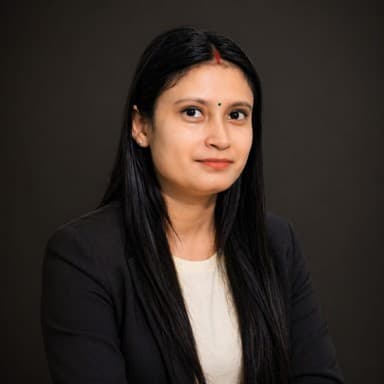
Priyanka Kumari
IB Maths
IB + IGCSE
4rating13 Yrs
Gurugram, All Areas in GurgaonHome / Online / Hybrid
IB Maths TutorIGCSE Maths Tutor
Check availability
Bhondsi, Gurugram (Gurgaon), Haryana
An IB MYP Chemistry home tutor in Bhondsi, Gurgaon typically starts by fixing one specific habit: a student who can describe a reaction accurately but cannot yet explain why it happens, using the scientific reasoning MYP criteria actually reward. Bhondsi sits along the Sohna Road corridor heading south, close to Badshahpur and New Gurgaon, an area with several IB World Schools including GD Goenka World School and Pathways World School, both of which set a demanding pace for MYP 4 and 5 sciences. A tutor working here needs to move a student past descriptive answers into explanation and evaluation, the shift criteria A through D are built around. Online sessions handle concept review well; in-person sessions tend to work better for lab-based reasoning.
School names are shown for local academic context only. IB Gram is an independent tutoring platform and is not affiliated with, endorsed by, or representing any school listed here.
Browse a sample of verified IB and IGCSE tutors for PYP, MYP, DP and IGCSE subjects. Matching considers syllabus fit, HL or SL level, preferred tutoring mode, schedule and the kind of support the student needs.
Explore IB tutor optionsIB Maths
IB + IGCSE

Mathematics
IB + IGCSE

Math AAHL
IB + IGCSE
 Australia
 United States+2 more
Bhondsi and the stretch of Sohna Road running south towards it host a genuine concentration of International Baccalaureate schools, more than most other corridors in Gurugram. GD Goenka World School and Pathways World School both run full IB continuum programmes, which means MYP Chemistry here is taught with an eye already on the Diploma Programme two years ahead, not as a standalone middle-years subject. Matrikiran High School, Suncity School and Excelsior American School round out the local mix, each with its own pace and internal assessment rhythm. A student moving through MYP 4 and 5 at one of these schools is expected to write in criterion language almost from day one, well before the Diploma Programme itself begins.
IB Gram is an independent tutoring platform and is not affiliated with, endorsed by or representing GD Goenka World School, Pathways World School, Matrikiran High School, Suncity School, Excelsior American School or the International Baccalaureate itself; the schools are named here only because a tutor working in Bhondsi needs to know which criteria weighting and internal deadline pattern each one runs on. A tutor who has supported a Pathways World School student through a criterion-D investigation, for example, already knows how that school structures the write-up, which saves real time compared to explaining the format from first principles in session one.
The corridor itself runs from Sohna Road down through Badshahpur and into New Gurgaon, part of Gurugram (Gurgaon) in Haryana, taking in Sector 68, Sector 70 and Sector 72, with a strong residential cluster in societies such as Central Park Flower Valley, Tata Primanti and Vatika City. A home tutor covering Bhondsi typically plans around a longer commute than one working closer to the older parts of the city, since this stretch of Sohna Road can back up badly during evening peak hours. Families in Tata Primanti or Vatika City often prefer a tutor who already lives along this corridor rather than one commuting in from elsewhere in Gurgaon for a single weekly session.
None of this local density guarantees a student will find MYP Chemistry easier here than elsewhere; if anything, schools with a full IB continuum tend to set a faster pace precisely because they are building habits for the Diploma Programme early. The honest limitation is that a tutor unfamiliar with how MYP criteria are actually marked, as opposed to a generic school science tutor, can do more harm than good by teaching content without the criterion-based reasoning the school is actually assessing. Asking a prospective tutor to explain criterion C or D in their own words is a reasonable way to check this before committing.
For most MYP 4 and 5 students in Bhondsi, in-person sessions work better for lab-based reasoning and criterion-D investigation write-ups, while online sessions handle concept review and criteria A and B practice just as well. Neither mode covers the whole picture on its own; the specific criterion being worked on that week should decide the mode, not a fixed preference for one over the other.
A common pattern along this corridor is one in-person session focused on investigation design or lab-report structure, paired with a second online session for reviewing concepts like moles, bonding or reaction rates. This suits Bhondsi's geography reasonably well: an in-person session can be scheduled for a weekend when Sohna Road traffic is lighter, while a midweek online session avoids the commute entirely on an evening when the tutor or student is short on time. Families in Sector 68 or Sector 70 who tried purely online sessions for a full term sometimes find that criterion-D write-ups suffer without at least occasional in-person guidance on structuring the investigation properly.
Online sessions have one specific weak point for this subject: talking through a practical experiment secondhand is not the same as watching a student actually handle equipment, read a burette or record an observation accurately, and criterion-B skills, the ones built around scientific inquiry, are harder to assess remotely. A tutor teaching MYP Chemistry online should lean on data-based questions and specimen eAssessment-style tasks rather than trying to simulate a lab session over video, since the second approach rarely works as well as it sounds.
The practical way to decide is to look at which criterion is currently costing the most marks in school reports. A student weak on criterion C, communicating in scientific language, often improves quickly through structured online writing practice. A student weak on criterion D, applying science, usually needs in-person time working through an actual investigation from question to conclusion. Most families in Bhondsi end up running both criteria in parallel across the two years of MYP 4 and 5, adjusting the balance as school assessments come due.
The jump from MYP 2 and 3 science to MYP 4 and 5 Chemistry is bigger than most students expect. Earlier years reward accurate description: naming a reaction, listing observations, stating a rule. MYP 4 and 5 chemistry criteria expect explanation and evaluation on top of description, asking a student to say why a reaction proceeds the way it does, what the underlying particle-level behaviour is, and where a method's limitations lie. A student who was a strong performer purely on recall in MYP 2 can suddenly find their marks flattening in MYP 4, not because they know less, but because the criteria are now asking a different kind of question.
Criterion D, applying science, is where this shows up most sharply. Designing an investigation, identifying a genuine research question, controlling variables properly and evaluating the method's reliability is a skill most students have not practised deliberately before MYP 4, and a first attempt at a full investigation write-up is often the point where a family first notices the gap. A tutor working on this needs to walk through the structure of an investigation more than once, since getting the hang of a testable research question alone can take several attempts before it clicks.
For students at schools entering MYP 5 eAssessment, an additional pressure appears: the onscreen exam format tests content and scientific inquiry under timed conditions, which is a different skill from the coursework-style criterion tasks students have been used to through MYP 4. Not every school enters students for eAssessment, and this is worth confirming directly with the school rather than assuming, since a tutor preparing a student for a timed onscreen paper needs a noticeably different session plan than one focused purely on ongoing criterion-based coursework.
There is also a straightforward volume issue: MYP 4 and 5 Chemistry typically covers particle theory, elements and compounds, chemical reactions, acids and bases, and often an introduction to stoichiometry, all inside a school year that is also managing other IB subjects with similar coursework demands. A tutor who tries to accelerate content coverage without checking what the student can already explain, not just describe, usually finds that new topics do not stick until the underlying reasoning skill catches up first.
MYP Chemistry sits within the Middle Years Programme (MYP) of the International Baccalaureate (IB), assessed through four criteria: knowing and understanding, investigating patterns, communicating, and applying science, generally labelled A through D. Each criterion is marked on its own achievement scale up to a maximum, and schools convert the combined result into the IB's 1-7 grade scale using published grade descriptors, the same scale families later see again in the Diploma Programme. Bhondsi schools running a full IB continuum, GD Goenka World School and Pathways World School among them, use this same criterion structure consistently from MYP 4 through MYP 5.
Teaching is organised around concept-based units rather than a strict linear syllabus, meaning a single unit on, say, chemical reactions might weave in a global context like scientific innovation or systems, and assessment tasks are built to test understanding within that context rather than isolated fact recall. This is a real adjustment for a student used to a more linear, chapter-by-chapter science syllabus, and a tutor unfamiliar with concept-based planning can end up teaching content correctly while still missing what a specific assessment task is actually asking for.
Students whose schools opt into MYP 5 eAssessment sit an onscreen examination covering content and scientific inquiry skills, alongside an ePortfolio of coursework built up across the two years. Specimen papers published for MYP eAssessment are the closest equivalent to past paper practice available for this subject, and working through them under timed conditions is genuinely useful preparation, closer in spirit to past paper drilling than most MYP coursework tasks allow. A tutor helping with eAssessment prep should be using these specimen materials directly rather than generic chemistry questions that do not match the onscreen format.
Practically, a Bhondsi parent should know that MYP itself does not use an external syllabus code the way IGCSE or A Level subjects do; the criteria and grade boundaries are set centrally by the International Baccalaureate and applied consistently across every IB World School globally, Bhondsi's schools included. The 1-7 grade scale used at MYP is the same scale used later at Diploma Programme level, which is one reason schools here treat MYP 4 and 5 as genuine preparation for the Diploma Programme rather than a separate, lower-stakes phase.
Matching a Bhondsi family with the right IB MYP Chemistry tutor follows a short, repeatable process. First, a parent shares the student's school, current MYP year, and which criterion, A through D, is showing the weakest marks in recent reports. Second, IB Gram shortlists tutors experienced specifically with MYP criteria and the Sohna Road to Bhondsi corridor for home sessions. Third, the parent reviews the shortlist and selects one or two tutors to try. Fourth, a parent-attended demo session covers a real criterion-based task, not a generic chemistry introduction. Fifth, sessions are scheduled around the school's assessment calendar if the fit works; if not, another tutor from the shortlist is offered.
The matching step checks more than whether a tutor knows chemistry. It checks whether the tutor can actually explain MYP's criterion language, since a tutor strong in Diploma Programme or A Level chemistry does not automatically understand how MYP assesses differently, particularly around criterion D investigation design. It also checks whether a tutor is realistically able to reach Bhondsi on a weekday evening without losing significant time to Sohna Road traffic, since a mismatch on logistics undermines even strong subject knowledge over a full term. There are no guaranteed grades from any of this, only a more informed starting point.
The demo session is built to show real teaching, not a sales conversation. A tutor works through roughly twenty minutes of an actual criterion task, for instance sketching how a student might structure a criterion-D research question on reaction rates, with the parent present throughout. Families in Bhondsi who have used this option often say it reveals more about whether a tutor can actually teach MYP-style reasoning, as opposed to just knowing the content, than any written profile or past qualification list could show on its own.
If the first match does not work out, a second tutor is offered without treating it as a setback; MYP Chemistry specifically requires a tutor comfortable with criterion-based marking, and not every experienced chemistry tutor has taught this framework before. Availability for in-person sessions along the Bhondsi corridor can run tighter than for online slots, since fewer tutors cover this stretch of Sohna Road regularly, so families with flexible timing sometimes find it easier to secure a strong match quickly.
GD Goenka World School, Pathways World School, Matrikiran High School, Suncity School and Excelsior American School each run MYP Chemistry on their own internal schedule, and a tutor supporting students from more than one of these schools needs to track each calendar separately. A school running a full IB continuum, such as GD Goenka World School or Pathways World School, tends to introduce criterion-D investigations earlier and with more structure than a school newer to the programme, since staff there have more years of experience calibrating what the criteria expect.
A tutor's role is to reinforce what the school teaches, not to run ahead of it, and this matters more in MYP than in a syllabus-driven board exam subject, since concept-based units can be sequenced differently from school to school even within the same academic year. A tutor who has not checked which global context and unit a student is currently working through risks teaching content the right way but missing the specific lens the assessment task is actually built around, which costs marks even when the chemistry itself is correct.
None of the schools named here have a formal relationship with IB Gram; they are named because they shape the pace and assessment style students bring into a tutoring session, not because of any arrangement between the school and the platform. A tutor referencing how a particular school structures its criterion-D write-up is working from what the family or student has shared, and it is reasonable for a parent to ask a tutor directly where their familiarity with a specific school's approach actually comes from.
As one example, a student at a school that introduces the full investigation process in MYP 4 arrives at MYP 5 with real practice already behind them, while a student at a school that leaves investigation work mostly to MYP 5 is still learning the structure at the same time as content gets harder. A tutor who does not check which situation applies risks either repeating a process the student has already mastered or assuming a familiarity the student does not yet have, and either mistake wastes session time that is genuinely limited across two demanding years.
The first month typically covers a diagnostic review of recent school reports and coursework against the four MYP criteria, a focused push on whichever criterion is weakest, and one practice task, an investigation outline or a specimen eAssessment question, attempted under realistic conditions before the month ends. No four-week period guarantees a grade shift; it is meant to build an honest picture of where the student actually stands criterion by criterion.
Week one usually reviews the student's most recent graded coursework or report card against the criterion descriptors directly, since parents and even students often have a vaguer sense of which criterion is weak than the school reports actually show. Week two works on that specific criterion, using real content the student is currently studying rather than unrelated practice material. Week three, where relevant, introduces investigation design practice for criterion D, since this is the criterion most students need direct coaching on rather than independent study. Week four closes with a practice task done under timed or semi-timed conditions, reviewed against actual criterion descriptors.
Parents sitting in on the demo sometimes expect a visible jump in the next school report within a month; the more realistic expectation is that month one mostly clarifies which criterion needs the most work and whether the student responds well to the tutor's teaching style. Genuine improvement in criterion marks tends to show up over the following school assessment cycle, once the specific gap identified in month one has actually been practised repeatedly rather than simply explained once.
The plan adjusts at the end of the first month based on the practice task's outcome. A student still weak on criterion D gets more structured investigation practice going into month two; a student solid on investigation design but weak on criterion C, communicating using correct scientific language and conventions, shifts toward more focused writing practice instead. This adjustment, rather than a fixed four-week curriculum applied identically to every student, is what the first month is actually for.
There is no single rupee figure that applies across the board, since fees for an IB MYP Chemistry home tutor in Bhondsi depend on the tutor's experience with MYP specifically, session length, and whether sessions run in person, online or as a hybrid mix. What can be said plainly is that in-person sessions along this corridor typically cost more per hour than online ones, largely because of the Sohna Road commute involved.
A few factors move the fee independent of subject knowledge alone: a tutor with genuine MYP criterion experience, as opposed to general school-level chemistry teaching, often charges more, since criterion-based marking is a specific skill many tutors have not been trained in. Sessions supporting eAssessment preparation for MYP 5 can also run at a different rate than standard coursework support, given the more structured, exam-style preparation involved. None of these figures are fixed centrally by IB Gram; they are agreed between the family and the individual tutor once a match is confirmed.
Value is better judged by whether sessions are closing the actual criterion gap than by the hourly rate alone. A lower-cost tutor who teaches chemistry content well but cannot explain how criterion D is actually marked is poor value for a family whose real problem is investigation write-ups, while a higher-cost tutor who works directly from the criterion descriptors and the school's own coursework is better value even at a higher rate. Families in Bhondsi comparing options are better served asking a tutor to walk through how they would mark a sample criterion-D response than comparing rates in isolation.
IB Gram does not publish a fixed price list, since a fair rate depends on the specific tutor's MYP experience and the family's preferred mode and schedule; this is discussed directly once a shortlist is reviewed, subject to tutor availability at the time. Session frequency can be adjusted mid-year, for instance stepping up from weekly to twice-weekly ahead of a major coursework deadline or an eAssessment sitting, without restarting the matching process.
Starting is meant to be straightforward: share the student's school, current MYP year, and which criterion is showing the weakest marks, review a short shortlist of tutors experienced with MYP criteria along the Bhondsi corridor, and sit in on a demo session before agreeing to anything ongoing. Nothing about this first step locks a family into a term-long commitment.
Before reaching out, it helps to have a recent school report or graded coursework task on hand, along with an honest sense of which criterion, knowing and understanding, investigating, communicating or applying science, is currently weakest. A tutor working from this information can plan a genuinely useful first session rather than starting from a generic introduction, which shortens the diagnostic phase considerably.
Timing matters, particularly around major coursework deadlines or an MYP 5 eAssessment sitting if the school has opted in. Starting several months ahead of a big criterion-D submission leaves room for proper investigation practice; starting in the final few weeks before a deadline means moving straight into targeted support on the specific task at hand, which still helps, but leaves less room to build the underlying skill from scratch. A tutor should be upfront about what is realistically achievable in the time actually available.
From there, the process runs at the family's own pace. Some households in Bhondsi start with a single trial session to see whether a tutor's teaching style suits the student; others move straight into a regular weekly pattern based on what worked for an older sibling. Either way, the demo session, not a long conversation about qualifications, is the real point where a parent can judge whether the tutor's approach to MYP criteria actually fits their child.
Online tutoring covers concept review and criteria A and B well, but criterion D investigation work usually benefits from in-person guidance. A tutor covering the Bhondsi and Sohna Road corridor can offer either, and most families settle into a hybrid pattern rather than choosing one mode permanently. The deciding factor should be which criterion is currently weakest: content and communication gaps translate well onto a screen, while investigation design and lab-based reasoning tend to go faster with a tutor physically present. Sohna Road's evening traffic is also worth planning around, since a late in-person session can lose real time to congestion that an online slot avoids.
A second tutor is matched without treating the first attempt as a loss. Subject knowledge and the ability to teach MYP's specific criterion language are not always the same skill, and a tutor strong in one can still be a weak fit for a particular student's pace. Because the demo session is parent-attended, most mismatches become clear before any ongoing commitment begins. If a mismatch only shows up a few sessions in, IB Gram offers another tutor familiar with MYP criteria and the Bhondsi corridor, picking up from wherever the diagnostic work had already reached rather than restarting completely.
Yes, MYP results are reported on the same 1-7 grade scale used later in the Diploma Programme, built from combined marks across the four criteria, knowing and understanding, investigating patterns, communicating, and applying science. No tutoring arrangement can guarantee a specific grade, and this should be treated as a fixed rule rather than a marketing detail. What a tutor can realistically do is target the specific criterion where a student's school reports show the weakest marks, since criterion-specific practice tends to move results more reliably than generic content revision.
No, MYP 5 eAssessment is optional and depends entirely on whether the individual school has opted in; this should be confirmed directly with the school rather than assumed. For students whose schools do use it, preparation should centre on the official specimen papers, since these are the closest equivalent to past paper practice available for this subject, alongside continued work on the ePortfolio coursework built up across MYP 4 and 5. A tutor preparing a student for eAssessment should be using these specimen materials directly rather than generic chemistry questions that do not match the onscreen exam format.
This depends on the individual tutor's base and existing schedule, and is worth confirming directly before committing to a fixed slot. Tutors matched through the Bhondsi corridor generally cover nearby societies including Central Park Flower Valley, Tata Primanti and Vatika City, but weekday evening in-person availability is tighter than online availability, since fewer tutors regularly cover this stretch of Sohna Road. Families further along the corridor sometimes find it practical to start with online sessions and move to in-person once a strong local match with a workable schedule is confirmed.
This usually reflects a shift in what is being assessed rather than a drop in ability. MYP 2 and 3 reward accurate description; MYP 4 and 5 criteria expect explanation and evaluation on top of that, asking why a reaction happens and how reliable a method actually is. A student who scored well purely on recall earlier can see marks flatten simply because the questions are now asking something different. This is common and fixable with targeted criterion-based practice, rather than a sign that the subject has become fundamentally too difficult for the student.
No, and any platform implying a formal arrangement with a specific IB World School should be questioned closely. IB Gram is an independent platform, not affiliated with, endorsed by or representing GD Goenka World School, Pathways World School, Matrikiran High School, Suncity School, Excelsior American School or the International Baccalaureate. Tutors are matched based on demonstrated experience with MYP criteria and familiarity with the Bhondsi corridor, not on any institutional relationship with a particular school. A tutor may have worked with students from these schools before, which is useful practical context, but it is not the same as an official tie-up.
The first step is an honest review of what the month actually covered against the criterion the family and tutor agreed to target at the start. If a practice task at the end of the month still shows the same weaknesses untouched, that signals a change in approach is needed, more structured investigation practice, a different pacing, or occasionally a different tutor, rather than simply continuing the same sessions. No specific outcome is guaranteed within four weeks, and any promise to the contrary should be treated with real scepticism.
Most students manage with one to two sessions a week outside major deadline periods, stepping up to two or three in the weeks before a significant coursework submission or, where applicable, an eAssessment sitting. This is not a fixed rule: a student close to strong marks across all four criteria may need less frequent, more targeted sessions, while a student rebuilding investigation-design skills from a low base may need more concentrated time over a shorter stretch. A tutor should recommend frequency after an initial diagnostic session rather than before seeing where the actual gaps are.
Not automatically, and this is worth checking directly. Strong subject knowledge transfers well, but MYP assessment works through four specific criteria, particularly criterion D's investigation design, which differs meaningfully from how Diploma Programme or A Level chemistry is assessed. A tutor experienced only in later-stage IB or board exams may need to adjust their teaching approach to MYP's concept-based, criterion-referenced style, and it is reasonable to ask a prospective tutor directly how familiar they are with MYP criteria specifically before assuming their broader chemistry background covers this.
Yes, and starting mid-year is common, particularly once a school report has already flagged a specific weak criterion. A tutor picking up mid-year usually begins with a quicker diagnostic than a fresh MYP 4 start, since recent coursework and reports already show where the gaps are, and moves faster into targeted practice on the specific criterion or, where relevant, eAssessment preparation. The main adjustment is pacing: a mid-year start compresses the timeline before major deadlines, so sessions may need to run more frequently than they would starting a full year out.
If Bhondsi's Sohna Road commute, MYP's criterion-D investigations or a recent school report are the reason you are reading this, the next step is small: share your child's school, MYP year and weakest criterion, review a short shortlist of tutors familiar with this corridor, and sit in on one parent-attended demo session before deciding anything further, subject to tutor availability.
Book a free academic consultation