Compare
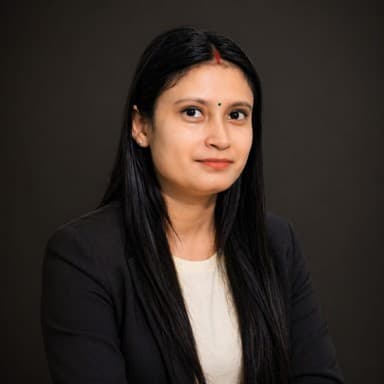
Priyanka Kumari
IB Maths
IB + IGCSE
4rating13 Yrs
Gurugram, All Areas in GurgaonHome / Online / Hybrid
IB Maths TutorIGCSE Maths Tutor
Check availability
Gurgaon
When a Golf Course Road family's DP2 Economics teacher offers to tutor their own son after school, most parents pause. IB Gram verifies and matches an independent IB and IGCSE private tutor for Gurgaon families instead, with home, online or hybrid lessons and no connection to the student's own school.
Matched by programme, subject, level, weak areas and your school's calendar.
Math AA, Math AI, Physics, Chemistry, Economics, English and more, to the current syllabus.
Online worldwide around school hours, with home and hybrid options where tutors are local.
Clear updates on what was covered, what needs practice and the next step.
School names are shown for local academic context only. IB Gram is an independent tutoring platform and is not affiliated with, endorsed by, or representing any school listed here.
An IB and IGCSE private tutor in Gurgaon is one specific, verified person working with your child outside school, not a class or a batch, and the question this page answers is how that person is chosen, checked and kept separate from any conflict of interest your child's own school might create. Home tuition remains IB Gram's usual way of delivering this: a private home tutor teaches at your child's own desk, gets to know how your child actually works, and reports back to you directly. Families in Gurgaon often reach this page after their child's own subject teacher has offered private lessons, wanting to compare that familiar option against an outside tutor with no classroom relationship to manage, whether delivered at home, online or as a hybrid mix.
A parent calling about a private tutor rarely leads with a syllabus code; they lead with a person: someone their child will sit across a table from twice a week for months, so trust and chemistry matter as much as subject knowledge. Nothing about choosing an IB and IGCSE private tutor in Gurgaon should feel like picking from a catalogue; it should feel like meeting a specific person. IB Gram's first conversation asks about both sides of that: the board, syllabus and level on one hand, and on the other, what kind of person tends to work well with this particular child, whether that is someone patient and slow-paced or someone who pushes harder. The process that follows is deliberately short. 1. Tell IB Gram the board, syllabus, level, school calendar and the kind of tutor personality your child responds to. 2. Receive a shortlist of verified, independent tutors matched on both the syllabus and, as closely as possible, that personal fit. 3. Meet the tutor properly at a free demo or trial session before any ongoing commitment is made. If the subject knowledge is right but the person is wrong, that shows up fast in a trial lesson, and IB Gram treats a request to see someone else as completely normal. What you are ultimately choosing is not a service but a specific individual your child will work with regularly, and getting that choice right matters more than any single syllabus detail.
Describe both the syllabus needs and the kind of tutor personality that suits your child.
Receive a shortlist matched on subject fit and, where possible, personal style.
Meet the tutor at a free demo session before committing to anything.
Ask for someone different if the personal fit is not right, even with strong subject knowledge.
Keep the same tutor across terms once the fit is confirmed, or change it if not.
Browse a sample of verified IB and IGCSE tutors for PYP, MYP, DP and IGCSE subjects. Matching considers syllabus fit, HL or SL level, preferred tutoring mode, schedule and the kind of support the student needs.
Explore IB tutor optionsIB Maths
IB + IGCSE

Mathematics
IB + IGCSE

Math AAHL
IB + IGCSE
 Australia
 United States+2 more
A single private tutor covering the International Baccalaureate (IB) Diploma Programme (DP) has to hold the whole two-year picture in mind: DP1 and DP2, six subjects from six groups, three or four at Higher Level (HL, 240 recommended teaching hours) and the rest at Standard Level (SL, 150 hours), each graded 1 to 7, with Theory of Knowledge (TOK) and the Extended Essay (EE) adding up to 3 more points toward a 45-point maximum and a 24-point minimum, alongside Creativity, Activity, Service (CAS). Most private tutors specialise in one or two subjects rather than the whole DP, so a family often ends up with more than one private tutor across the six subjects, each chosen individually rather than as a package. The Middle Years Programme (MYP), running five years across MYP 1 to 5 and eight subject groups, assesses every subject against four criteria, A to D, each out of 8, with the total out of 32 converting to a final 1 to 7 grade. A private tutor working with a younger MYP student, ahead of the Personal Project in MYP 5 or the Community Project in MYP 3 or 4, is often as much about building consistent study habits as about any one subject, since the habits formed here carry into DP. Cambridge IGCSE (Cambridge International Education) and Pearson Edexcel International GCSE typically run across Grades 9 and 10 ahead of the DP, A Levels, or a return to CBSE or ISC. An IGCSE to IB DP transition tutor, as families often describe the search, is really asking for one person who can carry a student credibly across that boundary; it happens, but most families end up choosing an IGCSE specialist and a separate DP specialist, the kind of international board tutor in Gurugram families look for once the stage actually changes.
Most private tutors specialise in one or two DP subjects, not all six.
MYP: four criteria per subject, A to D, each out of 8, converting to 1 to 7.
A private tutor for a younger MYP student also builds study habits, not just content.
IGCSE runs Grades 9-10 before the DP, A Levels, CBSE or ISC.
Few tutors credibly carry a student across both IGCSE and the DP; plan for two.
A single, dedicated private tutor helps most in subjects where consistency over months matters more than a one-off explanation: Maths and the Sciences, where each topic builds directly on the last, and any subject with a long-running Internal Assessment (IA) or coursework piece that needs the same person tracking its progress from first draft to final submission. Language subjects benefit in a different way: a private tutor who has worked with a student for a full year notices small, specific patterns, a habit of over-explaining in Written Assignments or an unusually strong grasp of literary technique but a weak structure, that a new tutor meeting the student for the first time simply cannot see yet. This is the real argument for keeping the same private tutor across a full academic year where possible, rather than treating tutoring as a series of unconnected sessions. For DP subjects with a substantial IA, one private tutor following the work from topic selection through to the final draft can flag a weak research question early, months before the deadline makes it a genuine problem, while keeping the actual data collection and analysis clearly the student's own under the IB's academic integrity rules. A tutor who has taught the same student for a year also tends to know, almost instinctively, which command term the student consistently misreads, which is the kind of detail that only shows up over time, not in a single session. None of this happens in a single trial lesson; it builds gradually, session by session, which is the real case for choosing one dedicated private tutor rather than rotating between whoever is available that week.
Maths and Sciences build topic on topic; continuity with one tutor compounds over time.
A long-running IA or coursework piece benefits from one tutor tracking it start to finish.
A tutor working with a student for a year spots patterns a new tutor cannot yet.
Keeping the same private tutor across a year beats restarting each term with someone new.
A familiar tutor knows which command term a specific student consistently misreads.
Sohna Road, taking in Sector 47, Sector 48, Sector 49, Sector 50, Nirvana Country, South City 2, Rosewood City, Uppal Southend, Vatika Chowk and Badshahpur, along with societies such as Central Park Resorts, Orchid Petals, Vatika City, Malibu Towne, Vipul Greens and The Close, stretches a long way from the older parts of Gurgaon, and a private home tutor covering this corridor is often based somewhere along the same road rather than commuting the full length of the city each evening. DLF Phases 2 to 4, MG Road and Cyber City, including Sikanderpur, Chakkarpur, Sector 24, Sector 27 and Sector 28, plus societies such as DLF Beverly Park, Heritage City, DLF Hamilton Court, DLF Regency Park, DLF Richmond Park and Ambience Caitriona, sit close to Gurgaon's commercial core, where evening office traffic peaks earlier than in residential-only corridors; a private tutor here often prefers a slightly later slot, after 7 pm, once the worst of the commercial traffic has cleared. Sushant Lok 1, Sushant Lok 2, South City 1, Sector 29, Sector 40, Sector 45, Sector 46 and Greenwood City sit centrally and are well served by private tutors, which usually means more choice of individual tutor for a family here than in a newer or more distant corridor, and less pressure to compromise on personal fit just to secure someone who can reach the sector reliably. A family in this corridor comparing two or three shortlisted tutors after a trial session is a genuinely common situation, precisely because the choice of individual tutor is wider here than almost anywhere else in Gurgaon.
Sohna Road: Sectors 47-50, Nirvana Country, South City 2, Rosewood City, Uppal Southend, Badshahpur.
Central Park Resorts, Orchid Petals, Vatika City, Malibu Towne, Vipul Greens, The Close sit along Sohna Road.
DLF Phases 2-4, MG Road, Cyber City, Sikanderpur, Chakkarpur, Sectors 24, 27, 28.
DLF Beverly Park, Heritage City, Hamilton Court, Regency Park, Richmond Park, Ambience Caitriona near Cyber City.
Sushant Lok and South City 1 offer the widest choice of individual private tutors.
IB Gram is an independent platform and is not affiliated with any school named here, the International Baccalaureate, Cambridge International Education or Pearson Edexcel; schools are mentioned only to describe the calendar a private tutor has to work around, not to claim any relationship. A private home tutor working with a student at Pathways World School Aravali, Pathways School Gurgaon, Lancers International School, Scottish High International School, GD Goenka World School, Heritage Xperiential Learning School, The Shri Ram School Aravali or DPS International Edge needs to know that school's actual dates for unit tests, parent-teacher meetings and mock examinations, not a generic academic year, since most Gurgaon IB schools sit the May exam session with results released in early July. A good private tutor asks for these dates directly in the first conversation, and adjusts the session plan around them rather than teaching to a fixed template regardless of what the school is doing that week. Each school sets its own DP2 mock examination dates, usually months ahead of May, and a private tutor who has not asked about them is effectively guessing at when to intensify revision. The tutor should also understand, without being told twice, that a student juggling CAS, sports fixtures, a Personal Project deadline and a full school day has limited bandwidth, and a private tutor who pushes an ambitious plan regardless of that reality is doing the student a disservice, however well-intentioned the effort. Asking about the school calendar in the very first conversation, rather than after the first missed deadline, is one of the simplest signs a private tutor is paying attention.
IB Gram is not affiliated with any school, the IB, Cambridge International Education or Pearson Edexcel.
A private tutor should ask for the school's actual test and mock dates directly.
Most Gurgaon IB schools sit the May session; results are released in early July.
DP2 mock dates are set individually by each school, usually months ahead.
A tutor should recognise a student's limited bandwidth rather than pushing a fixed plan.
A home tutor remains IB Gram's most common private arrangement: one verified person who comes to your house, sits with your child at their own desk, and gets to know their handwriting, their pace and their habits over repeated sessions. For most families choosing a private tutor for the first time, a home tutor is the natural starting point, since it is the format that makes the personal relationship, which matters so much in a one-to-one arrangement, easiest to build. An online private tutor makes sense once a family has identified a specific specialist who does not live close enough to visit, or once the relationship with a home tutor is already established and a second, harder-to-find specialist needs to be added for one subject. The personal dynamic that matters in a home arrangement, trust, consistency, a tutor who notices when a student is having an off day, works just as well over video once the pair has met properly at least once. Hybrid tuition, splitting time between a home tutor for one subject and an online tutor for another, suits a family managing more than one private tutor at once, each chosen individually for their own subject specialism. The honest trade-off is that a family juggling two tutors in two formats has to manage two separate relationships and two separate schedules, which asks more of a parent's coordination than a single home tutor covering everything would. Most families only take on that extra coordination once they have already found one tutor they trust and simply need a second specialist for a subject the first cannot cover.
Home tutor: the easiest format for building a genuine personal relationship.
Online tutor: reaches a specific specialist regardless of distance, once trust is established.
Hybrid: a home tutor for one subject, an online specialist for another.
Managing two tutors in two formats asks more of a parent's coordination.
A first private tutor arrangement usually starts at home, then adapts as needed.
An independent private tutor suits a family that wants a dedicated relationship with one verified person and no conflict of interest; the school teacher's own classes suit convenience where a school allows it; a coaching batch suits a tight budget; a small group suits a student who enjoys peer discussion. The trade-off that decides it is usually a personal, one-to-one relationship against convenience or cost.
| What matters | Independent private tutor | Own school teacher's classes | Coaching centre batch | Small group of 3-4 students |
|---|---|---|---|---|
| Personal relationship with the tutor | A dedicated, ongoing relationship with one chosen, verified individual. | A relationship that already exists, but bound by a classroom dynamic too. | Little personal relationship; the batch instructor changes or rotates. | A shared relationship split across three or four students. |
| Syllabus fit (HL/SL, MYP criteria, IGCSE tiers) | Chosen specifically for the exact HL, SL, MYP criterion or IGCSE tier. | Already familiar with the school's own scheme of work and tier. | Built for a general syllabus, not tailored to one board or tier. | Fits if the group shares the syllabus and tier; weaker otherwise. |
| Travel and time in Gurgaon | Tutor travels to the family or meets online; timing set by agreement. | No extra travel; timing fits around the teacher's own school hours. | Family travels to a fixed centre at a fixed time. | Travel or online depending on where the small group meets. |
| Consistency across a full year | The same person tracks progress from term to term, if the family keeps them. | Consistent by default, tied to how long the teacher stays at the school. | Often inconsistent; instructors or batch composition can change mid-year. | Consistent only if the same group of students stays together. |
| Coursework or IA help within academic integrity rules | One tutor follows a piece of work from topic choice to final draft. | The same person also grades the work; a genuine conflict of interest. | Rarely individual enough to track one student's IA closely. | Some individual tracking, shared across the group's time. |
| Feedback to parents | Direct, personal updates from the one tutor who knows the student well. | Feedback tends to blend into normal school reporting. | Periodic, centre-level reports, less personal. | Feedback shared but more individual than a full batch. |
| How the tutor or teacher is chosen and checked | Chosen individually by the family, verified before the first meeting. | Already employed by the school; the family does not choose them. | Employed by the centre; rarely chosen by an individual family. | Chosen once, individually, for the whole small group. |
| Trial before committing | A free demo session to judge both competence and personal fit. | Rarely a formal trial; often begins as an informal favour. | Sometimes a single trial class, centre-dependent. | A shared trial session with the rest of the group. |
| Cost structure | Priced for a dedicated, ongoing one-to-one relationship. | Often the least additional cost if a teacher offers it informally. | Usually the lowest cost per hour of the options here. | Costs less per student than one-to-one, more than a large batch. |
| Who it suits best | A family that wants a dedicated relationship with one chosen person. | A family comfortable with the convenience, where school policy allows it. | A student who wants structured, affordable practice. | A student who works well alongside a couple of peers. |
Every private tutor on IB Gram's shortlist has a verified profile before a family ever hears their name: board and syllabus experience checked against what is claimed, the level and subjects confirmed, and a direct conversation about how they actually teach a one-to-one session, not just a list of qualifications. Because a private tutor works alone with one child, repeatedly, this check matters more here than in a group or classroom setting, and IB Gram treats it accordingly. Parents are encouraged to ask their own questions too: which specific syllabus codes has the tutor taught in the last year, how would they describe their teaching style in their own words, and are they comfortable putting the schedule, confidentiality and cancellation terms in writing rather than as a loose verbal understanding. A tutor's answer to 'what would you do in the first session with a student you have not met' often reveals more than a list of credentials. The free demo or trial session is where a family actually meets this specific person, watches how they explain something the child does not yet understand, and judges tone as much as competence. If the personal fit feels wrong even when the subject knowledge is strong, say so; IB Gram treats a request to try someone else as routine, since the relationship between one tutor and one child is the entire point of going private. This verification happens once, before you ever see a name, so the shortlist you receive has already cleared the basic checks rather than leaving you to do that work yourself.
Board, syllabus and level checked against what the tutor claims before shortlisting.
Ask how the tutor would approach a first session with a student they have not met.
Request schedule, confidentiality and cancellation terms confirmed in writing.
A free demo session lets you judge tone and manner, not just competence.
A request to try a different tutor is treated as routine, not a complaint.
Usually not, and the reason is structural rather than personal: a teacher who privately tutors their own student is also the person setting classwork, marking it, and often contributing to an internal predicted grade for that same student, which creates a conflict of interest no amount of good intention fully removes. This matters most in the moments that count. If a student is struggling and needs to say so honestly, they may hesitate to admit confusion to the same person who will later grade their work in class, which is exactly the honesty a private tutor most needs to hear. An independent private tutor, meeting the student only in the tutoring relationship, has no such conflict, and a student is often more candid with someone entirely outside the school system. Some schools explicitly prohibit staff from privately tutoring their own students for this reason, so it is worth checking your child's school policy before assuming a teacher's offer is straightforwardly acceptable. An outside private tutor should still be mapped closely to the school's own scheme of work, not working from a generic syllabus order, and the way to do this is to ask, through the student or the school directly where allowed, what topics and assessments are coming up next. A good private tutor asks this routinely rather than once at the start, since a scheme of work shifts as a term progresses. What a student says in a private session, including what they find hard or embarrassing, should stay between the family and the tutor; a private tutor who casually mentions a student's struggles outside that relationship, even to be helpful, has broken something that is hard to rebuild.
A teacher tutoring their own student privately creates a structural conflict of interest.
A student may hesitate to admit confusion to the same person who grades their work.
Check your child's school policy on staff privately tutoring their own students.
Ask routinely what the school is covering next, not just once at the start.
What is said in a private session should stay strictly between family and tutor.
Within the first month, a right-fit private tutor should be visible in specific, ordinary ways: the student mentions the tutor by name without being prompted, asks a question between sessions that shows they have actually been thinking about the subject, and completes homework without a daily reminder. A written note after each session, naming what was actually covered, is a simple but reliable sign that the relationship is functioning properly rather than just occupying an evening slot. Fit is not only about subject competence. A private tutor who is technically excellent but whose manner does not suit your child, too impatient for a nervous student, too slow-paced for a confident one, will not produce results, however strong their syllabus knowledge is on paper. There is no verifiable 'best' IB and IGCSE private tutor in Gurgaon, only the person whose manner and syllabus experience actually fit your child; if a month of sessions has produced no named, specific improvement and the student seems no more comfortable with the tutor than on day one, it is worth asking for someone different rather than assuming more time alone will fix a personality mismatch. No private tutor, however good, can guarantee a grade, and any private tutor who implies otherwise should be treated with real suspicion. Starting a private arrangement close to an exam session narrows what a new tutor can realistically achieve before results day, and an honest tutor says this plainly rather than promising a rescue in a few weeks. The relationship between one tutor and one student, sustained over months, is what makes private tutoring valuable; a family that keeps switching tutors every few weeks rarely gets that benefit.
The student should mention the tutor by name and ask questions between sessions unprompted.
A written note after each session should name what was actually covered.
Subject competence alone does not guarantee fit; manner and pace matter too.
No private tutor can guarantee a grade; treat any promise of one with suspicion.
Frequent switching prevents the relationship benefit that makes private tutoring valuable.
Getting started takes one conversation. Whether your family is weighing an IB and IGCSE private tutor in Gurgaon against your child's own teacher's offer, or simply starting fresh, send a query or book a free consultation and share your child's board, syllabus code if known, current level, the school's calendar for the term ahead, and what kind of tutor personality tends to work well with your child. The first session is best treated as a genuine introduction rather than a lesson in the usual sense: expect the tutor to spend real time getting to know how your child thinks and works, alongside a short piece of actual work, whether a past paper question or a recent essay, so the match can be judged properly. Bring a recent test or piece of marked work if you have one; it helps the tutor start from something concrete rather than a blank slate. After the trial, agree the schedule, cancellation notice and confidentiality terms in writing before the first paid session. Availability for a specific subject, level and corridor is always subject to tutor availability, particularly close to the May exam session, and whether your search is for a tutor in Gurgaon or specifically in Gurugram (Gurgaon), Haryana, IB Gram draws from the same verified, independent pool either way. Starting the conversation early, even a few weeks before you think you need it, gives IB Gram more room to find someone whose subject experience and manner genuinely suit your child, rather than whoever happens to be free that particular week.
Share the board, syllabus code, level, school calendar and tutor personality that suits your child.
The first session is an introduction; bring a recent test or marked work if you have one.
Agree schedule, cancellation notice and confidentiality terms in writing before paying.
Nothing is booked before a free demo or trial session.
Availability depends on subject, level and corridor, especially near the May session.
IB Gram is an independent tutoring platform and is not officially affiliated with any school named on this page, the International Baccalaureate, Cambridge International Education or Pearson Edexcel.
Yes, structurally, even when the teacher's intentions are good, because the same person setting and marking your child's classwork is also being paid privately by your family, which can make it harder for a student to admit confusion honestly. Some schools have explicit policies against staff privately tutoring their own students for exactly this reason, so it is worth checking before assuming the offer is straightforward. An independent private tutor with no classroom relationship to your child removes this conflict entirely, and many families find their child is more candid with someone entirely outside the school system.
IB Gram verifies board and syllabus experience against what a tutor claims, confirms the level and subjects they say they can teach, and has a direct conversation about how they run a one-to-one session before ever shortlisting them to a family. Because a private tutor works alone, repeatedly, with one child, this check is treated more carefully than for a group setting, and it happens before you ever see a profile. You are also encouraged to ask your own questions at the free demo, including how the tutor would approach a first session with a student they have never met.
Say so, and IB Gram will shortlist someone else; personal fit is treated as seriously as subject knowledge, since a private tutor who is technically excellent but whose manner clashes with your child rarely produces good results. This is one reason the free demo session matters so much: it shows tone, pace and manner, not just competence, and a mismatch usually becomes obvious within that first meeting. Switching tutors after a poor fit costs a short conversation, not a restart of the whole matching process, since your child's board, syllabus and level are already on file.
Where possible, yes, because a tutor who has worked with a student for a full year notices specific patterns, a recurring weak command term or a strength that could be built on, that a new tutor meeting the child for the first time cannot yet see. Even so, a change is sometimes the right call: if the fit was never quite right, or if the student is moving from IGCSE to the DP and the syllabus demands a different specialist, switching is entirely reasonable. Continuity is valuable, not compulsory, and IB Gram supports either choice depending on what your family actually needs.
Cost depends on the subject, the level, whether sessions run at home or online, and how many sessions a week your family needs, so IB Gram will not quote a figure without understanding those details first during your consultation. A dedicated one-to-one private tutor is generally priced to reflect that ongoing, individual relationship rather than shared time, and the exact structure is confirmed with you directly before anything is booked. Availability for a specific subject, level and tutor personality is always subject to tutor availability, particularly close to the May exam session when demand rises.
Many private tutors covering Sohna Road, including Sector 47 to 50, Nirvana Country, South City 2 and Rosewood City, are based somewhere along the same stretch, so a weekly evening slot here is generally reliable once the tutor's own base is factored into matching. Societies such as Central Park Resorts, Vatika City and Malibu Towne sit within this same corridor, and IB Gram asks specifically where a family lives before shortlisting so the tutor's realistic travel radius is already accounted for, not discovered after the first missed session. If a slot does slip because of Sohna Road traffic, moving that one week online is a simple fix.
Generally yes, but expect the tutor to prefer a slightly later slot, since evening office traffic around MG Road and Cyber City peaks earlier than in residential-only corridors and a 6 pm slot can be harder to hold reliably than one starting closer to 7 pm. Sikanderpur, Chakkarpur and the sectors around DLF Phase 2 to 4 are otherwise well connected, and most tutors already covering this area can offer decent slot choice. If your family needs an earlier slot specifically, say so during matching, since it narrows the shortlist to tutors who have confirmed they can make that timing work.
Not necessarily; it depends on your child's age and what feels right for your family, though IB Gram generally suggests a parent or responsible adult being reachable in the house for at least the first few sessions while trust between tutor and student is still forming. Older DP students in particular often work better without a parent present once the relationship is established, while a younger MYP student may need someone nearby a little longer. This is worth agreeing directly with the tutor early on, alongside the schedule and confidentiality expectations, rather than assuming either way by default.
It is rescheduled by direct agreement with the tutor, the same as any private appointment, and reasonable cancellation notice, ideally agreed in writing when the arrangement starts, protects both sides from last-minute confusion. If sessions keep getting missed because of a clash with school activities or travel, it is worth revisiting the weekly slot itself with the tutor rather than continuously rescheduling around a timing that no longer fits. IB Gram can help adjust the arrangement, including changing the weekly day or moving a session online, if the original plan stops being realistic for either side.
Two sessions a week is the usual starting point for most subjects, rising to three during exam years or once a subject has fallen behind school pace, and dropping to one for lighter, revision-focused support. A DP HL subject with 240 recommended teaching hours over two years generally needs a steadier rhythm than an SL subject at 150 hours, and the right frequency is something your private tutor should actively revisit as the term develops, not fix once and leave unchanged. Raise it directly with the tutor if the current frequency feels too light or too heavy for where your child actually is.
It can work for a student who mainly needs structured, affordable practice and does not need close, individual attention, but it is not really a substitute for a private tutor if your child needs someone tracking their specific gaps, an IA draft or a particular command term over months. A batch built for CBSE, JEE or NEET in particular tends to fit IB or IGCSE syllabuses poorly, since the pacing and question style are simply different. If a batch has been tried and the student is still stuck on the same specific issue after a term, a dedicated private tutor is usually the more direct next step.
Send a query or book a free consultation and share your child's board, syllabus, level, school calendar and the kind of tutor personality that suits them. IB Gram will shortlist verified, independent tutors, arrange a free demo before anything is booked, and confirm schedule and confidentiality terms in writing. Ask for a different tutor at any point if the personal fit is not right.
Book a Free Consultation