Compare
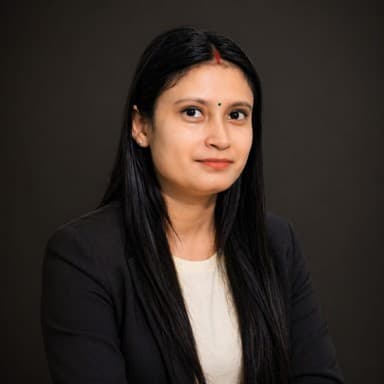
Priyanka Kumari
IB Maths
IB + IGCSE
4rating13 Yrs
Gurugram, All Areas in GurgaonHome / Online / Hybrid
IB Maths TutorIGCSE Maths Tutor
Check availability
Nirvana Country, Gurugram (Gurgaon), Haryana
Whether you need an IB DP Physics home tutor in Nirvana Country starting this week, this month, or from the new term, changes what we would actually suggest. A student six weeks from a Paper 3 IA deadline needs someone who can triage fast; a student starting DP 1 this term has time to build proper habits in mechanics and fields before they become the two topics that quietly cost the most marks by Year 2. Families around Nirvana Country, South Close and Unitech Fresco tend to call us at very different points in that timeline, and the right tutor match depends on which one you are actually in. IB Gram matches Gurugram families with DP Physics tutors based on that timeline, not a one-size profile.
School names are shown for local academic context only. IB Gram is an independent tutoring platform and is not affiliated with, endorsed by, or representing any school listed here.
Browse a sample of verified IB and IGCSE tutors for PYP, MYP, DP and IGCSE subjects. Matching considers syllabus fit, HL or SL level, preferred tutoring mode, schedule and the kind of support the student needs.
Explore IB tutor optionsIB Maths
IB + IGCSE

Mathematics
IB + IGCSE
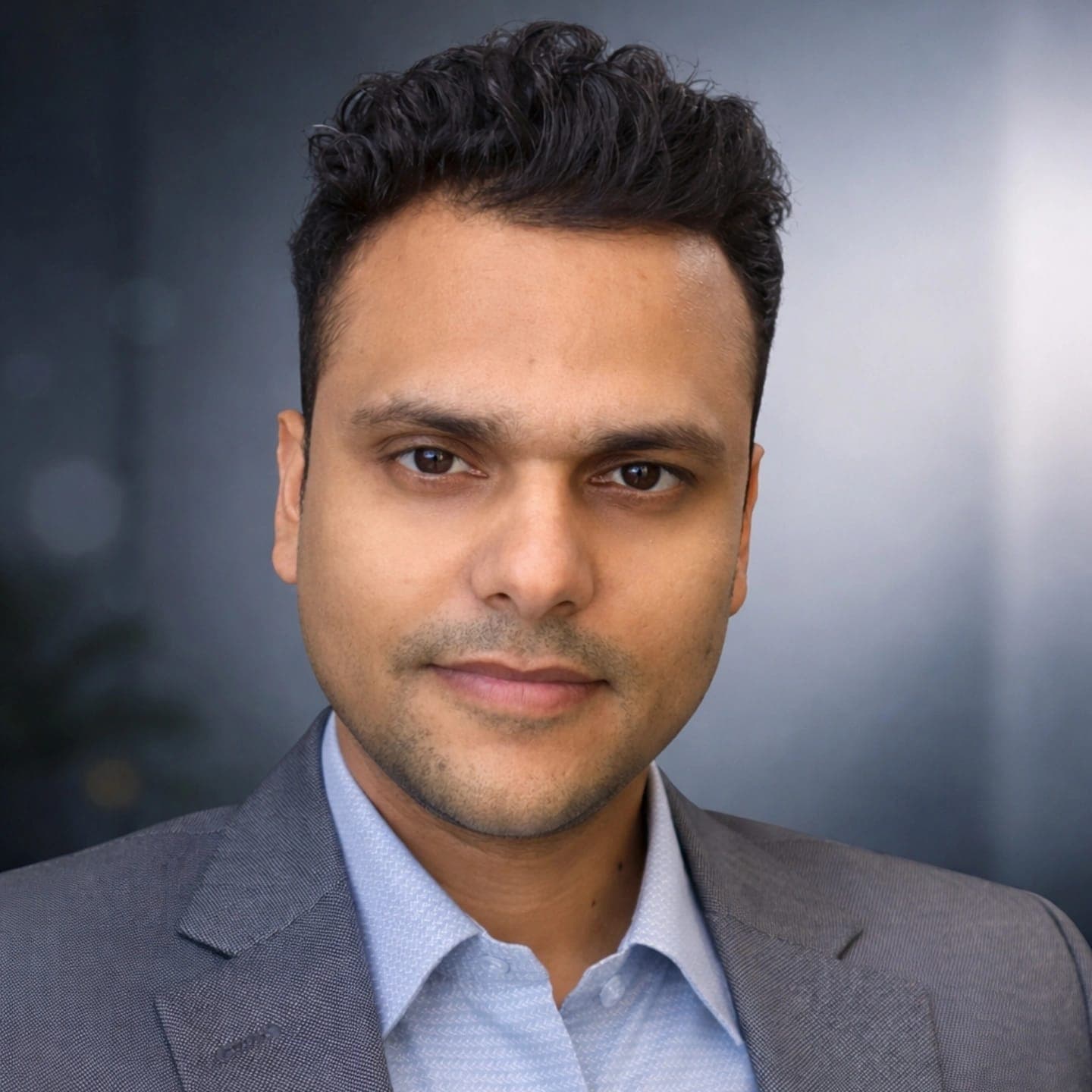
Math AAHL
IB + IGCSE
 Australia
 United States+2 more
IB Gram matches an International Baccalaureate (IB) Diploma Programme (DP) Physics tutor in Nirvana Country by asking three things in order: what is actually due and when, where the specific topic gaps sit, and which tutors have recent DP Physics experience in that exact gap, before ever sending a profile. We start every match with one question that sounds simple but changes everything downstream: what is due, and when? A parent calling in October with an IA draft due in three weeks needs a very different tutor conversation than one calling in April thinking ahead to DP 1 starting in August. Matching on timeline first, subject content second, is the single biggest thing we do differently from a generic tuition listing.
Once we know the timeline, we ask where the gaps actually sit, mechanics, fields, the Scientific Investigation writeup, error propagation, or general exam technique under Paper 1B's multiple-choice pressure. We then suggest tutors whose recent DP Physics work has specifically included the weak area, rather than a general physics tutor who happens to also teach IB. That distinction shows up quickly in how a tutor talks about uncertainty budgets in a first conversation.
You see two or three suggested profiles with a short, specific reason for each, not a long list to sift through yourself. Tutor availability depends on level, subject and your preferred schedule, and we review it honestly against your actual timeline rather than promising a slot that does not really exist.
A frequent Nirvana Country scenario: a parent hears from a neighbour in South Close that DP2 mocks happen in November and assumes the same date applies to their own child, only to find their child's school actually schedules mocks in January. Borrowing someone else's deadline like this wastes exactly the weeks that would matter most for a tailored plan, so during matching we always confirm the actual mock date and IA submission window directly from the family rather than assuming a corridor-wide calendar. Two families a few gates apart in this belt can be working against entirely different school timetables.
Nirvana Country itself, part of Gurugram (Gurgaon), Haryana, is a large, internally quiet residential cluster, which makes it genuinely pleasant for a tutor to hold a fixed evening slot once they know the layout, unlike some denser parts of the city where every visit fights traffic. South Close and Unitech Fresco sit close enough that most tutors serving one comfortably serve the other on the same evening, back to back if timing allows.
The bigger variable is getting into the area at all during peak hours, since access from Sohna Road and Golf Course Extension Road can back up badly between 6 and 8 pm on weekdays, exactly the window most DP students want their session. Families who can offer a slightly earlier slot, right after school before the evening jam sets in, tend to get more consistent tutor timing than those insisting on 7 pm sharp.
For students juggling a heavy DP2 course load alongside a South City 2 or Sector 49-52 school run, we usually suggest fixing the physics session on a specific weekday rather than rotating it, since rescheduling around this corridor's traffic gets harder the more last-minute it is.
A detail families rarely mention upfront: several gated sections within Nirvana Country and neighbouring South Close run their own visitor sign-in process at the main gate, which can add five to ten minutes to a tutor's arrival time beyond the drive itself, especially during a security shift change around 6 pm. A tutor allotted a tight one-hour session immediately after this kind of gate delay effectively loses a meaningful chunk of teaching time before the pen even touches paper. Flagging the specific tower or block name when requesting a home session, rather than just the society name, helps a tutor plan the gate walk into their actual arrival estimate.
DP Physics is organised across Themes A to E, space, time and motion; the particulate nature of matter; wave behaviour; fields; and nuclear and quantum physics, with Higher Level (HL) students covering additional depth within several of these themes rather than entirely separate topics. Paper 1 splits into 1A, multiple-choice on core content, and 1B, data-based questions that test whether a student can actually apply theory to an unfamiliar experimental setup rather than recall it.
Paper 2 is extended-response across the whole syllabus and tends to be where strong conceptual students separate from students who have only memorised formulae, since it rewards showing full reasoning under time pressure. HL students sit an additional Paper 3, covering the options and deeper theme content, which needs its own dedicated revision time rather than being treated as an extension of Paper 2 preparation.
Running alongside all three papers is the internally assessed Scientific Investigation, DP Physics's Internal Assessment (IA), worth a meaningful share of the final grade, which asks a student to design, carry out and evaluate their own experiment with proper treatment of uncertainties and error propagation throughout. Students who treat uncertainty as an afterthought, tacked onto the end of a writeup, consistently lose marks that solid experimental technique elsewhere in the report cannot recover.
Take a Paper 1B stimulus built around a diffraction pattern from a double-slit setup: the question gives measured fringe spacing with a stated instrument resolution and asks a student to propagate that resolution into an uncertainty on the calculated wavelength. A student who can state the double-slit formula correctly but has never practised carrying an instrument's resolution through a rearranged equation loses marks on the propagation step alone, not on understanding the wave physics. This exact pattern, physics understood, propagation skipped, shows up across wave, mechanics and electricity stimuli throughout Paper 1B, which is why it is worth isolating and drilling as its own short unit rather than re-explaining wave theory each time it resurfaces.
Home sessions give the closest supervision for early IA design and diagram-heavy topics but cost more and compete with this corridor's peak-hour traffic; online sessions are cheaper, traffic-proof, and work fine for Paper 1 and Paper 2 revision but are weaker for catching hand-drawn diagram habits; most Nirvana Country families settle on a hybrid, home for IA and circuits, online for the rest of the term. For lab-heavy IA work, we generally recommend at least the early sessions be in person, since talking through apparatus choice and uncertainty sources works better face to face than over a shared screen, particularly when a student is still deciding on a research question. Nirvana Country's relatively easy internal roads make home visits practical once a tutor is past that first-visit learning curve.
For pure content revision, Paper 1 and Paper 2 past paper practice especially, online sessions work just as well and remove the corridor's peak-hour access problem entirely. A DP2 student balancing multiple subjects often finds online sessions easier to slot into a tight week than committing to a fixed travel-dependent evening.
Our honest view for most Nirvana Country families: home sessions for IA design and the first few investigation sessions, online for the bulk of ongoing content revision once the IA direction is settled. Insisting on home sessions for the entire year, given the access constraints during peak hours, often costs more in reliability than it gains in convenience.
The clearest practical difference shows up in circuit and field-line diagrams: a tutor sketching a circuit by hand next to a student, then asking them to redraw it themselves with corrections in real time, catches wiring and labelling habits that a screen-shared diagram, drawn once by the tutor and looked at rather than redrawn, does not surface in the same way. For Nirvana Country families choosing between modes for a student weak specifically in fields or circuits, this argues for at least the early sessions on this topic being in person, even if the rest of the term runs online for efficiency.
Mechanics is where the largest single chunk of avoidable marks disappears at Standard Level (SL), not because the concepts are unusually hard but because questions routinely combine several ideas, projectile motion with energy conservation, or circular motion with a real-world friction scenario, and students who learned each idea in isolation struggle to recognise the combination under exam conditions.
Fields is the second consistent problem area, particularly the shift from thinking about force as a simple push or pull to reasoning about field strength, potential, and how the two relate across gravitational, electric and magnetic contexts. Students who can recite the equations often cannot yet explain, in a sentence, why a field's direction at a point matters for the sign of the work done moving through it.
The Scientific Investigation writeup compounds both problems when a student picks a mechanics or fields-based research question without first being confident in the underlying theory, since a shaky conceptual foundation makes it much harder to design a genuinely testable, well-controlled experiment. We tend to advise sorting out the mechanics and fields gaps before finalising an IA topic in either area, not after.
A scenario that comes up often in this belt: a student who scores comfortably on school-set mechanics tests, which tend to isolate one concept per question, then drops noticeably on the same topic in a full past paper, where two or three ideas are combined in a single scenario. Parents sometimes read this drop as the student having forgotten material over a break, when the real explanation is that school assessment and IB past-paper style test genuinely different skills. A tutor who explains this distinction early saves a family from an unnecessary panic about regression that was never actually happening.
Families in Nirvana Country and the surrounding South City 2 and Sohna Road stretch commonly send children to Lancers International School, Scottish High International School, Pathways World School, GD Goenka World School or The Shri Ram School, Aravali, each running its own internal deadlines for the Scientific Investigation and mock exam schedule that a tutor needs to plan around.
Mock exam timing in particular varies enough between these schools that a revision plan built for one school's calendar can leave a student from a different school underprepared if simply copied across. We ask which school a student attends specifically so pacing lines up with the actual internal deadlines, not a generic DP calendar.
IB Gram operates independently of every school named here and of the IB Organization itself; we are not affiliated with, endorsed by, or officially connected to any of them. These names exist on this page purely to help a tutor plan a realistic term, not to suggest any formal relationship.
Beyond mock timing, schools in this cluster also stagger internal Scientific Investigation submission dates differently within the same academic year, sometimes with a first draft due as early as October of DP2 and a final submission in January, while another nearby school runs a single deadline in December. A tutor coordinating IA support needs the specific draft-and-final dates rather than a general 'sometime in DP2' understanding, since uncertainty and evaluation work needs real weeks scheduled around the actual draft deadline, not squeezed in around a guessed one.
An IB DP Physics home tutor near Nirvana Country is priced by tutor experience level, home versus online mode, session length, and whether the need is a short IA-focused block or a full-year commitment, so there is no single fixed number we can honestly quote that applies to every family in this corridor. Fees vary with tutor experience level, whether sessions run at home or online, session length, and whether the immediate need is a short IA-focused engagement or a full-year weekly commitment. A tutor brought in for six intensive weeks before an IA deadline is priced on a different basis than one running weekly sessions from the start of DP1.
We avoid stating a fixed figure because doing so before we know the actual starting point and timeline would not be an honest number. What we can say clearly is that home sessions near Nirvana Country generally cost more than online ones, reflecting the corridor's peak-hour access difficulty, and that tutors with specific HL Paper 3 experience tend to sit at a different rate than SL-only tutors.
The more useful question than 'what does it cost' is usually 'what does a session actually change for my child by next month', and that is the conversation we would rather have directly, once we understand your timeline, than settle with a number on a page that does not reflect your situation.
Families sometimes ask whether booking two children, say a DP1 and DP2 sibling both needing physics support, through the same tutor reduces the combined cost, and the honest answer is that it depends on whether the two students can genuinely share session time or need entirely separate, level-appropriate sessions. A DP1 and DP2 sibling are rarely at a stage where combining sessions works well for physics specifically, since the content gap is usually too wide, so any saving tends to come from a tutor consolidating travel across one evening visit rather than from a shared lesson itself.
The first session is diagnostic, working through recent test papers and, where relevant, the current state of the Scientific Investigation, to locate whether the real problem is mechanics, fields, exam technique under time pressure, or a mix. A tutor who jumps straight into new content without this step is usually guessing at the actual gap rather than addressing it.
Weeks two and three typically rebuild the weakest concept area deliberately, using past paper questions rather than isolated theory drills, since DP Physics marks are earned in applied, multi-step questions rather than standalone recall. If an IA is active, uncertainty and error propagation get worked into these sessions directly rather than left for a separate, rushed writeup session later.
By the end of the month, look for a student attempting past paper questions with more confidence in the areas identified early on, even if the raw mark has not shifted dramatically yet. If a student is still avoiding the same question types by week four, that is worth raising directly with the tutor about whether the approach needs to change.
For DP2 students specifically, the first month of tutoring sometimes overlaps with university application season, personal statements, recommendation requests, portfolio work for some courses, which competes directly for the same evening hours a physics session would otherwise use. A tutor aware of this does not read a skipped homework week during application crunch as a lack of commitment to physics, and instead adjusts the month's plan to fewer, more focused sessions rather than pushing a fixed weekly homework load the student genuinely cannot fit in during that particular window.
If your decision timeline is this week, tell us that directly on the first call, along with what is actually due and when, so we can suggest a tutor who can start fast rather than one better suited to a slower, term-long build. Urgency changes the shortlist, and we would rather be upfront about that than send a generic list regardless of your timeline.
For a less urgent, term-ahead decision, the same call still applies, just with more room to talk through which concept areas, mechanics and fields especially, are worth building deliberately before they become exam-week problems. Either way, the call is short and comes with no obligation attached.
You then see a small number of matched profiles, choose who to try, and sit in on that first session yourself, whether at home in Nirvana Country or online. If it works, sessions continue on your schedule. If it does not, you tell us and we suggest someone else.
One situation we see often from this belt: a parent who has been quietly covering gaps themselves, sitting with the student on weekends, and only calls once they realise the syllabus has moved beyond what they can explain confidently themselves, often around fields or the IA. That parent usually already has a clear, specific sense of where the gap is, which actually makes the first matching call faster than starting from scratch, and we would rather build on that existing diagnosis than discard it and start the investigation over from zero.
Not too late, but the tutor conversation is different from a term-ahead one. We would focus immediately on locking the research question if it is not final, tightening uncertainty treatment across the calculation and evaluation sections, and triaging what can realistically improve in three weeks rather than trying to cover everything the IA rubric rewards. A tutor who tries to fix data collection, the write-up structure and general Physics revision simultaneously in three weeks usually helps with none of them well; picking the single highest-leverage fix, most often the evaluation section, tends to move the mark more than spreading effort thin across the whole report.
Mechanics questions routinely combine several ideas at once, which trips students who learned each idea separately in class but never practised the combined version under timed conditions. Fields asks students to move from thinking of force as a simple push or pull to reasoning about field strength and potential, a conceptual shift many students never fully make without direct, deliberate practice using diagrams rather than just equations. Both areas also feed directly into the Scientific Investigation when a student chooses a mechanics or fields-based research question, so a shaky foundation in either theme tends to resurface later in the IA rather than staying contained to exam papers.
Usually, though access from Sohna Road and Golf Course Extension Road can back up between 6 and 8 pm on weekdays, and some internal blocks add a short gate sign-in on top of the drive itself. We often suggest a slightly earlier slot right after school for more consistent tutor timing, or an online session on the busiest evenings, and flagging your specific tower or block when booking helps a tutor plan the extra few minutes into their arrival estimate rather than arriving late to a tightly scheduled hour.
We generally recommend the early IA sessions, especially research question design and apparatus discussion, happen in person, since talking through equipment choice and likely error sources works better face to face than over a shared screen. Once the IA direction is settled and data collection begins, ongoing content revision, past paper practice, and even uncertainty calculation review on the collected data work perfectly well online, since a shared document and screen annotation cover most of what remains. Many Nirvana Country families run the first two or three IA sessions at home and then move the rest online without losing much.
It depends on tutor experience, home versus online sessions, and whether the need is a short IA-focused engagement or a full-year commitment running from the start of DP1 or DP2. Home sessions here typically cost more given the corridor's peak-hour access difficulty and the extra time a tutor spends navigating gate procedures in some blocks. A tutor with specific HL Paper 3 experience also tends to sit at a different rate than one who only teaches SL content, so the clearest way to get an actual figure is a direct conversation once your child's level and starting point are known.
No. IB Gram is an independent tutor-matching platform and is not affiliated with, endorsed by, or officially connected to the IB Organization, Cambridge Assessment, Pearson Edexcel, or any school named on this page, including those commonly attended by families in Nirvana Country, South Close and the surrounding sectors. Schools are mentioned solely for scheduling and syllabus-pacing context, since knowing a school's mock and IA dates helps a tutor plan sessions realistically, not because of any formal partnership or endorsement arrangement between IB Gram and the institutions themselves.
Raise it directly. By a month we would expect more confidence on the identified weak areas in past paper questions, even before marks shift significantly on a full timed paper, along with homework being started without the usual resistance. If a student is still avoiding the same question types, still guessing rather than reasoning through fields or mechanics problems, that is a fair signal to discuss changing approach, increasing session frequency for a short stretch, or switching tutors rather than assuming another month of the same routine will close the gap on its own.
Some do, and we ask this specifically during matching, since HL Paper 3 preparation, covering the options and additional theme depth, is a distinct skill from Paper 1 and 2 coaching and not every physics tutor has recent experience teaching it well. Confirming which option your child's school has chosen, astrophysics, engineering physics, imaging or relativity, matters too, since a tutor prepared for one option cannot simply improvise another one convincingly a few weeks before Paper 3.
Yes, tutors serving Nirvana Country typically cover South Close and Unitech Fresco on the same evening without much additional travel, since the three sit close enough together that one visit can often be planned back to back with another nearby family if schedules align. The main variable is less distance and more which specific gate or block a family is in, since internal sign-in processes vary slightly across sections, so mentioning your exact block when requesting a home session helps a tutor estimate arrival time accurately rather than guessing from the society name alone.
A DP1 student typically has more runway, so sessions can build mechanics and fields properly from the ground up, working through concepts in the order the school introduces them rather than racing to patch specific gaps. A DP2 student is usually closer to a mock, an IA deadline, or the exam session itself, so sessions lean toward triage: identifying which two or three topics carry the most marks relative to time available and working those hardest. Matching accounts for this directly, since a tutor who teaches DP1 concept-building well is not automatically the strongest fit for DP2 exam-technique triage, and we ask which stage your child is in before suggesting anyone.
Not automatically, and it's worth confirming directly with your child's school rather than assuming, since DP group sizes along this belt vary and some schools run only one level depending on enrolment in a given year. A tutor matched through IB Gram will ask which level your child is actually sitting before the first session, because HL and SL Physics diverge meaningfully in depth and in Paper 3, and preparing content for the wrong level wastes real session time that a quick confirmation upfront would have avoided entirely.
Whatever your timeline, this week, this month, or the new term, start with a short call about what is actually due and where your child's real gaps sit. We will suggest DP Physics tutors near Nirvana Country matched to that specific situation, and the first session happens with you present before you commit to anything further.
Book a free academic consultation