Compare
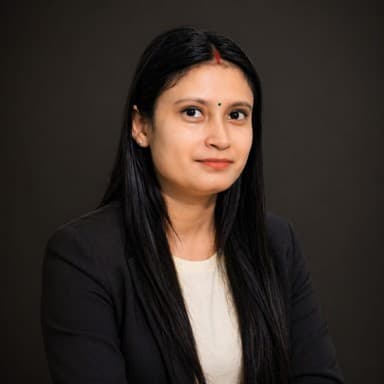
Priyanka Kumari
IB Maths
IB + IGCSE
4rating13 Yrs
Gurugram, All Areas in GurgaonHome / Online / Hybrid
IB Maths TutorIGCSE Maths Tutor
Check availability
Sushant Lok 2, Gurugram (Gurgaon), Haryana
IB DP Mathematics tutoring in Sushant Lok 2 is usually sought out after a mock result frightens a family, but an IB DP Maths online tutor in Sushant Lok 2 Gurgaon works better as a year-long habit than a panic response. Analysis and Approaches and Applications and Interpretation both build on two years of connected content; a gap opened in Year 12 algebra shows up again in the Year 13 Paper 3 investigation, and firefighting in April cannot undo October's missed foundation. Sessions here run online by default, using a shared digital whiteboard and screen-shared graphic display calculator work, so the corridor from DLF Park Place to Golf Course Extension Road is not a scheduling obstacle. Tutor availability can be reviewed once a subject level and weekly rhythm are confirmed.
School names are shown for local academic context only. IB Gram is an independent tutoring platform and is not affiliated with, endorsed by, or representing any school listed here.
Browse a sample of verified IB and IGCSE tutors for PYP, MYP, DP and IGCSE subjects. Matching considers syllabus fit, HL or SL level, preferred tutoring mode, schedule and the kind of support the student needs.
Explore IB tutor optionsIB Maths
IB + IGCSE

Mathematics
IB + IGCSE

Math AAHL
IB + IGCSE
 Australia
 United States+2 more
A match for IB DP Mathematics starts with specifics, not a form asking for a subject name alone. A parent in Sushant Lok 2 typically tells IB Gram whether the student sits Analysis and Approaches or Applications and Interpretation, at Higher Level or Standard Level, what the last two assessed grades were, and which weeknights are actually free once school pickup and homework are accounted for. That last detail matters more than it sounds; a Tuesday and Thursday 6pm slot works differently for a family near DLF Park Place than for one near Golf Course Extension Road, even though both are minutes apart on paper. IB Gram uses this to shortlist tutors who teach the correct syllabus variant, since AA and AI overlap on statistics but diverge sharply on calculus depth and the use of technology.
Before any commitment, the shortlisted tutor runs a short diagnostic session with the parent present, not hidden behind a call summary written after the fact. The session usually opens with a recent Paper 1 or Paper 2 question the student found hard, and the tutor talks through method rather than just the answer, so a parent with no calculus background can still judge whether the explanation was clear. This is where mismatches surface early: a tutor strong in AI's modelling content may not be the right fit for an HL AA student two topics from the exploration deadline. Tutor availability for a specific week can be reviewed once these preferences are confirmed, and it does shift through the year as May and November examination sessions pull tutors toward existing students.
If the first few sessions do not work, the honest answer is that IB Gram treats this as routine rather than as a failure to be smoothed over. Teaching styles clash sometimes; a student who wants worked examples first and theory second will struggle with a tutor who teaches the reverse way, however qualified that tutor is on paper. A second match is arranged without re-running the entire onboarding conversation, since the original preferences and the diagnostic notes carry over. Because the relationship runs online from the first session, switching tutors does not mean renegotiating a commute or a fixed evening slot at Ireo Skyon or M3M Merlin; the same login and the same shared whiteboard folder simply point to a different tutor next week.
Matching is not a one-time event for a two-year Diploma Programme subject. A tutor who was the right fit for building algebra and function fluency in the first term of Year 12 is not automatically the right fit for exploration supervision in Year 13, where the skill required shifts from explaining content to critiquing a student's own mathematical writing. Families in Sushant Lok 2 who started with a general HL Maths tutor sometimes ask, around September of the second year, for a session focused purely on the exploration draft. That is a normal adjustment, not a sign the first match failed, and it is worth raising with IB Gram directly rather than assuming the existing arrangement has to stretch to cover everything.
Sushant Lok 2 sits inside a corridor that families here navigate constantly without necessarily naming it that way: Sushant Lok 1 to the east, Sushant Lok 3 and the newer stretch of Golf Course Extension Road to the south, and Sectors 55 through 57 forming the residential spine in between. A tutor search that starts in Sushant Lok 2 often widens within a week, because an online IB DP Maths tutor in Sushant Lok 2 Gurgaon is, in practice, also available to a student living at Ireo Skyon or DLF Park Place ten minutes away, since the session happens over video rather than in a living room. This is one place where online delivery genuinely removes a constraint instead of just adding convenience.
Weekday evening traffic on the stretch connecting Sushant Lok 2 to Golf Course Extension Road is not dramatic by Gurugram standards, but it is unpredictable enough that a 6pm home session booked for 45 minutes can lose ten of those minutes to a tutor stuck near Sector 56. Online sessions do not solve every problem this corridor creates, since a student can still be late from an evening activity or a school bus running behind schedule, but they remove the travel variable entirely from the tutor's side. Families at M3M Merlin who tried a home tutor first sometimes switch to the online format for exactly this reason, not because the home format was worse for teaching, but because it was less reliable for actually starting on time.
Sector 55, Sector 56 and Sector 57 send a steady stream of Class 11 and Class 12 students into DP Mathematics tutoring, and this part of Haryana around Sushant Lok 2 is treated by IB Gram as one wider catchment rather than a strict boundary. A family technically living in Sector 57 but closer in practice to Sushant Lok 2's market and cafes is matched the same way as one with a Sushant Lok 2 postal address; the corridor is a lived geography, not an administrative line. This matters for scheduling too, since a tutor who already teaches a student near DLF Park Place can often take a second nearby student in the same evening block without the usual gap a fresh commute would require.
One detail families rarely mention until asked directly: high-rise societies like Ireo Skyon and M3M Merlin, with layered security and lift queues at peak evening hours, add five to ten minutes that a flat-format society elsewhere in Sushant Lok 2 does not. For a home tutor this eats into a fixed session length in a way that compounds over a term. For an online IB DP Maths tutor in Sushant Lok 2 Gurgaon, it is irrelevant, which is part of why the online-first structure suits high-rise households in this corridor better than it might suit a smaller independent house nearby. This is not a claim that online is always better here, only that this specific friction disappears.
The Diploma Programme (DP) offers two Mathematics routes: Analysis and Approaches, built around algebraic proof and calculus, and Applications and Interpretation, built around statistical modelling and technology-driven problem solving. Both are offered at Higher Level (HL) and Standard Level (SL), and the choice between them should be made on how a student thinks, not on which sounds easier. IB Gram is an independent tutoring platform and is not affiliated with, endorsed by or representing the International Baccalaureate (IB) Organization or any school named on this page. A Sushant Lok 2 student who enjoys deriving a result from first principles usually does better in AA; one who prefers interpreting a dataset and building a model from it tends to find AI more natural, regardless of which route their school defaults every student into.
HL Mathematics adds a third paper: Paper 1 and Paper 2 are worked without and with the graphic display calculator (GDC) respectively at SL, while HL students sit Paper 1 (no GDC), Paper 2 (GDC allowed) and Paper 3, a shorter paper built from two extended problem-solving questions that reward a student who can hold several linked ideas in view at once. The GDC itself is not optional kit; a student who has not built real fluency with it loses time on Paper 2 hunting for a function the calculator already has, and Paper 3 questions are written assuming that fluency exists. Online sessions handle this directly through screen-shared GDC work, walking through the same button sequence the student will use on exam day rather than describing it in the abstract.
The internal assessment for Mathematics is the exploration, a written investigation of roughly six to twelve pages where the student picks their own topic and applies it with appropriate mathematical rigour. Weak explorations tend to share one fault: the mathematics chosen is either too simple to justify the length or too advanced for the student to actually explain in their own words, and a tutor's real value here is often steering the topic choice in September rather than editing a finished draft in January. A Sushant Lok 2 student interested in, say, modelling traffic flow on Golf Course Extension Road has a topic that is locally grounded and genuinely explorable at HL, which tends to produce stronger exploration work than a generic topic copied from a school handout.
Command terms carry real weight in Mathematics marking: 'show that' requires every step to be shown even when the answer is given, 'hence' requires the previous result to be used rather than an independent method, and losing marks on these distinctions is one of the most common and most fixable gaps a tutor finds in a first diagnostic session. Paper 1 and Paper 2 together carry the bulk of the final grade, so accuracy under time pressure on routine algebra and calculus questions matters more than most students expect going in. A tutor working online can flag a command-term slip in real time on the shared whiteboard, which is harder to do convincingly over a phone photo of handwritten work sent after a home session has already ended.
Home tutoring in Sushant Lok 2 puts a tutor physically at the table, which helps a student who needs someone visibly present to stay focused for a 90-minute block, but it fixes both parties to a single weekly slot that a late school bus or an evening badminton match at the society clubhouse can easily wreck. Online tutoring for IB DP Mathematics trades that physical presence for flexibility and for direct GDC screen-sharing, which is arguably the more useful trade for a subject where watching a calculator screen matters as much as watching handwriting. Hybrid arrangements exist too: a fortnightly home session for exploration supervision, paired with weekly online sessions for syllabus content, though this only works if both tutor and family are honest that hybrid costs more coordination, not less.
Online tuition for Mathematics does have a real limitation: a tutor cannot see a student's rough working the way they can when leaning over a physical notebook, and a student who tends to skip steps mentally can hide that habit on screen longer than they could at a table. Good online sessions correct for this by asking the student to write on a shared digital tablet rather than solve in their head and type only the answer, but this depends on the household having a usable tablet or a laptop with a stylus, which is not universal even in a corridor as well-resourced as Sushant Lok 2. Families without that setup are often better served starting with home sessions until the habit of showing full working is established.
Exam season shifts the calculus again. In the two months before the May session, most Sushant Lok 2 families increase frequency rather than switch format, adding a Sunday morning online block dedicated purely to past-paper timing practice and one-to-one doubt-solving on top of the regular weekday session. Sunday mornings work well here specifically because school activity is minimal and the household is not competing with homework from other subjects, unlike a weekday evening squeezed between school pickup near Sector 56 and dinner. A tutor who already knows the student's common errors from months of regular sessions can run this kind of timed practice far more efficiently than a new exam-season-only tutor could in the same number of hours.
Neither format is inherently the correct choice, and a family that insists on home sessions purely out of habit, without weighing the GDC screen-sharing advantage, is making a decision based on comfort rather than fit. The more useful question is not home or online in the abstract but which format survives a bad week: a delayed school bus, a sudden extracurricular clash, a tutor's own travel. Online tends to survive a bad week better simply because rescheduling does not involve renegotiating a commute across the corridor. Sushant Lok 2 parents who have tried both formats across a full academic year tend to settle on online for regular content and keep home sessions, when available, for occasional intensive exploration weekends.
Students who found Class 10 mathematics straightforward sometimes struggle with DP Mathematics HL for a reason that has nothing to do with intelligence: the subject demands sustained abstract reasoning across multiple linked topics rather than mastery of one procedure at a time. A Class 10 exam rewards knowing the quadratic formula; an HL Paper 3 question rewards connecting a quadratic to a related rate of change, a graph transformation, and a real-world constraint, all inside one multi-part problem. That shift catches Sushant Lok 2 students who were used to being the strongest in the room at their school and have not previously had to sit with a problem they cannot immediately see the route through.
Vectors and calculus, particularly related rates and optimisation, are where this shows up most sharply in AA HL. The difficulty is rarely the algebra itself; it is translating a word problem into the correct equation before any algebra can begin, a skill that improves through repeated exposure to varied problem phrasing rather than through more practice on a single problem type. On a shared digital whiteboard, a tutor can keep the original word problem visible on one half of the screen while building the equation on the other, which is a small thing but genuinely harder to replicate with a single shared notebook page during a home session where space runs out fast.
Time pressure compounds the conceptual difficulty. Paper 1 gives roughly two minutes per mark, and a student who can solve every question given unlimited time but freezes when a question does not immediately match a memorised pattern will underperform relative to their actual understanding. This is common enough in Sushant Lok 2 that it is worth naming directly rather than treating each case as unusual: strong students at schools like Lancers International School or Scottish High International School, named here only as local context, arrive with excellent content knowledge and comparatively little timed-practice discipline, because school assessment rarely enforces the same time constraints as the actual DP exam.
None of this means a tutor removes the difficulty; DP Mathematics HL remains a demanding course and no amount of tutoring guarantees a particular grade, since the exam ultimately tests the student's own reasoning under their own time pressure. What consistent tutoring changes is the rate at which a student meets new problem types before the exam does, so that May's Paper 3 is the fifth unfamiliar multi-part problem they have worked through calmly that month, not the first. That difference is measurable in confidence and pacing even when it cannot be promised as a grade outcome, and any tutor who promises a specific grade should be treated with more scepticism, not less.
Lancers International School, Scottish High International School, Pathways World School, GD Goenka World School and The Shri Ram School, Aravali are the schools most often named by Sushant Lok 2 families booking an IB DP Maths tutor, simply because they sit within a short radius and offer the Diploma Programme locally. Naming them here is descriptive, not promotional: a student's actual school year, teacher, and internal deadlines still set the pace, and a tutor's job is to work around that calendar rather than substitute for it. Two students at the same school studying the same route can still need very different tutoring emphasis depending on which teacher they have and how that teacher paces algebra, functions and calculus across the two years of the Diploma.
School calendars around Sushant Lok 2 tend to cluster mock exams in November and again in February, with the exploration draft typically due somewhere in between, which means a student can face a mock, an exploration deadline and a half-term assessment inside a six-week window. A tutor who is not tracking a specific school's calendar risks scheduling a heavy practice-paper push in a week the student is already underwater with an internal deadline. IB Gram asks for the school's rough assessment calendar during matching precisely to avoid this, and adjusts session focus around it rather than running a fixed generic syllabus plan regardless of what else is happening that month.
Several of these schools run bus routes that reach Sushant Lok 2 and the surrounding sectors between 3:30pm and 4:15pm, which sets a hard floor on how early a session can realistically start; a 4pm slot booked without checking this simply means a tired student arriving fifteen minutes into their own tutoring session. Families who mention their child's actual school and grade at the matching stage get a schedule proposal that already accounts for this, rather than a generic evening slot that has to be renegotiated after the first missed start. This is a small operational detail, but it is the kind of detail that determines whether a Tuesday session actually happens or gets pushed every week.
None of this implies these schools' own Mathematics departments are lacking; IB Gram has no visibility into and no affiliation with how any named school teaches Mathematics internally, and school-based teaching varies by teacher rather than by school reputation. What tutoring addresses is the gap between a classroom pace set for thirty students and the pace one specific Sushant Lok 2 student needs on their weakest topic, which is a different problem from the quality of classroom teaching itself. Parents sometimes frame tutoring as compensating for a weak school; more often, in this corridor, it is simply compensating for the fact that no classroom, however good, can be paced for one child alone.
Fees for an IB DP Maths tutor in Sushant Lok 2 depend on level (HL costs more tutor time than SL), mode (online sessions are sometimes priced lower than home sessions once travel is factored out), session length, and the individual tutor's experience with Paper 3-style extended problems; there is no single rate that applies across the corridor, and any page quoting one fixed number should be treated cautiously. Value is better judged by how a tutor spends the first month than by the headline rate, since two tutors charging different amounts can produce very different outcomes depending on whether that time goes into genuine diagnostic work or into generic worksheet practice available for free online.
HL Mathematics genuinely requires more from a tutor than SL, since Paper 3 preparation and a longer syllabus mean more planning time between sessions, and this is usually reflected in how a tutor structures their rate rather than being a flat multiplier. Online sessions remove a tutor's commute across the corridor, which sometimes shows up as a modestly lower rate compared to an equivalent home session, though this varies by tutor and is never guaranteed. A tutor experienced specifically with the exploration, able to give focused written feedback on a draft rather than a verbal comment, tends to price that skill separately from regular weekly content sessions, and families should ask about this explicitly rather than assuming it is included.
Real value shows up in specifics a parent in Sushant Lok 2 can actually check: does the tutor keep a running list of topics the student has and has not yet covered against the full syllabus, or is each session planned the night before with no visible thread connecting it to the last one? Does feedback after a practice paper identify the actual error pattern, such as consistently losing marks on 'show that' questions, rather than a generic 'needs more practice' comment? A tutor charging a higher rate but doing neither of these is worse value than one charging less who tracks progress properly, and cost alone is a poor proxy for whether the tutoring is actually working.
None of this means the most expensive tutor available is automatically the right choice, or that a lower rate signals lower quality; tutor availability and pricing depend on demand within the corridor at a given point in the school year, and rates can be reviewed directly once a family's specific level, mode and frequency are confirmed with IB Gram. Families are better served asking a shortlisted tutor directly how they structure a first month, what they will check in the first session, and how they report progress, than trying to compare rates across tutors as if the service itself were identical. It rarely is, even within the same corridor and the same subject.
The first week is diagnostic almost by design: the tutor works through recent school assessments and a short set of mixed-topic questions spanning the last two years' content, not to grade the student again but to build an actual map of where gaps sit. A Sushant Lok 2 student who scored reasonably on a recent test can still have a specific, narrow gap, such as consistently mishandling composite functions, that a single test grade hides. This week is also when GDC fluency gets checked directly, since a student who has quietly been avoiding certain calculator functions for two years usually reveals this only when asked to demonstrate it live on a shared screen.
Weeks two and three shift to the topics the diagnostic flagged, worked in enough depth that the student can explain the method back rather than just reproduce an answer they watched the tutor solve. This is slower than covering more ground would be, and some parents initially worry that only two or three topics have been addressed in two weeks when the syllabus has dozens; the trade-off is that a topic actually understood needs far less repetition later than one skimmed and revisited five times across the year. Sessions in this window also start introducing timed mini-sets, five or six questions under a compressed clock, to build the pacing habit early rather than only in the final term.
By the fourth week, most tutors schedule a short check-in with the parent present, separate from the student's regular session, to summarise what the diagnostic found, what has been addressed, and what is realistically still outstanding. This is also the point at which a mismatch, if there is one, tends to surface clearly enough to act on, since four sessions is usually enough for a parent to judge clarity of explanation even without a maths background themselves. Families in Sushant Lok 2 who skip this check-in often find out about a mismatch much later, closer to a mock exam, when there is less room to adjust course without added pressure.
None of this produces a grade change inside a month, and any suggestion that it would should be treated with suspicion; a first month establishes rhythm, surfaces the real gaps, and builds the working relationship a two-year subject actually needs. What it should produce, realistically, is a parent who understands specifically what their child struggles with in Mathematics rather than a vague sense that maths is hard, and a student who has stopped avoiding the calculator functions they used to skip. Progress on grades, when it comes, tends to show up gradually across subsequent terms rather than inside the diagnostic month itself.
Starting is a short process, and it is worth stating plainly since getting-started pages often bury the actual steps under unrelated copy. First, a parent shares the student's board (AA or AI), level (HL or SL), current school and year, and a rough sense of weekly availability. Second, IB Gram shortlists one or two tutors whose experience matches that specific combination, not a generic pool of IB Mathematics tutors. Third, the parent sits in on a diagnostic session with the shortlisted tutor before committing to anything. Fourth, if the fit is right, a regular weekly, or twice-weekly depending on level and timeline, online schedule is set, built around the family's actual weeknight availability in Sushant Lok 2 rather than a default slot.
Having a few specifics ready speeds this up considerably: the student's most recent test or mock paper, if available, gives a tutor more to work with in the first conversation than a general description of struggling with maths does. Families who know roughly which topics cause the most difficulty, even informally, get a more precisely targeted diagnostic session in week one. There is no fixed response time promised for matching, since it depends on tutor availability for the specific board and level requested at that point in the year, though HL AA requests are generally easier to match quickly than the less common AI HL combination, simply because fewer students in this corridor take that route.
Some Sushant Lok 2 families reach out not for full-syllabus support but for a narrower need: exploration supervision alone in Year 13, or a focused revision block in the final term before May. Both are workable requests, and it is worth being specific about which one is wanted when first getting in touch, since the matching process for exploration-only supervision looks for a different kind of tutor experience than the matching process for weekly content teaching. A student requesting help two months before the May session should say so directly rather than describing it as ongoing tutoring, since the session structure and pacing for that scenario are genuinely different from a year-long arrangement.
None of this requires a long-term commitment decided on the first call. The diagnostic session exists specifically so a family can judge fit before agreeing to anything beyond it, and a parent who wants to think it over after the first session is free to do so without pressure to confirm immediately. Tutor availability for Sushant Lok 2 requests in Gurugram (Gurgaon) does shift with the school calendar, busier around mock season and the run-up to May, so a family that knows they will want support later in the year is better served starting the conversation early rather than waiting for the same week everyone else in the corridor also decides to look.
Online tutoring works well for IB DP Mathematics specifically because so much of the subject depends on GDC use and worked method rather than physical presence. A shared digital whiteboard lets the tutor see every step of working in real time, and screen-sharing the calculator means the student learns the exact button sequence they will use on exam day. Home tuition still suits students who focus better with someone physically at the table, and neither format is universally superior. The honest answer is that online tends to work better for content-heavy topics like calculus and functions, while some families prefer occasional home sessions around exploration deadlines when longer, less interrupted stretches of work help.
No, and any platform claiming otherwise should be treated carefully. IB Gram does not guarantee grades, a specific score, or a particular outcome, since the final result depends on the student's own work, the exam itself, and factors no tutor controls. What a consistent tutoring relationship can realistically change is how well-prepared a student is for the range of question types the DP exam uses, and how calmly they handle Paper 3's multi-part problems by May. Progress is usually visible in practice-paper pacing and topic confidence well before it shows up in an actual grade, and tracking that honestly matters more than chasing a promised number.
A second match is arranged without restarting the whole process. IB Gram treats an early mismatch as routine, not as a problem to work around quietly, and the diagnostic session in week one exists specifically to catch this before a family has committed to months of sessions. If the teaching style, pacing, or communication does not suit the student, the original preferences and diagnostic notes carry over so a new tutor does not require the family to repeat the same conversation from scratch. Families in Sushant Lok 2 sometimes worry that switching reflects badly on them; in practice it is a normal part of finding the right working relationship for a two-year subject.
Some tutors teach both routes well, but it is worth confirming directly rather than assuming, since AA and AI diverge sharply beyond the shared statistics content. AA leans on algebraic proof and calculus depth; AI leans on modelling, technology use and applied interpretation, and a tutor strong in one is not automatically strong in the other. During matching, IB Gram shortlists based on the specific route a Sushant Lok 2 student is taking rather than a general IB Maths tutor label, and it is reasonable for a parent to ask a shortlisted tutor directly how many students they have taught in that exact route recently.
Exploration supervision works over shared documents and screen-shared discussion rather than a printed draft handed across a table. The tutor reviews the student's draft directly on screen, marks specific sections against the assessment criteria, and talks through revisions live so the student understands the reasoning rather than just receiving corrected text. This format actually suits exploration work well, since a written investigation benefits more from careful line-by-line discussion than from physical presence. Families in Sushant Lok 2 sometimes book exploration supervision as a separate, shorter-term arrangement distinct from weekly content tutoring, which IB Gram can match separately if that is what is actually needed.
A tutor works around the school's pace rather than replacing it, since the school calendar and internal deadlines still set the overall timeline. What a tutor can do is slow down specifically on the topic the student is behind on, using extra sessions or a targeted diagnostic to isolate exactly where the gap is, rather than trying to keep pace with every topic simultaneously. This page names Lancers International School only as local context; IB Gram is not affiliated with the school and has no visibility into its internal teaching. A tutor who understands roughly when that school's mocks and internal deadlines fall can plan around them more effectively than one working blind.
A 45-minute weeknight slot is workable and common in this corridor, where school bus arrivals between 3:30pm and 4:15pm limit how early sessions can realistically start. Shorter sessions work best when tightly focused on one or two topics rather than trying to cover broad ground, and a tutor experienced with this corridor's typical evening constraints will usually structure the session that way by default. Families sometimes add a longer weekend online block, often Sunday morning, for past-paper practice that needs more uninterrupted time than a weeknight slot allows. The exact schedule is worked out during matching once actual weeknight availability is confirmed.
No single fixed fee applies, and a page quoting one exact rate for every family should be treated with caution. Cost depends on the level (HL or SL), the mode (home or online), session length and frequency, and the individual tutor's experience, particularly with HL Paper 3 and exploration supervision. Online sessions are sometimes priced a little lower than home sessions once a tutor's travel across the corridor is removed from the equation, though this varies by tutor and is never guaranteed. The most reliable way to get an actual figure is to confirm level, mode and frequency directly with IB Gram, since rates are reviewed against those specifics rather than quoted generically.
DP Mathematics demands sustained, multi-step reasoning across linked topics rather than applying one procedure to one question type at a time, which is a real shift from most Class 10 board preparation. A Class 10 exam often rewards recognising a familiar question format; an IB Paper 3 question, at HL specifically, expects a student to connect several ideas, such as a function, its derivative and a real-world constraint, inside a single extended problem. Students who found Class 10 straightforward sometimes struggle initially with this shift, not from lack of ability but from not yet having practised sitting with an unfamiliar problem long enough to find the route through it.
Yes, though it helps to say upfront how the time should be split, since Paper 3 practice and routine homework help draw on the session differently. Paper 3 preparation benefits from dedicated, uninterrupted blocks working through multi-part extended problems, ideally on a schedule separate from day-to-day homework support, which is often shorter and more reactive to whatever the school assigned that week. Some Sushant Lok 2 families run two shorter weekly sessions, one for homework and pacing support, one purely for Paper 3-style problems closer to exam term, rather than trying to blend both into a single session every time.
A month with no visible progress is worth raising directly with IB Gram rather than continuing quietly out of politeness. The first step is usually a short review of the diagnostic notes against what has actually been covered, since sometimes the issue is scheduling gaps or missed sessions rather than the tutoring itself. If the tutor genuinely is not the right fit after a fair trial, a new match is arranged using the same diagnostic information, so the process does not start from zero. This is a normal part of finding the right fit for a demanding two-year subject, and raising it early costs far less than waiting until closer to the exam.
Yes, though a crash course compressed into the final weeks before the May session works differently from year-long tutoring and should be requested as such when first getting in touch. A tutor taking on a crash course arrangement usually front-loads diagnostic work in the very first session, since there is no earlier relationship to draw on, then moves quickly into timed past-paper practice and one-to-one doubt-solving on the topics that diagnostic reveals. It tends to work best for a student who already has reasonable content knowledge and mainly needs pacing and confidence under exam conditions, rather than for a student with substantial gaps still to close, where a compressed timeline is a real constraint worth naming honestly.
If IB DP Maths in Sushant Lok 2 has become a once-a-week scramble before homework is due, a year-long online arrangement is worth considering before the next mock exam, not after it. Share the board, level and a rough weekly availability with IB Gram, sit in on a diagnostic session with the shortlisted tutor, and decide only once you have actually seen how they teach.
Book a free academic consultation