Compare
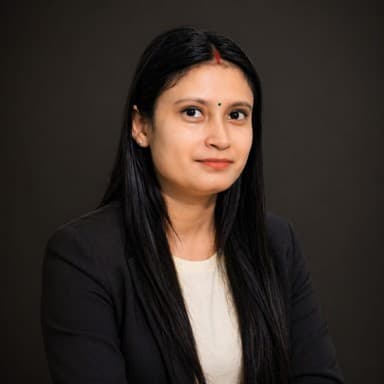
Priyanka Kumari
IB Maths
IB + IGCSE
4rating13 Yrs
Gurugram, All Areas in GurgaonHome / Online / Hybrid
IB Maths TutorIGCSE Maths Tutor
Check availability
M3M Capital, Gurugram (Gurgaon), Haryana
An IB DP Mathematics online tutor for a family in M3M Capital is usually being searched for at one of two very different moments: September, when Analysis and Approaches or Applications and Interpretation is still mostly new ground, or January onward, when the same subject has quietly turned into exam papers, GDC technique and an Internal Assessment exploration all competing for the same revision hours. What a student needs from a tutor changes substantially between those two points in the year, even though the syllabus code stays the same. IB Gram matches families in M3M Capital, M3M Golf Estate and the Sohna Road corridor with IB DP Maths tutors for online sessions built around shared whiteboards and GDC screen sharing, with a demo before you commit.
School names are shown for local academic context only. IB Gram is an independent tutoring platform and is not affiliated with, endorsed by, or representing any school listed here.
Browse a sample of verified IB and IGCSE tutors for PYP, MYP, DP and IGCSE subjects. Matching considers syllabus fit, HL or SL level, preferred tutoring mode, schedule and the kind of support the student needs.
Explore IB tutor optionsIB Maths
IB + IGCSE

Mathematics
IB + IGCSE

Math AAHL
IB + IGCSE
 Australia
 United States+2 more
M3M Capital sits between Golf Course Extension Road and Sohna Road, close to Sector 65, Sector 67 and Sector 68, in a part of Gurugram where towers have filled in faster than the internal road network has kept pace — which is precisely why this page leans toward online tutoring rather than assuming a home tutor can reliably reach the society every weekday evening. A tutor without a family already established in this corridor is taking on a genuine commute risk on Golf Course Extension Road during peak hours, one that an online session simply removes from the equation.
The society sits alongside M3M Golf Estate and M3M Merlin, with M3M Skycity a little further along, and Sector 113 extending the same cluster of newer high-rise developments. This density of similar towers means broadband infrastructure here is generally solid — a genuine advantage for a family specifically choosing an online IB DP Maths tutor, since shared-whiteboard and screen-sharing sessions depend on a stable connection more than most other tutoring formats do.
IB DP Mathematics households in this pocket skew toward dual-career families with limited weekday evening flexibility, which is part of why online tutoring has become the default rather than the fallback option here — a session that starts on time because no one is stuck on Sohna Road traffic is worth more to many M3M Capital families than the marginal benefit of having a tutor physically in the room for a subject that is, in any case, heavily screen and calculator-based already.
One honest limitation: a small number of families in M3M Capital do still prefer occasional home sessions, particularly ahead of a mock exam, when working through a full Paper 2 by hand alongside a tutor feels more like exam conditions than a screen does. IB Gram does not rule this out, but it is worth knowing upfront that the tutor pool comfortable with occasional home visits to this specific corridor is smaller than the pool comfortable teaching online exclusively.
IB DP Mathematics gets harder in a specific, structural way as the year progresses: the first term is mostly new content — functions, algebra, the groundwork of calculus — taught at a pace that feels manageable, while the second half of the year adds past-paper technique, GDC fluency under timed conditions, and the Internal Assessment exploration, all layered on top of content that is still being taught. A student who was comfortable in September can look like they have gotten worse by February, when really the demands around them have multiplied rather than their ability declining.
Analysis and Approaches (AA) and Applications and Interpretation (AI) diverge sharply in where the difficulty sits — AA leans on proof, algebraic manipulation and calculus rigor with lighter GDC dependence, while AI leans on modelling, statistics and heavier, near-constant GDC use across both Paper 1 and Paper 2. A student placed in the wrong route relative to their actual strengths — abstract reasoning versus applied modelling — will find the subject disproportionately harder no matter how much tutoring is added, which is worth checking honestly before assuming more sessions is the fix.
For Higher Level (HL) students specifically, Paper 3 adds a further layer in the final year: extended, unstructured investigation-style questions that reward mathematical exploration rather than recall, and these questions are exactly where students who learned the syllabus as a list of techniques, rather than as connected ideas, tend to struggle most. This gap often only becomes visible once past papers start in earnest, typically well into the second year of the Diploma Programme.
An honest limitation: the exploration, IB Maths' Internal Assessment, is student-led by design, and a tutor's role there is narrower than in taught content — guiding topic selection, checking mathematical validity, and improving the write-up, rather than doing the mathematical thinking for the student, which the IB's own academic integrity rules do not allow and which would not actually help the student's exam performance either.
The IB DP Mathematics syllabus splits into two courses, Analysis and Approaches and Applications and Interpretation, each offered at Standard Level (SL) and Higher Level (HL), and the choice between them should be made on how a student thinks, not on which sounds easier. Both courses are assessed through Paper 1 and Paper 2, with HL students additionally sitting Paper 3, a set of extended problem-solving questions, plus the exploration, a 6-12 page piece of independent mathematical writing worth 20% of the final mark at both SL and HL.
Analysis and Approaches content runs through algebra, functions, geometry and trigonometry, sequences and series, and calculus — including, at HL, more advanced techniques like proof by induction and further calculus — building toward a course that rewards precise algebraic manipulation and formal proof. Applications and Interpretation covers similar foundational topics but weights statistics, probability and mathematical modelling far more heavily, with the Graphic Display Calculator (GDC) used extensively across both papers rather than reserved for one.
The GDC itself is worth treating as a syllabus component in its own right rather than an accessory — students lose marks routinely not from wrong mathematical reasoning but from an unfamiliar calculator workflow under time pressure, whether that is solving a system of equations, running a regression, or finding a numerical integral. A tutor working online with a student in M3M Capital can share their own GDC screen directly, showing the exact button sequence in real time, which is often faster to teach this way than describing a sequence of calculator steps verbally in a home session.
Grading uses the IB's 1-7 scale, combining external Paper 1, 2 and, for HL, Paper 3 marks with the internally assessed exploration score, moderated externally by the IB. Command terms in past papers — 'show that', 'hence', 'find', 'justify' — carry specific procedural expectations that differ from ordinary classroom phrasing, and a tutor who drills command-term literacy alongside content tends to close more marks than one who only reteaches topics the student has already technically covered.
Online IB DP Maths tutoring in M3M Capital works through two tools used together: a shared digital whiteboard for working through algebra and calculus step by step, the way a page of paper would be used in person, and GDC screen sharing, where the tutor mirrors their own calculator screen so a student sees the exact keystrokes for a regression, a solver function, or a numerical integral rather than being told the sequence verbally. Together, these two close most of the gap that used to make online maths tutoring feel worse than home tutoring.
The shared whiteboard specifically suits Analysis and Approaches-heavy content — algebraic manipulation, proof, calculus working — because a tutor can write alongside the student in real time, correct a step mid-calculation, and keep a visible record of the full working that both sides can scroll back through after the session, which is arguably easier to review afterward than a physical notebook page.
For Applications and Interpretation students specifically, GDC screen sharing tends to matter even more than the whiteboard, since so much of AI's marks come from correct calculator use — a tutor can watch a student's own screen in real time during a mock question, catch a wrong mode setting or a misread instruction before it becomes a habit, and this kind of real-time calculator correction is genuinely harder to do well in a home session unless the tutor is looking directly over the student's shoulder at the exact moment of the error.
The comparison, stated plainly: for M3M Capital families, home tutoring is not meaningfully better for IB DP Maths content delivery given how calculator and screen-dependent the subject already is, and it loses on reliability given the corridor's traffic. Online sessions are the practical default here, with an occasional home session before a mock exam remaining an option for families who specifically want full by-hand exam-condition practice in the room.
Matching for an IB DP Maths tutor in M3M Capital starts with the same brief as any subject — AA or AI, SL or HL, current topic — plus one detail that matters more here than for most subjects: how comfortable the student already is navigating their own GDC, since that shapes how much of the first few sessions go toward calculator fluency versus new content.
The International Baccalaureate (IB) sets the Diploma Programme (DP) syllabus and assessment structure that schools around M3M Capital, including Lancers International School and Scottish High International School, teach against. IB Gram is an independent tutoring platform and is not affiliated with, endorsed by or representing the IB Organization or any school named on this page. A tutor matched through IB Gram works from the published syllabus and from whatever a family shares about the student's actual coursework, not from an assumed relationship with any school.
For online-first matching specifically, IB Gram also checks a tutor's own screen-sharing setup — a tablet or a proper digital whiteboard tool, not just a webcam pointed at a piece of paper, since the latter genuinely limits how clearly a student can follow calculus working in real time. This is a small detail that makes a measurable difference to session quality and is worth asking about directly during the demo.
As with any subject, nothing here requires a long commitment upfront. If a matched tutor's teaching style or GDC-screen-sharing setup does not suit your child after the demo or first couple of sessions, IB Gram proposes an alternative rather than asking the family to adapt, and tutor availability for AA versus AI, and for SL versus HL, depends on level and schedule and is subject to tutor availability at the time of enquiry.
Coming back to the question this page opened with — what actually changes for an IB DP Maths student between September and the final exam session — the honest shape of the year is roughly three phases: content acquisition through the first two terms, technique consolidation once past papers begin in earnest, and a final intensive stretch in the last two to three months focused almost entirely on timed practice and closing specific, identified gaps.
A tutor engaged early, in the content-acquisition phase, spends most sessions on new material and GDC fluency, building habits — showing full working, using correct command-term structure — that pay off later rather than producing visible score jumps immediately, since there are no past papers yet to measure against. This phase is easy to underinvest in, because progress is harder to see than in the final exam-technique stretch, but it is where the strongest long-term gains actually get built.
By the technique-consolidation phase, typically starting in the second year of the DP, sessions shift toward timed past papers under real exam conditions, including GDC use exactly as the exam allows, with review focused on where marks were actually lost — a calculation error, a missed command-term requirement, a GDC mode mistake — rather than a general re-teach of the topic. A student engaged with a tutor since September usually needs less of this phase, because the underlying habits are already in place.
The final stretch compresses everything into targeted repair: identifying the two or three question types costing the most marks across recent mock papers and drilling those specifically, rather than reviewing the whole syllabus evenly in the time remaining. A family starting tutoring for the first time at this stage should expect the tutor's first session to look like an audit — reviewing recent mock scripts in detail — before any new practice begins, since guessing at weak spots wastes the limited time left.
IB Gram does not publish a fixed rate for an IB DP Maths online tutor in M3M Capital, because fees vary by course (AA or AI), level (SL or HL), how far into the Diploma Programme the student is, and session length. A quote is given against the specific brief once a tutor is shortlisted, since HL Paper 3 and exploration-focused support are a different, often more specialised job than general SL content review.
Value for online DP Maths tutoring is somewhat easier to judge than for some subjects, because past-paper scores give a concrete, repeated measure over a term — though a family should still weigh whether a tutor's sessions are producing genuine understanding or just short-term memorisation of specific question types, since the latter falls apart against an unfamiliar phrasing of the same underlying idea in the actual exam.
Online sessions generally cost the same as, or occasionally slightly less than, home sessions for the same tutor, since there is no travel time to price in — for M3M Capital families specifically, this also means the effective value is higher, given how much commute risk a home session on Golf Course Extension Road or Sohna Road would otherwise carry for the same rate.
Tutor availability for HL AA specifically tends to be the tightest of the four course-and-level combinations, since it requires both strong proof-based mathematics and comfort teaching Paper 3-style investigation questions, so families needing this combination should enquire with more lead time than for SL content, where availability depends on level and schedule and is subject to tutor availability at the time of enquiry.
M3M Capital sits within reach of several schools offering the IB Diploma Programme, including Lancers International School, Scottish High International School, Pathways World School, GD Goenka World School and The Shri Ram School, Aravali — named here as local context only, since families in this corridor are commonly enrolled at one of them, not because IB Gram has any affiliation or formal relationship with these schools.
Schools differ meaningfully in which Maths course they steer students toward by default — some lean AA-heavy given their own teaching strengths, others offer a genuinely open choice between AA and AI — and in how early they introduce past-paper practice, which affects how much of that work a tutor needs to backfill versus reinforce.
It also helps a tutor to know a student's school's internal mock exam schedule specifically, since M3M Capital-area schools typically run mocks at slightly different points in the year, and aligning online tutoring's technique-consolidation phase to land just before a school's own mock, rather than on a generic citywide calendar, makes that phase noticeably more useful.
As elsewhere on this site, none of this implies a partnership between IB Gram and these schools or with the IB Organization. IB Gram remains an independent platform; school names are used only because they are specific and checkable, which is more useful to an M3M Capital family than a vague reference to local IB schools.
Whatever point in the academic year this page is being read — the content-heavy first term or the exam-technique final stretch — starting an IB DP Maths online tutor in M3M Capital does not require waiting for a natural break. The tutoring approach simply adjusts to whichever phase the student is actually in.
Getting started with IB Gram follows four steps: first, share the course (AA or AI), level (SL or HL), and roughly where the student sits in the DP year; second, receive two or three tutor profiles matched to that brief, checked for a proper online whiteboard and GDC screen-sharing setup; third, attend a demo session to see the setup and teaching style directly; fourth, confirm a weekly schedule, with the understanding that the session focus will shift as the year moves from content to technique to targeted repair.
If starting later in the year, it helps to bring recent mock scripts or past-paper attempts to the first session, so the tutor's initial audit is based on real evidence of where marks are being lost rather than a general sense of needing help with Maths. This single step often saves an entire session that would otherwise be spent re-establishing what a diagnostic script would show directly.
None of this requires a term-long commitment. A demo session and a short initial run of online classes is enough to judge whether the whiteboard-and-GDC format actually suits your child, and IB Gram would rather an M3M Capital family switch tutors early than persist through a mismatch for a subject where lost time compounds more than most.
Analysis and Approaches (AA) emphasises algebraic proof, formal calculus and abstract reasoning with lighter, more occasional GDC use, while Applications and Interpretation (AI) emphasises statistics, modelling and real-world data problems with heavy, near-constant use of the Graphic Display Calculator (GDC) across both papers. Neither course is inherently easier; the right choice depends on whether a student thinks more comfortably in abstract, proof-driven terms or in applied, model-building terms. Both are offered at Standard Level (SL) and Higher Level (HL), and switching courses partway through the Diploma Programme is difficult, so this choice is worth getting right early rather than treating it as reversible.
The tutor mirrors their own Graphic Display Calculator screen during the video call, so a student watching sees the exact keystrokes for a regression, a numerical solver or an integral calculation in real time, rather than being told a sequence of button presses verbally. This is usually paired with a shared digital whiteboard for algebraic working, so a session moves between calculator demonstration and written working the same way a home session would move between a calculator and a notebook page, just on screen instead. A tutor without a proper screen-sharing setup — just a webcam pointed at paper — genuinely limits how clearly this can be followed.
For most of DP Maths, yes, and for GDC-heavy content specifically, online can work better, since a tutor can share their own calculator screen directly rather than describing steps out loud. The exception some families make is scheduling an occasional home session before a mock exam, to practise a full paper by hand under conditions closer to the actual exam room. For families in M3M Capital specifically, online also removes a real commute risk on Golf Course Extension Road and Sohna Road that a recurring weekday home session would otherwise carry.
There is no fixed rate, since fees vary by course (AA or AI), level (SL or HL), how far into the Diploma Programme the student is, and session length, with a quote given against the specific brief once a tutor is shortlisted. Online sessions are generally priced the same as, or slightly less than, home sessions for the same tutor, since there is no travel time involved. HL students needing Paper 3 and exploration-specific support should expect a narrower, sometimes costlier, tutor pool than general SL content review.
Early in the year, sessions are mostly new content and GDC fluency-building, with progress that is harder to see immediately but pays off later. By the second year, sessions shift toward timed past papers and loss-focused review — finding exactly where marks were lost rather than re-teaching topics generally. In the final two to three months, tutoring compresses into targeted repair of the two or three costliest question types identified from recent mock papers. A student engaged with a tutor since September typically needs less of the final intensive phase, because habits are already established.
Yes, but within limits set by the IB's own academic integrity rules — a tutor can help with topic selection, check the mathematical validity of an approach, and improve how the exploration is written up, but cannot do the mathematical thinking or write content on the student's behalf, since the exploration is meant to reflect the student's own independent work. Families should treat exploration support as guidance and quality-checking rather than co-authorship, both because it is the honest approach and because examiners are trained to notice work that does not read as a student's own.
If a tutor's teaching style or online setup does not suit your child after the demo or the first couple of sessions, IB Gram proposes an alternative rather than asking the family to adapt to a mismatch. This is treated as useful information, not a failed attempt, and switching early tends to matter more for Maths than for some subjects, since lost weeks compound directly into gaps in a cumulative subject.
No, and any tutor or platform promising a specific grade should be treated with caution, since final results depend on the student's own consistent work across two years, performance in Paper 1, Paper 2 and, for HL, Paper 3, the exploration score, and IB moderation, not on tutoring alone. What IB Gram offers is a matching process built around the actual course, level and stage in the DP year, a demo session to check setup and fit, and the flexibility to switch tutors if needed.
Matched tutor profiles are usually available within a short turnaround once a brief is shared, though the exact timeline depends on level, course and schedule and is subject to tutor availability at that moment — HL AA tutors specifically are a tighter pool than general SL tutors, so it is worth enquiring with some lead time for that combination. A demo session can typically be arranged soon after a tutor is confirmed, and starting mid-term, at any point in the DP year, is normal.
A laptop or tablet with a stable webcam and a reasonably fast, stable internet connection is enough for most sessions, and the student's own GDC — whether a physical calculator or its software emulator — should be the same one they will use in the actual exam, so practice transfers directly. Families in M3M Capital generally have solid broadband given the newer infrastructure in developments like M3M Golf Estate and M3M Merlin, but it is worth testing the connection at the actual evening hour sessions will run, since household usage can vary between daytime and evening.
Standard Level (SL) covers a narrower slice of the same syllabus areas with less depth and no Paper 3, while Higher Level (HL) adds extra content, more advanced techniques, and Paper 3's extended investigation-style questions, which need dedicated practice beyond what Papers 1 and 2 require. A tutor working with an HL student typically needs to introduce past-paper-style unstructured problems earlier and more often than for SL, since Paper 3 specifically rewards comfort with unfamiliar problem structures rather than recall of a fixed method.
Sixty to seventy-five minutes tends to work best for most DP Maths students, since a shorter session limits how much of a full timed past-paper question can be worked through and reviewed properly, while attention on calculation-heavy problems tends to drop past the seventy-five-minute mark in most evening slots. As past-paper practice becomes the main focus later in the DP year, some families move to a slightly longer session less frequently — a 90-minute session every other week to fit a full timed paper section, for example — rather than keeping a fixed weekly length throughout.
If your child is starting IB DP Maths fresh this term, or needs focused past-paper technique closer to exams, share the course, level and current stage of the year. IB Gram will send two or three matched online tutors, checked for a proper whiteboard and GDC setup, for a demo session before anything is confirmed.
Book a free academic consultation