Compare
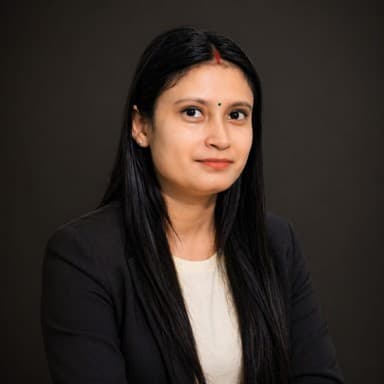
Priyanka Kumari
IB Maths
IB + IGCSE
4rating13 Yrs
Gurugram, All Areas in GurgaonHome / Online / Hybrid
IB Maths TutorIGCSE Maths Tutor
Check availability
Manesar, Gurugram (Gurgaon), Haryana
An IB DP Global Politics home tutor in Manesar Gurgaon usually spends the first session correcting one assumption parents bring in: that this is a current-affairs class where an opinionated, well-read student will coast through. It isn't. IB DP Global Politics is assessed as political science — SL and HL students apply named concepts like power, legitimacy and sovereignty to real cases through structured argument, not personal opinion. Families across the IMT Manesar and NH-48 industrial-residential belt often spend the first few weeks un-teaching op-ed habits before Paper 1 source analysis and Paper 2 essay structure start to click. Home sessions suit Sector 82, Sector 84 and Sector 86; online works for evenings when NH-48 traffic runs heavy. The syllabus doesn't change with the mode.
School names are shown for local academic context only. IB Gram is an independent tutoring platform and is not affiliated with, endorsed by, or representing any school listed here.
Browse a sample of verified IB and IGCSE tutors for PYP, MYP, DP and IGCSE subjects. Matching considers syllabus fit, HL or SL level, preferred tutoring mode, schedule and the kind of support the student needs.
Explore IB tutor optionsIB Maths
IB + IGCSE

Mathematics
IB + IGCSE
Math AAHL
IB + IGCSE
 Australia
 United States+2 more
Manesar sits at the industrial edge of Gurugram (Gurgaon), Haryana, where residential growth runs straight into the IMT Manesar belt. This corridor carries a working population of engineers, plant managers and corporate staff who commute daily to manufacturing units and back into Gurgaon proper for schooling and everything else a family needs. A tutor covering this stretch learns quickly that evening traffic on NH-48 is not a minor inconvenience — it is the single biggest scheduling constraint in the belt, and it shapes whether a family books a home session at 5 pm or pushes it online to 7 pm once the roads have cleared. Global Politics families here tend to be time-pressed rather than under-resourced, which changes what useful tutoring support actually looks like.
New Gurgaon, Kherki Daula and the Pataudi Road stretch feed into the same catchment. Many families here moved from Delhi, Faridabad or another city within the last few years, chasing an IMT Manesar posting or housing stock that was simply cheaper than DLF or Golf Course Road. That matters for Global Politics specifically: a student who joined an IB school mid-Diploma Programme, having done a different curriculum through Grade 10, often has strong general knowledge but no exposure to how the IB wants that knowledge structured into a source-based Paper 1 answer. A tutor working this corridor spends real time on structure before content, because the content gap is usually smaller than the exam-technique gap.
Sector 82, Sector 84 and Sector 86 sit closest to the IMT boundary, and societies like Vatika India Next, Sobha City and Godrej Summit house a good share of the dual-income households a Global Politics tutor works with in this belt. Both parents working shifted schedules around IMT company hours is common, which means a student's evening is often unsupervised until 7 or 8 pm — useful to know when planning whether a tutor should check homework independently or wait for a parent's evening review. None of this changes the syllabus. It changes how a tutor paces the first month and how much they lean on the student's own initiative between sessions.
Global Politics draws a particular kind of student in this corridor: one who has grown up around a multinational, industrial workforce and has opinions about trade, labour and development formed at the dinner table rather than from a textbook. That is an asset for Paper 2 essays, which reward genuine real-world engagement, but it is also the trap the syllabus is built to catch — an argument needs a named concept and a specific example, not a confident opinion. A tutor's job in the first weeks is to keep that instinct for real-world engagement while retraining it to run through IB Global Politics vocabulary: power, sovereignty, legitimacy, interdependence.
A handful of schools around Manesar and its approach roads run the IB Diploma Programme, and Global Politics usually sits as one of several options inside the Individuals and Societies subject group rather than a large, heavily-taught cohort. GD Goenka World School and Scottish High International School are the two most established IB World Schools serving this corridor, both offering Global Politics alongside History and Economics as I&S choices. Cohort sizes for Global Politics tend to run smaller than for History, which means less in-class debate and fewer peer examples to learn from — a gap a home tutor fills by acting as the sparring partner the classroom doesn't always provide.
IB Gram is an independent tutoring platform and is not affiliated with, endorsed by or representing GD Goenka World School, Scottish High International School or any other school named on this page; they are named only because families searching for a Global Politics tutor in Manesar are usually comparing notes against what their own school teaches. Tutors matched through the platform are reviewed for subject depth and IB assessment familiarity, not for any relationship with a particular school. A parent can request a tutor who has worked before with a school's known internal deadlines and grading habits, but that request is about experience, never about an institutional tie.
Excelsior American School and Kunskapsskolan School bring different starting points into the same Diploma Programme classroom. Excelsior's earlier grades lean towards an American-style curriculum, and Kunskapsskolan's model is built around individualised, self-paced learning — both produce students comfortable with independent research but sometimes under-practised in the tightly timed, source-based writing IB Global Politics Paper 1 demands. DPS International Edge sits closer to a CBSE-adjacent day-school rhythm for students who transfer in around Grade 11, and those students often need the most direct coaching on how a Global Politics essay differs from a school-style answer that simply describes an event instead of analysing it through a named concept.
Every school in this corridor sets its own internal submission date for the engagement project, usually weeks ahead of the IB's own deadline, and those internal dates rarely line up with how ready a student actually feels. A tutor who has worked with a specific school before knows roughly when that school's mock exams fall and how much research time is realistically left before the internal draft is due. Where a tutor hasn't worked with a school directly, the fix is simple: bring the school's own assessment calendar to the first session, so pacing is built around real dates instead of the generic IB session timeline.
The IB DP Global Politics syllabus for both Higher Level (HL) and Standard Level (SL) students is built on four core units: power, sovereignty and international relations; human rights; development; and peace and conflict. Each unit is a lens, not a topic list — students apply the same handful of key concepts, including power, sovereignty and legitimacy, across all four rather than treating them as separate mini-courses. That structure is exactly what trips up students who prepare by memorising case studies: an examiner wants a concept applied to a case, not a case recited on its own. A tutor's most useful early work is teaching the concept-to-case habit before touching new content.
Assessment for Standard Level runs across Paper 1, a source-based paper built around one of the four core units, and Paper 2, an essay paper requiring students to construct an argument across two units of their choice. Higher Level students sit both of those plus Paper 3, which examines an HL extension topic studied in greater depth through case-study work. All Diploma Programme students, HL and SL, complete the engagement project — a roughly 2,000-word piece of independent political research into a real, local or global issue, which functions as the course's Internal Assessment (IA) component and is marked against its own criteria for research, analysis, evaluation and engagement.
The engagement project is where a Manesar-based tutor's local knowledge earns its keep. Students are free to choose almost any political issue with a real stakeholder they can genuinely investigate, and a project rooted in something the student can observe directly — labour conditions near an IMT Manesar unit, a Pataudi Road land-use question, a New Gurgaon civic infrastructure decision — tends to score well on the engagement criterion precisely because it isn't built entirely from newspaper archives. A tutor's job here is not to pick the topic but to stress-test it early: is there a real stakeholder to approach, is the issue specific rather than a general theme, and can it be researched inside the word limit without spiralling.
Final grades are reported on the IB's standard 1–7 scale, combining external paper marks with the internally assessed engagement project score, and IB Gram does not promise or imply any particular result on that scale — no tutor can guarantee a 6 or a 7, and a platform claiming otherwise isn't being straight with a parent. What a tutor can reasonably promise is coverage: all four core units treated at the depth Paper 1 and Paper 2 require, the HL extension rehearsed through past Paper 3 questions where relevant, and the engagement project scaffolded against the official criteria rather than left to guesswork in the weeks before the internal deadline.
Strong students struggle with Global Politics for a specific reason: they are usually good at English and good at reading the news, and both skills produce fluent, confident writing that still scores poorly under IB criteria. A well-argued opinion piece about a trade dispute is not the same thing as a Paper 2 essay that defines a concept, applies it consistently across two named units, and reaches a judgement using the command term the question actually asked for. Examiners mark against specific criteria — knowledge, application, synthesis and evaluation — and a student who has only ever written for a school essay competition rarely knows those exist until a tutor names them explicitly.
Command terms are the second trap. 'Evaluate', 'discuss' and 'to what extent' each demand a different shape of answer, and a student who writes the same balanced-both-sides structure regardless of the verb loses marks they never realise were available. 'To what extent' wants a position, defended, with the counter-argument acknowledged and then answered — not two paragraphs of equal weight and a shrug in the conclusion. This is teachable in a handful of focused sessions, but only once a tutor has seen the student's unprompted first attempt and knows exactly which habit needs breaking.
HL students carry an extra burden most parents underestimate at the start of Grade 11: the HL extension is not a light add-on, it is a third paper's worth of case-study depth on top of the four core units, examined separately in Paper 3. Students who leave HL extension prep until after the core units are 'done' in Grade 12 routinely run out of time before mocks, because case-study material needs repeated practice translating theory into a specific, named example, not one read-through the week before the exam. A tutor pacing this correctly starts light HL extension work alongside the core units from early Grade 11.
The engagement project adds a third pressure that has nothing to do with exam technique: independent research discipline. A 2,000-word limit sounds generous until a student has interviewed a stakeholder, gathered primary material, and needs to cut half of it to fit the evaluation criteria properly. Students who struggle here are not usually weak researchers — they are weak at knowing what to leave out, a different skill from finding information in the first place. And there is an honest limit to what any tutor can do about this close to the internal deadline: engagement projects rushed in the final two weeks rarely reach the depth a slower-paced one would have.
The first session is diagnostic, not instructional, and a tutor who skips straight to teaching content in week one is guessing at a starting point instead of testing it. A typical opening session asks the student to write a short, timed response to a real past Paper 2 style question, cold, with no prior coaching — not to catch them out, but so the tutor can see exactly where the gap sits: concept knowledge, structure, command-term reading, or timing under pressure. Parents in Manesar can sit in on this first session if they want to, since IB Gram builds a parent-attended demo into the process before any ongoing commitment is made.
Weeks two and three usually focus on one core unit at a time, chosen to match wherever the school has already started teaching rather than restarting from the syllabus's first page. If a GD Goenka World School or Scottish High International School class is mid-way through human rights, the tutor works human rights first, reinforcing the classroom rather than running a parallel syllabus the student has to mentally juggle. Concept application gets drilled here specifically: for every case study introduced, the student practises naming which key concept it illustrates and why, out loud, before writing anything down.
By week four, most students are ready to start shaping an engagement project direction, even if the formal proposal isn't due for months. This is deliberate: a topic chosen under pressure close to the internal deadline is usually weaker than one that has had six or eight weeks to sit and be tested against real feasibility — is there a stakeholder willing to talk, is there enough primary material, is the political issue specific enough. A tutor working in this corridor often steers students towards something observable in the IMT Manesar or New Gurgaon area, precisely because access is easier than a topic requiring travel across Gurugram.
By the end of the first month, a parent should have a written note from the tutor covering three things: where the student's baseline sat, which core-unit and command-term gaps were addressed, and what the next six weeks will focus on. This is not a formality — it is the only honest way to judge whether tutoring is working before committing to a full term. If a first month produces no measurable shift in how a student structures a Paper 2 response, that is a signal to change approach, not proof that the subject itself is simply hard, though sometimes it is that too.
Matching starts with specifics, not a general request for 'a Global Politics tutor'. A parent shares the student's level (HL or SL), which core units the school has already covered, whether an engagement project topic exists yet, and the preferred mode — home visits around Sector 82, Sector 84 or Sector 86, or online for evenings when NH-48 traffic makes a home visit impractical. That information shapes who gets shortlisted; a tutor strong on HL extension case-study material is a different match from one better suited to an SL student who mainly needs Paper 2 essay structure.
The process runs in four steps, in order. 1) The parent submits the student's level, current unit and preferred mode. 2) IB Gram shortlists tutors whose subject depth and availability match, rather than sending the first available name. 3) The parent and student sit in on a demo session with the shortlisted tutor, at home or online. 4) If the fit works, sessions are scheduled around the family's actual week, including NH-48 traffic patterns where relevant. No step is skipped, and a family can stop after the demo with no obligation to continue.
Tutor availability for home visits into the Manesar corridor depends on where the tutor is based; some cover IMT Manesar and Kherki Daula directly, others are better suited to online sessions if their own base is further into central Gurugram. This is stated plainly during matching rather than discovered after a session is booked and cancelled. Fit also gets checked, not assumed: a tutor excellent for exam-technique drilling may be the wrong fit for a student who needs help finding an engagement project topic, and the matching conversation is built to surface that difference before the demo, not after.
Availability for a specific tutor is never guaranteed in advance — it depends on the tutor's existing schedule and how quickly a family wants to start, and IB Gram is upfront that a first-choice match sometimes isn't free for two or three weeks during peak exam-prep months. What is guaranteed is the process: a demo before commitment, a shortlist based on actual subject fit rather than convenience, and no obligation to continue past that first session if the match isn't right.
Global Politics doesn't have a lab component or a practical skill that favours one mode the way a science subject might — the comparison for this subject comes down to discussion quality and logistics, not equipment. Home sessions allow a whiteboard-style back-and-forth that suits essay planning and command-term practice, where a tutor watches a student's handwriting and pacing in real time during a timed practice answer. Online sessions lose a little of that immediacy but gain flexibility: a shared document lets a tutor mark up an essay live, and scheduling doesn't depend on NH-48 traffic clearing by 6 pm.
The direct trade-off for this corridor is this: home tutoring in Sector 82, Sector 84 or Sector 86 works best when a family can commit to a consistent early-evening slot, because a tutor travelling in from outside Manesar needs to beat the worst of the NH-48 congestion; online works best when a family's evenings are unpredictable, since it removes the travel variable entirely and sessions can shift by thirty minutes without cancelling a commute. Neither mode changes what gets taught. Global Politics content and command-term practice are identical whether the tutor is in the room or on a screen.
Hybrid arrangements are common in this belt for a practical reason: families often want weekly content sessions online, on a predictable weekday evening, with an occasional home session booked ahead of a mock exam or just before the engagement project's internal deadline, when a longer, in-person working session helps a student push through a full draft. This isn't the only way to split it, but it is the pattern that shows up most often among Manesar families balancing IMT work schedules against school deadlines.
An honest limitation worth stating plainly: online tutoring is not automatically 'as good' as home tutoring for every student, whatever a platform's marketing might claim. A student who is easily distracted, or one whose internet connection in parts of Sector 86 is unreliable during monsoon months, genuinely does better with a tutor in the room, at least for the first few months of concept-building. That is a real trade-off, not a sales line, and it is worth a parent being honest about before committing to an all-online arrangement purely for convenience.
There's no single number that applies to every family, and any page claiming a fixed rate for an IB DP Global Politics home tutor in Manesar is simplifying past the real variables. Fees depend on the student's level (HL carries more content and an extra paper, so typically more session time than SL), how experienced the tutor is with Global Politics specifically, whether sessions are home visits into Manesar or online, and how long each session runs. A tutor experienced with the HL extension and Paper 3 case-study coaching commands a different rate from one newer to the subject, which is a fair reflection of the preparation involved on their side too.
Home visits into the IMT Manesar and NH-48 belt typically carry a travel consideration online sessions don't, since a tutor is committing transit time on top of the session itself. Families sometimes assume online should always be cheaper for that reason, and it often is, but not always — a highly experienced HL extension specialist working online may still cost more than a less experienced home tutor nearby, because subject depth is the bigger factor in fee variation, not mode. The honest way to compare two tutors is by what each brings to the HL extension and engagement project, not by home versus online alone.
Session frequency matters more to total cost than the per-session rate usually suggests. A student who needs weekly reinforcement through Grade 11 and then intensifies to twice-weekly ahead of Grade 12 mocks spends differently across the two years than a student brought in only for a pre-exam push in the final term. Families planning budget across the full Diploma Programme, rather than term by term, generally get more consistent value, because a tutor who has worked with a student since early Grade 11 needs far less re-diagnosis time than one starting cold six weeks before Paper 1.
What a fee should always include, regardless of the exact number: a proper diagnostic in session one, a written note on progress at reasonable intervals, and direct, honest communication if a student isn't progressing — not vague reassurance that everything is fine. Fees can be reviewed and discussed directly with a shortlisted tutor once matching is done, and they depend on level, subject depth, mode and session length rather than any fixed platform rate; a parent should expect that conversation to happen openly before the first paid session, not after.
The best time to start is whenever a family notices the gap, not when a mock exam is already two weeks away. Starting mid-way through a core unit is completely normal — most students who come to a tutor for the first time in Grade 11 are already partway through power, sovereignty and international relations or human rights, and a tutor's job is to catch up the concept-application habit quickly rather than insist on restarting the syllabus from unit one.
For families in the IMT Manesar, Kherki Daula, New Gurgaon or Pataudi Road catchment, starting in February limits what's realistically achievable before May exam sessions arrive for the graduating cohort, and it's worth being honest about that rather than promising a full turnaround in ten weeks. A February start can still meaningfully sharpen Paper 2 essay structure and command-term reading, but it is not enough time to build HL extension depth from scratch if that groundwork hasn't happened earlier — that particular gap needs a full term, not a sprint.
For Grade 11 students with a full two years ahead, starting early is simply the lower-effort path: pacing spreads across four core units and the HL extension without any single term feeling rushed, and the engagement project gets the slow-burn development it benefits from rather than a last-month scramble. Families in Sector 82, Sector 84 and Sector 86 who start this way in Grade 11 typically need less intensive scheduling overall than families who wait, because early, steady sessions catch small misunderstandings before they compound into bigger gaps closer to Paper 1 and Paper 2.
Getting started is a short process: share the student's level and current unit, sit in on a demo session at home or online, and decide from there with no pressure to commit beyond that first meeting. IB Gram is an independent platform, not affiliated with the IB Organization, and every tutor match is reviewed for subject fit before a parent ever sees a name — the goal is a tutor a family will actually keep working with through Paper 1, Paper 2, the HL extension where relevant, and the engagement project, not just a first session that sounds good.
Mainly two things: concept application and command-term reading, which is where most Global Politics students lose marks despite strong general knowledge. A tutor works through the four core units — power and sovereignty, human rights, development, and peace and conflict — teaching the student to apply named concepts to real cases rather than describe events on their own. They also drill command terms like 'evaluate' and 'to what extent', which each demand a different essay shape, and they scaffold the engagement project against the official assessment criteria. For HL students, a tutor also builds the HL extension case-study depth examined in Paper 3. None of this replaces classroom teaching; it reinforces and sharpens it.
Yes, for tutors whose base is close enough to the IMT Manesar corridor to make regular travel practical, and this is confirmed during matching rather than assumed. Some tutors cover Kherki Daula and the wider NH-48 belt directly; others are better placed for online sessions if their own base is further into central Gurugram, since a long commute for a single session isn't sustainable for either side. Families are told plainly which applies before a demo is booked. If a preferred tutor can only work online, a hybrid arrangement — mostly online with an occasional in-person session before a mock or a deadline — is usually available instead.
For most students, yes, because Global Politics has no lab or practical component that favours being physically in the room. Content, command-term practice and essay marking all transfer well to a shared document and a video call, and online removes the NH-48 travel variable that complicates evening scheduling in this corridor. The honest exception is a student who is easily distracted on a screen or whose home internet is unreliable during monsoon months — for that specific student, home sessions genuinely work better, at least while concept-building habits are still forming. A hybrid mix suits many Manesar families better than committing fully to either mode.
There's no obligation to continue past the first demo session, and mismatches get addressed directly rather than papered over. If a parent or student feels the fit isn't right after a demo or even a few sessions in, IB Gram re-shortlists based on what specifically didn't work — pacing too fast, not enough HL extension depth, a communication style that didn't suit the student. This is treated as normal, not as a failure on the family's part; subject expertise and personal fit are two different things, and a strong tutor for one student can be the wrong match for another with the same syllabus needs.
The student chooses, with the tutor stress-testing the idea for feasibility before it's locked in. A workable topic needs a real political issue, a stakeholder who can genuinely be reached for research or interview, and enough scope to fill roughly 2,000 words without spiralling into something too broad to evaluate properly. Students in this corridor often land on something observable locally — a labour or land-use issue connected to IMT Manesar, or a civic decision in New Gurgaon — because local access makes the research easier than a topic requiring travel across Gurugram. The tutor's role is scaffolding against the official criteria, not choosing the topic outright.
HL students sit an additional paper, Paper 3, based on an HL extension topic studied through case studies, on top of the same four core units and Paper 1 and Paper 2 that SL students also sit. That means HL requires meaningfully more session time across Grade 11 and Grade 12, not just a slightly longer syllabus — the HL extension needs its own pacing started early, ideally alongside the core units rather than after them. SL students, by contrast, can generally treat the four core units as the whole of their preparation, alongside the engagement project both levels complete.
Yes, and this is a common starting point in this corridor given how many families relocate for IMT Manesar postings. A transfer student often has strong general political knowledge from a previous curriculum but no exposure to how the IB structures a Paper 1 source-based answer or a Paper 2 essay — the first sessions focus on that structural gap specifically, not on reteaching content the student likely already knows. Tutors pace around wherever the new school currently is in the four core units, so the student isn't juggling two different syllabus orders at once.
That's a genuine signal to change something, and a good tutor says so directly rather than asking for more time without explanation. Every month-one engagement should end with a written note covering the student's baseline, what was worked on, and what shifted — if nothing measurable changed in how the student structures an essay or applies a concept, that's grounds to review pacing, swap the tutor, or reassess whether the mode, home or online, is actually suiting the student. IB Gram treats this as useful information, not as a reason to keep a mismatched arrangement running out of inertia.
No, and any tutor or platform promising a specific score isn't being honest with you. Grades depend on the student's own work across Paper 1, Paper 2, Paper 3 for HL, and the engagement project, combined and reported on the IB's 1–7 scale — no external party controls that outcome. What a tutor can reasonably commit to is full coverage of the four core units, rehearsed command-term practice, HL extension preparation where relevant, and a properly scaffolded engagement project, all of which meaningfully improve a student's chances without becoming a guarantee anyone can honestly make in advance.
There's no fixed rate — fees vary with the student's level, the tutor's experience with Global Politics and the HL extension specifically, whether sessions are home visits or online, and session length. HL typically needs more session time than SL given the extra paper, and a tutor experienced with Paper 3 case-study coaching commands a different rate from one newer to the subject. Home visits into the Manesar corridor sometimes carry a travel consideration online sessions don't. The clearest way to get an accurate figure is to discuss it directly with a shortlisted tutor once matching is done, rather than rely on a generic number.
Yes, and this is worth confirming during matching since not every tutor has equal depth here. The HL extension is examined separately in Paper 3 and needs repeated practice translating theory into a specific, named case rather than a single read-through close to the exam. A tutor experienced with this component paces it alongside the four core units from early Grade 11, building a bank of case-study examples the student can draw on flexibly rather than memorising one rigid answer per topic. Families should ask directly about a tutor's Paper 3 experience before committing, since it's a meaningfully different skill from core-unit teaching.
Both are available in Gurugram, matched to what the student actually needs this close to exams. A short crash course makes sense for a student who has covered the four core units in class but needs concentrated Paper 1 and Paper 2 practice in the final weeks before mocks or the May session; doubt-solving, one-to-one sessions work better for a student who mostly needs specific questions answered while revising independently. Families in Manesar can ask for either format directly during matching, and a tutor experienced with the HL extension can fold Paper 3 practice into a crash course if the timeline allows it. Neither replaces steady term-long preparation, but both help close gaps quickly.
Share your child's level, current unit and preferred mode — home in Manesar or online — and IB Gram will shortlist tutors matched on Global Politics depth, not just availability. Sit in on a demo session before deciding anything. IB Gram is an independent platform with no affiliation to the IB Organization, and no session is ever confirmed without a parent's clear go-ahead first.
Book a free academic consultation