Compare
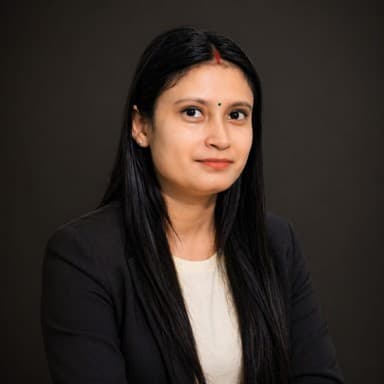
Priyanka Kumari
IB Maths
IB + IGCSE
4rating13 Yrs
Gurugram, All Areas in GurgaonHome / Online / Hybrid
IB Maths TutorIGCSE Maths Tutor
Check availability
Ashok Vihar, Gurugram (Gurgaon), Haryana
IB DP Global Politics home tutoring in Ashok Vihar, Gurgaon almost always begins with a timing question rather than a content one. School in this pocket of the Old Gurugram Sector 3-4 belt typically lets out by mid-afternoon, but by the time homework, another Higher Level subject and dinner are done, a family searching for an IB DP Global Politics home tutor in Ashok Vihar Gurgaon is really asking whether a serious ninety-minute session can still happen on a weeknight without pushing the student's sleep past eleven. It usually can, once the tutor's travel window from nearby Sector 3, Sector 4 or Palam Vihar is fixed in advance. This page sets out what that session covers, how the engagement project gets built, and where home or online tuition fits a subject that runs on live debate, not memorisation.
School names are shown for local academic context only. IB Gram is an independent tutoring platform and is not affiliated with, endorsed by, or representing any school listed here.
Browse a sample of verified IB and IGCSE tutors for PYP, MYP, DP and IGCSE subjects. Matching considers syllabus fit, HL or SL level, preferred tutoring mode, schedule and the kind of support the student needs.
Explore IB tutor optionsIB Maths
IB + IGCSE

Mathematics
IB + IGCSE
Math AAHL
IB + IGCSE
 Australia
 United States+2 more
A family in Ashok Vihar searching for an IB DP Global Politics home tutor in Ashok Vihar Gurgaon is usually not asking about syllabus content first. They are asking whether a tutor can realistically reach the house on a Tuesday or Thursday evening, sit through a ninety-minute session, and leave enough time for the student to eat, wind down and still be asleep at a reasonable hour. Ashok Vihar sits inside the Old Gurugram Sector 3-4 belt in Gurugram (Gurgaon), Haryana, a part of the city where internal roads are narrow and evening traffic from the MG Road and Sohna Road corridors backs up well before seven. A tutor based further out in New Gurugram can lose forty minutes each way on a bad evening, which either eats into teaching time or forces an unrealistically early start that clashes with school pickup.
That is why matching for this locality starts with geography, not just subject expertise. IB Gram treats Ashok Vihar as part of a cluster that includes Sector 3, Sector 4 and Sector 5, along with Rajendra Park and Palam Vihar close by. A tutor already teaching in Palam Vihar on a Monday can often extend the same evening loop to Ashok Vihar on a Wednesday, which keeps the commute predictable for both sides. This matters more for Global Politics than for most other IB subjects, because a rushed or interrupted session does real damage here: the subject depends on sustained argument-building across ninety minutes, not on working through short, discrete problems the way a mathematics session can.
Families near South City 1 and Sushant Lok 1 sometimes ask whether it is worth extending the search radius rather than staying local. The honest answer is that it depends on what is scarce. Global Politics tutors who can also mark to IB DP standard are not common, so a parent in Ashok Vihar may find a stronger subject match by accepting online delivery from a tutor based in Sushant Lok 1 rather than insisting on someone who can drive to Sector 3 twice a week. IB Gram is an independent platform and is not affiliated with, endorsed by or representing any of the schools named on this page; a tutor's proximity to Alpine Convent School or Salwan Public School says nothing about that school's own arrangements.
Weeknight scheduling in this belt also has to work around school-specific timings. Presidium School and Suncity School run extracurricular blocks on different afternoons, and DPS International Edge students in the area sometimes have a later dismissal on Fridays because of enrichment periods, so a tutor confirming availability with the family directly, session by session, tends to work better than a fixed weekly slot locked in from day one. Traffic on the Old Gurugram side of Ashok Vihar is also more unpredictable around the Sector 4 market in the evening, which is one more reason a fifteen-minute buffer built into the schedule saves a session rather than costing one.
IB DP Global Politics reads like a current-affairs subject on the surface, and that is precisely what trips students up. The core themes of power, sovereignty and international relations, human rights, development, and peace and conflict all invite opinion, and a student who has followed the news closely can mistake a strong opinion for a strong answer. Examiners are marking against specific assessment objectives: knowledge and understanding of political concepts, application of those concepts to real cases, and evaluation that weighs competing perspectives rather than settling on one. A tutor's first job in Ashok Vihar is usually not teaching content the student does not know, but unlearning the habit of writing like a newspaper column.
The engagement project is where this gap shows up most clearly. Students choose a real-world political issue, conduct first-hand engagement such as an interview or fieldwork, and then have to connect that engagement back to course concepts in a structured written report. A student in Ashok Vihar who chooses, say, a local civic issue around water supply in the Sector 3-4 belt has a genuine advantage: the evidence is close at hand. But the project still fails if it reads as a personal account rather than an analysis using the vocabulary of power, legitimacy or structural violence that the syllabus actually asks for.
Higher Level (HL) students carry an additional case-study extension that Standard Level (SL) students do not, which means an HL Global Politics home tutor in Ashok Vihar is doing two different jobs across the same family's two children if one is HL and the other SL. The HL extension asks students to examine a political issue in genuine depth using two comparative case studies, and the skill it tests, sustained comparative analysis under a word limit, rarely gets built through reading alone. It needs a tutor pushing back on a first draft, asking where the comparison breaks down, and forcing the student to cut material that is interesting but not load-bearing for the argument.
There is also a maturity gap worth naming honestly. Global Politics assumes a student can discuss human rights violations, conflict and development failure without either performing outrage or going numb to it, and a sixteen or seventeen-year-old in their first year of the Diploma Programme is still building that register. A tutor who has marked IB scripts before can usually tell within the first session whether a student's problem is a knowledge gap or a writing-register gap, and the two need almost opposite kinds of homework: one needs more reading, the other needs more structured practice turning opinion into an argument a marker can award marks for.
The International Baccalaureate (IB) Diploma Programme (DP) Global Politics syllabus is built around four core units: power, sovereignty and international relations; human rights; development; and peace and conflict. Every student studies all four at both HL and SL, with the difference between levels sitting in the HL extension rather than in extra core content. Alongside the core units, every student completes the engagement project, an independent piece of research grounded in real political engagement, which counts toward the internal assessment component and carries real weight in the final grade.
Power, sovereignty and international relations covers how political power is exercised, recognised and contested, including case studies students are expected to bring in themselves rather than rely on the textbook alone. Human rights covers the legal and political frameworks that protect or fail to protect people, and development examines how growth, inequality and structural factors interact, often through case studies a Gurugram student can genuinely relate to given the visible inequality across sectors of the city. Peace and conflict, the fourth unit, examines the causes and resolution of conflict at multiple scales, from interpersonal to interstate.
For HL students, the case-study extension requires two comparative political issues to be examined in depth, written up as extended analytical work rather than short-answer responses. This is where a tutor's role shifts from teaching content to teaching structure: how to select two cases that are genuinely comparable, how to build a thesis that survives contact with counter-evidence, and how to reference political theory without turning the piece into a literature review. The assessment objectives sit above all of this: knowledge and understanding, application and analysis, synthesis and evaluation, and the ability to use appropriate terminology and examples throughout.
Because Global Politics has no fixed textbook the way Economics or Physics does, syllabus coverage in a Gurugram home tuition setting depends heavily on the tutor curating current material: recent policy reports, verified news analysis, and case studies that are still live enough to be interesting but settled enough to have reliable sources. A tutor working with a family in Ashok Vihar typically builds a rolling case file across the year rather than teaching from a single set text, updating it as real-world events unfold so the student always has fresh, defensible examples ready for either the engagement project or the final exam.
Home tuition works better for Global Politics when the session depends on live debate and immediate follow-up questions, which is most of the time for this subject. A tutor sitting across the table in Ashok Vihar can interrupt a weak argument the moment it starts, ask the student to defend a claim on the spot, and read body language that tells them whether a concept has actually landed or is being nodded through. Online tuition works about as well when the session is focused on structured writing practice, feedback on a draft, or reviewing case-study material the student has already read, where screen-sharing a document is genuinely as good as sitting side by side.
So the honest trade-off is this: home tuition in the Old Gurugram Sector 3-4 belt costs travel time that could otherwise go into an extra weekly session, while online tuition removes that cost but loses some of the spontaneous back-and-forth that Global Politics debate thrives on. A hybrid model, one home session and one online session most weeks, tends to suit this subject better than almost any other IB subject IB Gram covers, because it splits the workload along exactly this line: live debate in person, structured feedback online.
Families in Ashok Vihar considering online-only tuition should weigh one specific risk: Global Politics case material dates quickly, and a purely online relationship can drift toward recycled examples if the tutor is not deliberately refreshing them. This is not a reason to avoid online delivery, since many strong Global Politics tutors are simply not based close enough to Sector 3 or Sector 4 to visit weekly, but it is a reason to ask, before committing, how the tutor keeps case studies current rather than reusing the same three examples across every student they teach.
There is no single right answer here, and any tutor claiming there is one should be treated with some suspicion. A student who is naturally quiet in conversation but writes well may actually do better with more online, written feedback and less pressure to perform verbally in the moment. A student who argues confidently but struggles to structure a written response benefits more from home sessions where a tutor can slow the conversation down and turn it into an outline before the student writes anything. The choice should follow the student's actual working style, not a general preference for one mode over the other.
Matching starts with a short conversation about the student's current grade trajectory, whether they are HL or SL, and what specifically is not working: content gaps, writing structure, exam technique under time pressure, or confidence in discussion. This conversation matters more for Global Politics than for a subject with a fixed syllabus, because two students both struggling with Global Politics can need completely different kinds of help, one needs to read more, the other needs to write less opinion and more analysis.
From there, IB Gram shortlists tutors who have taught the IB DP Global Politics syllabus specifically, not just general politics or a related humanities subject, and checks realistic travel time from Ashok Vihar or willingness to teach online. A parent is offered two or three profiles rather than one, with enough detail to compare teaching style, not just qualifications on paper. This step exists because a credential-heavy profile does not always translate into a tutor who can hold a seventeen-year-old's attention through a ninety-minute debate on sovereignty.
The process, in order, looks like this: first, a short call or form to establish the student's level, target grade and specific gap; second, two or three matched tutor profiles sent for the family to review; third, a parent-attended demo session, usually the first real session rather than a separate sales call, so the family sees actual teaching rather than a pitch; fourth, a short check-in after two to three weeks to confirm the match is working before committing further; fifth, ongoing sessions with progress notes shared after key assessments. Each step is optional to skip except the demo, which IB Gram treats as non-negotiable.
That demo session is deliberately not a sales conversation. A parent in Ashok Vihar sitting in on it should expect to see the tutor handle a real piece of Global Politics content, whether that is unpacking a case study or reviewing a practice paragraph, and should come away with a clear sense of whether the teaching style suits their child. If it does not, the match is changed at no obligation to continue, because a mismatched tutor relationship in a subject this dependent on rapport and debate wastes more time than starting the search over.
The first two sessions in a new match are usually diagnostic rather than instructional in the traditional sense. A tutor working with a student in Ashok Vihar will typically ask the student to write a timed response to a past-paper-style question in the first session, cold, without preparation, purely to see how the student currently argues under pressure. That single piece of writing tells an experienced tutor more about where the real gap sits than a parent's description of the problem usually can, because it separates a knowledge gap from a structure gap immediately.
Weeks two and three typically focus on rebuilding whichever gap that diagnostic exposed. If the issue is structure, the tutor works through outlining before writing, teaching the student to plan an argument's shape before committing words to the page. If the issue is content depth, the tutor introduces a rotating set of current case studies tied to whichever core unit the school is currently teaching, so the tutoring reinforces the classroom rather than running a separate parallel syllabus that confuses the student about what actually matters for the next school assessment.
By the fourth week, most students in this setup are producing at least one full timed response per week, reviewed line by line rather than just marked with a grade. But this is deliberately slower than simply assigning more practice papers, because a Global Politics answer that scores poorly usually has one or two specific, fixable problems, an unsupported claim, a case study used descriptively instead of analytically, a missed counter-argument, and pointing those out precisely does more for the next attempt than a general grade ever could.
Parents in the Ashok Vihar and Sector 3-4 area should expect a short conversation at the end of the first month, not a formal report, just a plain update on whether the diagnosed gap is closing and what the next month will focus on. If it is not closing, that is worth hearing honestly rather than being reassured; a tutor relationship that is not working after a genuine month-long attempt is better ended early than persisted with out of politeness, especially with the Diploma Programme's compressed two-year timeline leaving little room for a wasted term.
There is no single fixed rate for an IB DP Global Politics home tutor in Ashok Vihar, and any page that quotes one specific number without knowing the student's level is guessing. Fees for this subject depend on whether the student is HL or SL, how experienced the tutor is at marking IB scripts specifically, whether sessions are home or online, and how close the tutoring window is to final exams, since demand for experienced Global Politics tutors rises sharply in the months before the May and November exam sessions and availability tightens accordingly.
HL tuition generally costs more than SL, not because the syllabus content differs dramatically but because the case-study extension requires a tutor comfortable guiding independent comparative research, a narrower skill than teaching core content. Online sessions are typically priced a little below home sessions of the same length, reflecting the tutor's saved travel time rather than any difference in teaching quality; the actual instruction, especially for a discussion-heavy subject like this one, does not become worse for being delivered over a screen.
Value in this subject is harder to judge purely by hourly rate than in something like Mathematics, where progress shows up in test scores relatively quickly. A Global Politics tutor's value shows up more in how a student's written arguments change over eight to ten weeks: whether claims start carrying evidence automatically, whether counter-arguments appear without being prompted, whether the engagement project moves from a personal account to genuine analysis. Parents comparing two tutors on price alone risk missing that the cheaper one may take twice as long to produce the same shift in writing quality.
Exact fees for a specific tutor in Ashok Vihar can be reviewed once a match is proposed, and depend on the factors above rather than a fixed city-wide rate; IB Gram does not publish a single number because doing so would misrepresent how differently priced two genuinely different tutor profiles can be. What is consistent is that pricing is discussed openly before the demo session, not after, so a family is never committing to ongoing sessions without knowing the range in advance.
The Old Gurugram Sector 3-4 belt around Ashok Vihar is served by a mix of established schools rather than one dominant institution, which changes what a Global Politics tutor needs to know about school-specific pacing. Alpine Convent School and Salwan Public School both have Diploma Programme cohorts that a tutor working locally is likely to have encountered before, while families closer to Palam Vihar and Sushant Lok 1 often draw from Presidium School, DPS International Edge or Suncity School. None of this reflects any arrangement between IB Gram and these schools; they are named here only because they shape the local school-day timetable a home tutor has to work around.
Different schools sequence the Global Politics core units in different orders, and a school running peace and conflict first in Year 1 while another starts with human rights means a tutor cannot assume a fixed syllabus order when planning sessions. This is one reason IB Gram asks, during matching, which school the student attends and, where possible, aligns the tutor's rolling case file to whichever unit the school is currently covering, rather than teaching in a generic sequence that might run ahead of or behind the classroom.
Mock exam timing also varies by school in this belt, typically clustering in November and again in February, and a Global Politics tutor working across two or three students in the same school cluster will often notice patterns in how a particular school's internal assessment criteria are applied, informally, without ever claiming inside knowledge of school policy. That pattern recognition is a genuine, if modest, advantage of using a tutor who already works in the Ashok Vihar and Old Gurugram area rather than one new to the local school cluster entirely.
School enrichment periods, particularly at schools running extended-day programmes nearby, can shift a student's free evening by an hour without much notice, which is a practical scheduling detail rather than an academic one but matters just as much for keeping sessions consistent. Families are usually better served confirming the week's session slot on a Sunday rather than assuming a fixed Tuesday-Thursday pattern will hold every single week across a school year, with exam periods, sports days and the occasional long weekend disrupting it.
Starting the search for an IB DP Global Politics home tutor in Ashok Vihar Gurgaon works best when you have a rough answer ready to two questions before the first call: is the student HL or SL, and what specifically feels like it is not working, content, writing structure, or confidence in discussion. Neither answer needs to be precise; a tutor's diagnostic session in week one will sharpen it considerably. But arriving with even a rough sense speeds up matching and avoids the first two sessions being spent purely on figuring out where to begin.
From there, the process described earlier in this page runs its course: a short intake conversation, two or three tutor profiles matched on subject expertise and realistic travel time from the Ashok Vihar and Sector 3-4 area, and a parent-attended demo session before anything is committed to. Families who have been through this before with another subject often move faster the second time, since they already know what to listen for in a demo, mainly whether the tutor can hold the student's attention through genuine debate rather than a one-sided lecture.
Timing matters more for this subject than families sometimes expect. Starting a search in the month before mock exams leaves very little room to fix a structural writing problem properly; six to eight weeks of consistent sessions makes a real difference to how an engagement project or a timed essay reads, while two weeks mostly just adds last-minute content cramming on top of an unfixed problem. Starting earlier, even at a lower weekly frequency, tends to produce a better outcome than starting late at a higher one.
There is no guaranteed grade outcome from any tutoring arrangement, and any service claiming otherwise for an IB subject as discussion-dependent as Global Politics is not being straight with a parent. What can be offered honestly is a matched tutor, a demo session to confirm fit, and ongoing sessions structured around the student's actual gap rather than a generic syllabus run-through. For a family in Ashok Vihar ready to start, the next step is simply requesting that first match and sitting in on the demo before deciding anything further.
Yes, most tutors matched to this locality already teach somewhere in the Sector 3-4 belt, Palam Vihar or Rajendra Park, so a weeknight visit to Ashok Vihar usually fits an existing loop rather than requiring a special trip. Travel time is confirmed before the demo session, not assumed, because evening traffic near the Sector 4 market can add real delay on a bad day. If no tutor can reach the locality reliably at the requested time, IB Gram offers online delivery instead, which works well for the structured writing side of this subject even if it loses some of the spontaneity of in-person debate.
It is not inherently harder, but it is graded differently in a way that catches students off guard. Global Politics rewards structured analysis over strong opinion, and a student who writes confidently about current events can still lose marks for not applying course concepts explicitly enough. Students coming from a strong History or English background sometimes assume the writing skills transfer directly, and mostly they do, except for the specific habit of anchoring every claim to a named political concept rather than general commentary. That adjustment, not raw difficulty, is usually what a tutor spends the first few weeks on.
The engagement project is an independent piece of research where a student engages first-hand with a real political issue, such as an interview or direct observation, and then analyses it using course concepts in a structured written report. It matters because it is an internal assessment component with real weight in the final grade, and because it is the one part of the course entirely in the student's control, unlike exam-day performance. A student in Ashok Vihar choosing a local civic issue has an evidence advantage, but the project still needs disciplined analytical writing, not a personal narrative, to score well.
For structured writing feedback and case-study review, yes, online tuition works about as well as sitting in the same room. For live debate and on-the-spot argument correction, home tuition has a real edge because a tutor can interrupt and redirect a weak point immediately. Many families in Ashok Vihar end up choosing a hybrid arrangement, one home session and one online session each week, which covers both needs without requiring the strongest available subject specialist to also live within easy driving distance of Sector 3 or Sector 4.
The match is changed at no obligation to continue, and this is treated as a normal part of the process rather than a failure. Fit matters more for Global Politics than for most subjects because so much of the learning happens through discussion, and a student who does not feel comfortable debating openly with a particular tutor will not get the full value of the sessions no matter how qualified that tutor is on paper. Parents are encouraged to be honest after the demo session rather than persisting with a mismatch out of politeness.
Yes, and the honest first step is a direct conversation about what specifically has not moved: content knowledge, writing structure, or confidence under timed conditions, since Global Politics tutoring approaches each differently. A genuine lack of progress after four to six consistent weekly sessions usually means either the diagnosed gap was wrong or the tutor-student fit is not working, and both are fixable by adjusting the approach or changing the match rather than simply continuing unchanged sessions and hoping for a different result closer to exams.
HL students take on an additional case-study extension requiring two comparative political issues examined in depth, which SL students do not do, so a tutor working with an HL student spends real time on comparative analysis skills beyond the shared core content. A family near Old Gurgaon with one HL and one SL child, or a student unsure which level to pick, benefits from a tutor who can explain this difference concretely rather than just repeating the official course description, since the practical workload gap is larger than the syllabus wording suggests.
No, and no honest tutor or platform should promise one for an IB Diploma subject, since final grades depend on the exam itself, the student's own work, and factors outside any tutor's control. What consistent tutoring can realistically deliver is a clearer, more evidence-based writing style, stronger case-study recall, and more confidence handling the engagement project, all of which tend to support a better outcome without being a guarantee of one. Progress is tracked through practice responses and internal assessment drafts rather than promised in advance.
A typical weekly session mixes current case-study discussion with structured writing practice, usually spending the first half working through a recent political development and connecting it explicitly to a core unit, then the second half on either outlining or reviewing a written response. The exact balance shifts depending on where the student is in the school term: closer to mocks or finals, more time goes to timed practice and detailed feedback on past attempts, while earlier in the year more time goes to building case-study depth.
Yes, where possible. Schools in the Ashok Vihar and Old Gurugram Sector 3-4 belt sequence the four core units in different orders, so a tutor aligns the rolling case-study file to whichever unit the school is currently covering rather than teaching a separate, potentially conflicting sequence. This keeps tutoring reinforcing the classroom instead of running parallel to it, which matters particularly around school-set internal assessments and mock exams, where consistency between what the school taught and what the tutor reinforced makes revision considerably more efficient for the student.
No. IB Gram is an independent platform and is not affiliated with, endorsed by or representing the IB Organization or any school named on this page, including those in the Ashok Vihar and Old Gurugram area. Schools are mentioned only to give parents useful local context about the school cluster a tutor may already be familiar with, not to suggest any partnership, tie-up or official arrangement. Every tutor match and every piece of subject guidance comes from IB Gram directly, independent of any school's own resources or policies.
If a weeknight slot in Ashok Vihar or the wider Sector 3-4 belt is the real constraint, say so upfront when requesting a match. IB Gram will shortlist two or three IB DP Global Politics tutors with realistic travel time or strong online delivery, arrange a parent-attended demo session first, and confirm fees before anything is committed. Availability depends on level and current tutor schedules.
Book a free academic consultation