Compare
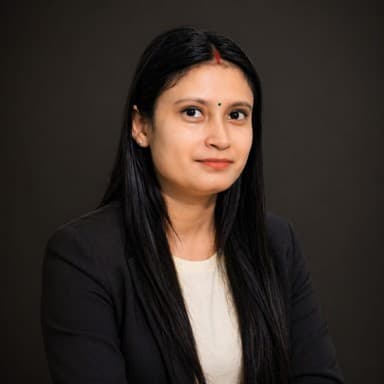
Priyanka Kumari
IB Maths
IB + IGCSE
4rating13 Yrs
Gurugram, All Areas in GurgaonHome / Online / Hybrid
IB Maths TutorIGCSE Maths Tutor
Check availability
Ardee City, Gurugram (Gurgaon), Haryana
IB DP Global Politics in Ardee City comes down to one skill examiners reward and most students never practise: using theory to explain a real case without slipping into opinion. Parents searching for an IB DP Global Politics home tutor in Ardee City Gurgaon are usually reacting to an engagement project draft that reads like an op-ed, or a mock paper where the student knows the concepts but cannot apply them under a 75-minute clock. Families near Sector 52 and along the Golf Course Road approach ask the same three questions: can a tutor travel here on a weekday evening, does online work for a discussion-based subject, and what happens in the first few sessions. This page answers all three, with syllabus detail a generic tutoring page skips.
School names are shown for local academic context only. IB Gram is an independent tutoring platform and is not affiliated with, endorsed by, or representing any school listed here.
Browse a sample of verified IB and IGCSE tutors for PYP, MYP, DP and IGCSE subjects. Matching considers syllabus fit, HL or SL level, preferred tutoring mode, schedule and the kind of support the student needs.
Explore IB tutor optionsIB Maths
IB + IGCSE

Mathematics
IB + IGCSE
Math AAHL
IB + IGCSE
 Australia
 United States+2 more
Matching starts with a short call, not a form that disappears into a database. A parent describes where the student is stuck — Paper 1 stimulus analysis, the Paper 2 extended response, or the engagement project that is due before the internal deadline the school has set. From there, IB Gram proposes a tutor whose own background fits the level: Higher Level (HL) students working through the HL extension need someone comfortable with the fourth unit, while a Standard Level (SL) student revising the four core units needs breadth more than depth. Because Ardee City sits close to the Sector 52 and Golf Course Road corridor, home sessions here are logistically straightforward for tutors who already travel that stretch for other students.
The process itself runs in four steps. First, the parent or student shares the current level, school, and the specific paper or skill causing difficulty. Second, IB Gram proposes one or two tutors whose subject background and teaching style match that need, rather than sending a long list to choose from blind. Third, a demo session is arranged — at home in Ardee City or online, whichever the family prefers — where the tutor works through one real concept with the student so both sides can judge fit before money changes hands. Fourth, if the demo goes well, weekly sessions are scheduled around school hours, and if it does not, a second tutor is proposed at no extra cost.
What the demo actually covers matters more than the fact that a demo exists. For Global Politics, a useful demo does not recap definitions the student already has from class. It takes one core unit — human rights is a common choice because most students have opinions about it already — and shows how an examiner expects a claim about a right being violated to be tied to a named political actor, a specific mechanism of power, and a source. Parents sitting in on this, which IB Gram encourages, usually see within twenty minutes whether the tutor can push a student past description into the kind of analysis Paper 2 rewards.
Not every first match is the right one, and IB Gram does not pretend otherwise. A tutor who is excellent at drilling Paper 1 stimulus questions may not be the right fit for a student who mainly needs help structuring the engagement project's written component. If that mismatch shows up after a session or two, families can ask for a different tutor without an argument about it. What IB Gram will not do is promise a specific grade outcome or claim a fixed number of tutors are available in Ardee City on a given evening — availability depends on the week, the level, and how many other families nearby have already booked that slot.
Ardee City sits inside a pocket of Gurugram (Gurgaon), Haryana, where International Baccalaureate (IB) families are unusually concentrated for a single locality. The corridor running from Sector 52 through to the Golf Course Road approach carries a mix of independent houses and mid-rise societies, and a fair number of them have a Diploma Programme (DP) student in the house at any given time. Golf Course Road itself, Sushant Lok 2, and South City 1 sit close enough that a tutor based anywhere along that stretch can reach Ardee City within a reasonable evening window, which matters more than it sounds for a subject like Global Politics that benefits from a fixed weekly slot rather than one that keeps shifting.
Inside Ardee City, societies such as DLF Park Place, Ireo Skyon and The Close each have their own quirks that affect scheduling. Some have stricter visitor sign-in processes at the gate that add ten minutes either side of a session; a tutor who has been there before knows to build that in rather than arrive exactly on the hour. Sector 43, just north of Ardee City, and Sector 53 to its east are both close enough that families there sometimes end up matched with the same tutor pool as Ardee City itself, particularly for a subject with as small a local base as Global Politics.
Schools near Ardee City that commonly send students into IB DP Global Politics include The Ardee School, The Shri Ram School, Aravali, Heritage Xperiential Learning School, Lancers International School and Pathways World School. IB Gram is an independent platform and is not affiliated with, endorsed by or representing any of these schools — they are named here only because families searching for a tutor in this locality usually study at one of them, and knowing the school helps a tutor anticipate how that school paces its own internal deadlines for the engagement project.
The travel question comes up on almost every first call, and it deserves an honest answer rather than a reassurance. A weekday evening session at 6 or 6:30pm in Ardee City is realistic for a tutor coming from the Golf Course Road side of Gurugram; it is tighter, though still workable, for one crossing from Sohna Road or from further out on NH-48 during peak traffic. Families who want a fixed 5:30pm slot on a weekday sometimes find it easier to hold that slot with an online tutor and reserve home sessions for weekends, when travel time stops being the constraint.
The IB DP Global Politics syllabus has four core units studied by every student regardless of level: power, sovereignty and international relations; human rights; development; and peace and conflict. Higher Level (HL) students add a fifth component, the HL extension, which is a single case study chosen from four options — environment, health, identity or poverty — studied in far greater depth than anything in the core. Standard Level (SL) students stop at the four core units and are assessed more lightly on the breadth of those four rather than depth on a fifth.
Assessment splits across three components. Paper 1 gives both SL and HL students unfamiliar source extracts and asks short, source-based questions tied to the four core units — it rewards students who can read a cartoon, a speech excerpt or a data table quickly and connect it to a concept like sovereignty or legitimacy. Paper 2 is an extended-response paper: one essay question answered in full, drawing on the core units without any source material to lean on, which is where most students discover whether they actually understand a concept or have only memorised its definition. HL students sit a third paper, Paper 3, built entirely around their chosen HL extension case study.
The single hardest habit to build in this subject is separating analysis from opinion, and it is exactly what the brief for Ardee City families should focus on. A student who writes that a government's response to a refugee crisis was wrong has said nothing an examiner can credit. A student who writes that the response illustrates a tension between state sovereignty and international human rights obligations, and supports that with a named case, has done the thing Global Politics actually assesses. Tutors working with Ardee City students on this page's cohort spend real time on exactly this line — teaching students to use a case as evidence for a concept, not as a platform for a personal view.
The internally assessed component is called the engagement project — roughly 2,000 words, built around a political issue the student has engaged with directly rather than read about, and it carries real weight in the final result. It requires the student to describe an engagement activity, connect it to political concepts covered in the core units, and reflect honestly on what the engagement did or did not achieve, which is a different kind of writing from the essay-style answers Papers 1 and 2 reward. Final grades run on the IB's 1 to 7 scale, and the May and November exam sessions are the two points in the year every part of this preparation ultimately has to line up with.
For IB DP Global Politics specifically, home tutoring in Ardee City tends to suit the engagement project and Paper 2 essay practice, because both benefit from a tutor watching body language and hesitation in real time as a student talks through a case; online tutoring tends to suit Paper 1 source drills and HL extension reading, because those are largely about working through material at pace rather than live discussion; and a hybrid arrangement — home sessions every other week, online for the weeks in between — is what most Ardee City families settle into once the school term gets busy. None of the three is wrong. The right one depends on which paper is currently the weak point and how much the family's own week has room for travel.
The case for home sessions is strongest when the student is quiet in class and needs to be drawn out verbally before they can write well. Global Politics rewards students who can argue a position out loud, revise it when challenged, and then put a cleaner version on paper — and that back-and-forth is easier to build face to face, at least in the early months of working with a new tutor. A tutor sitting across the table in a Sector 52 or Sector 53 home can interrupt mid-sentence and ask which actor exactly in a way that feels natural but can come across as clipped over a video call.
The case for online sessions is just as real, and families in Ardee City who dismiss it outright are usually working from an assumption rather than experience. Screen-sharing a marked Paper 1 extract with annotations is, if anything, clearer online than passing a printed sheet back and forth at a table. A student preparing for the HL extension case study can pull up a current news article mid-session and work through it with the tutor exactly as they would in person, and scheduling is far more forgiving when neither side has to account for Golf Course Road traffic at 6pm on a Tuesday.
Where online genuinely falls short is the engagement project supervision meeting some schools expect a tutor to help prepare for, where a student has to describe an activity they physically did — a visit, an interview, a piece of volunteering — and a tutor working in the room can push back on vague description in a way that is harder to sustain politely over a call. A DP2 student six weeks from the May session with a strong Paper 1 but a thin engagement project draft is usually better served by two home sessions a month focused entirely on that project, with everything else handled online.
The most common reason a student in Ardee City ends up searching for a Global Politics tutor mid-year is not that the subject is conceptually hard — most of the vocabulary is accessible on a first read. It is that the subject punishes a writing habit school assignments in earlier years rewarded: having an opinion and defending it persuasively. Global Politics wants the opposite instinct. A student needs to notice their own opinion forming mid-sentence and redirect it into an analytical claim backed by a concept and a case, and that redirect does not come naturally to a student who has spent years being praised for a strong personal voice.
A second, more practical difficulty is timing under exam conditions. Paper 2's extended response has to be planned and written inside a fixed window, and students who write well when given a week to draft an essay often fall apart when they have to structure an argument from a blank page in under twenty minutes before they even start writing. This is a skill that only improves with repeated timed practice, which is exactly the kind of unglamorous, repetitive work a tutor can hold a student to more reliably than a parent can at home in Ardee City after a long school day.
For HL students, the extension case study adds a third layer. Whichever of environment, health, identity or poverty the school has chosen, the material is genuinely dense — often built from academic-style readings rather than the more accessible news-style sources used in the core units — and a student who fell slightly behind during the unit at school can arrive at Paper 3 revision with real gaps rather than minor ones. Because this unit is examined nowhere else, a gap here cannot be papered over by strength in the core four units the way a weak Paper 1 topic sometimes can.
The engagement project causes a different kind of struggle: procrastination, not difficulty. Because it does not have a fixed classroom deadline the way a test does, and because it requires the student to actually go and do something — an interview, a visit, a piece of fieldwork — before they can write about it, it is one of the most commonly delayed pieces of IB DP Global Politics coursework among students in this part of Gurugram. A tutor who sets an early, artificial deadline for the engagement activity itself, weeks before the school's actual cutoff, tends to prevent the last-minute scramble that otherwise damages an otherwise strong Paper 1 and Paper 2 performance.
Global Politics is not offered at every school that runs the IB DP, and among schools near Ardee City it tends to be a smaller elective cohort than History or Economics — sometimes a handful of students per year rather than a full class. That smaller cohort size cuts both ways for a family here. On one hand, a smaller class can mean more individual attention from the school's own teacher. On the other, it usually means fewer past internal assessment samples circulating among students to learn from, and less peer pressure pushing everyone to start the engagement project early, which is where an outside tutor's structure tends to matter more than it would for a bigger-cohort subject.
The Ardee School, being the closest by name and location, understandably comes up often when Ardee City parents describe their situation, alongside The Shri Ram School, Aravali and Heritage Xperiential Learning School, both a short drive out along the Golf Course Road approach. Lancers International School and Pathways World School also draw students from this pocket of Gurugram, sometimes from families who chose to live in Ardee City specifically because of the school run. None of this is an endorsement or a claim of any relationship between IB Gram and these schools — it is local context, nothing more, offered because it shapes what a tutor should expect walking in.
Each school sets its own internal timeline for the engagement project draft, mock exams, and predicted grade submission, and these dates rarely line up across schools even when the schools sit a few kilometres apart. A tutor working with students from two different schools near Ardee City in the same term has to track two separate calendars, and a family should ask, on the first call, whether the tutor already has a sense of their specific school's pacing rather than assuming IB timelines are identical everywhere — the DP framework is common, but internal deadlines are set school by school.
Mock exams typically land six to ten weeks before the real May or November session, and for Global Politics specifically, a mock Paper 2 result is a far better predictor of the final grade than a mock Paper 1 result, because Paper 2 is where the analysis-versus-opinion problem shows up most clearly. A student near Ardee City who scores comfortably on a mock Paper 1 but struggles on Paper 2 is not evenly prepared, whatever the average score suggests, and that is usually the point at which families start looking for a tutor rather than waiting for the next school assessment cycle to confirm the pattern.
Fees for an IB DP Global Politics home tutor in Ardee City depend on level, format and the tutor's own experience, and IB Gram does not publish a fixed rupee figure because the honest answer varies too much to be useful as a single number. What does hold steady is the set of factors that move the price: whether the student is SL or HL, whether sessions are at home or online, how long each session runs, and how experienced the tutor is with the HL extension specifically, since that is a narrower skill than teaching the four core units.
HL sessions tend to cost more than SL sessions per hour, mainly because fewer tutors in Gurugram are confident teaching all four HL extension options well, and a tutor who has actually taught the environment or identity case study before is doing something scarcer than a tutor covering the shared core units. Online sessions are sometimes, though not always, priced a little below home sessions in Ardee City, reflecting the travel time a home tutor builds into the corridor from Golf Course Road or Sohna Road. Families should ask upfront how a tutor prices a mixed schedule — say, three home sessions and one online session a month — rather than assuming a flat rate applies across both formats.
Value is a harder thing to price than an hourly rate, and it is worth being specific about what value means for this particular subject rather than leaning on a vague promise. A tutor who genuinely improves how a student handles Paper 2 timing, or who gets an engagement project draft from vague to specific, is delivering something measurable even without a guaranteed grade attached to it. IB Gram does not promise a 6 or a 7, and any tutor who does should be treated with some caution — what a good tutor can reasonably promise is structured, syllabus-specific work session after session, not an outcome that also depends on the student's own effort between sessions.
Session length matters more for this subject than for some others, because a Paper 2-style extended response genuinely needs unbroken time to plan and draft — a 45-minute session rushed against a school pickup is rarely enough to do a full timed practice essay and then discuss it properly. Families in Ardee City often start with 60-minute sessions and move to 90 minutes closer to the May or November session, when timed full-paper practice becomes the main activity rather than one part of a broader session covering several topics.
The first session, wherever it happens in Ardee City or online, is diagnostic rather than instructional, and families sometimes find this slower start frustrating until they see what it prevents. The tutor works through short questions across all four core units to see where the gaps actually sit, rather than assuming a student's own sense of their weak topic is accurate — it often is not, because a student who feels shaky on human rights sometimes turns out to be equally shaky on development but has simply noticed the human rights gap more because it came up recently in class.
Weeks two and three usually split between two tracks running in parallel: targeted work on whichever core unit the diagnostic flagged as weakest, and, separately, getting the engagement project moving if it has not started yet, alongside short doubt-solving check-ins between full sessions when a student gets stuck on a specific reading. This second track matters disproportionately in the first month, because an engagement project that begins in month one of tutoring has time to go through a rough draft, feedback, and a proper revision before the school's own deadline, while one that begins in month three is usually rushed into a single draft with no real time to improve it.
By the end of the first month, a family in Ardee City should be able to see two concrete things: a completed diagnostic showing where the student stood at the start, and a specific engagement activity chosen and, ideally, already underway. If neither of those exists after four weeks, that is a fair question to raise directly with the tutor, not something to quietly tolerate. A DP2 student close to the May session moves faster through this first month by necessity, often compressing the diagnostic into a single extended session rather than spreading it across two.
Take a realistic case: a Sector 53 family whose DP1 daughter is comfortable in class discussion but freezes on written Paper 2 practice. A first month built around this profile would spend less time on the engagement project, since there is more runway before that deadline, and more time on short, low-stakes timed writing — ten-minute mini-essays rather than full 45-minute ones at first — building up to full timed Paper 2 practice only once the freezing stops happening. A DP2 student six months from the exam would not have that luxury and would move to full timed papers within the first two weeks.
Starting is meant to be a short process, not a sales conversation. A parent or student describes the level, the school if they are comfortable sharing it, and the specific paper or task causing trouble — whether that is Paper 1 stimulus questions, the Paper 2 essay, the HL extension, or an engagement project that has not started. IB Gram uses that to propose a tutor rather than sending a generic list, and there is no obligation attached to that first conversation.
The demo session that follows is the actual decision point, and it is worth treating it that way rather than as a formality to get through before the real tutoring starts. A parent in Ardee City is welcome to sit in, ask the tutor to explain how they would approach the engagement project specifically, and ask what a typical first month looks like for a student at this exact level. A tutor who cannot answer that last question with any specificity is worth reconsidering, regardless of how strong their general subject knowledge sounds on paper.
Once a family confirms, weekly sessions are set around the student's actual school timetable rather than a generic slot, which for Ardee City usually means late afternoon or early evening on weekdays, with weekends held in reserve for the longer sessions the engagement project sometimes needs. Format — home, online, or a mix — can be revisited at any point; it is not a one-time choice locked in at the start, and plenty of families in this corridor shift from mostly-online to mostly-home, or the reverse, once the school term's actual travel pattern becomes clear.
For a DP2 student, starting even a few weeks later than planned can mean losing one of the two or three passes through the engagement project that separate a rushed draft from a considered one, so the honest advice for families close to the May or November session is to start the diagnostic call sooner rather than waiting for a quieter week that may not arrive. For a DP1 student with more runway, the cost of starting a few weeks late is smaller, but the engagement project procrastination problem described earlier tends to fill whatever time is available, so an early start still pays off.
Yes, home sessions are arranged inside Ardee City, including for families in DLF Park Place, Ireo Skyon and The Close. Tutors working this part of Gurugram typically already cover the Sector 52 to Golf Course Road corridor for other students, so reaching Ardee City on a fixed weekday evening slot is usually straightforward rather than a special arrangement. Where a specific evening slot is difficult because of traffic on the Golf Course Road approach, IB Gram will say so directly rather than overpromise a time that is not realistic, and will suggest either a slightly later slot or an online session for that particular week.
For parts of the subject, yes; for others, home sessions have a real edge. Paper 1 source analysis and HL extension reading work translate well onto a screen, and screen-sharing annotated extracts is often clearer than passing paper back and forth. Where online falls a little short is engagement project supervision, which benefits from a tutor reading body language while a student describes fieldwork they actually did. Most families in Ardee City end up with a mix rather than choosing one format exclusively, shifting the balance depending on which paper is the current focus.
It is built around something the student actually did, not a topic they researched from a desk. The roughly 2,000-word engagement project requires a real engagement activity — an interview, a visit, a piece of fieldwork tied to a political issue — described honestly, then connected to specific political concepts from the four core units. A normal essay can be entirely desk-based; this cannot. Students who treat it like a research essay and skip the actual engagement activity tend to produce a weaker, more generic piece, because the reflection section specifically rewards honesty about what the engagement did and did not achieve.
The first step is a direct conversation with the tutor about what the diagnostic showed and what specifically has and has not moved since. Progress in Global Politics is not always a grade jump inside four weeks — sometimes it is a student who now redirects an opinion into an analytical claim without being prompted, which will show up in grades later rather than immediately. If a family genuinely sees nothing changing in either the writing or the engagement project's progress, IB Gram will discuss a different tutor rather than insist the current match continue unchanged.
Yes, though it is worth asking directly whether a prospective tutor has taught the specific case study your school has chosen, since the HL extension has four distinct options — environment, health, identity and poverty — and depth in one does not guarantee depth in another. A tutor confident across all four is less common than one confident on the shared core units. During the demo session, ask the tutor to walk through one key debate from your school's chosen case study; how specific and current their answer is tells you more than their general credentials do.
Consistently tying named cases to political concepts, across Paper 1, Paper 2 and, for HL students, Paper 3, rather than doing this well on one paper and describing events on another. The IB's 1 to 7 scale rewards analytical depth over factual coverage in this subject more than in most others on the DP. IB Gram does not promise any student will reach a 6 or a 7 — that depends on the student's own effort and starting point as much as on tutoring — but structured practice at exactly this analysis-versus-description distinction is what moves a student toward it.
Say so, and a different tutor is proposed at no extra cost. Fit issues in Global Politics tutoring are usually about teaching style rather than subject knowledge — a student who wants to be pushed hard in a fast-paced session may feel unheard with a gentler tutor, and the reverse happens just as often. The demo session exists specifically to catch this before a family commits to a term of weekly sessions, but if a mismatch only becomes clear after a few real sessions, that is still a normal, fixable situation rather than something to work around quietly.
Yes, and tutors familiar with this stretch of Gurugram generally already know the rough after-school patterns at schools families here commonly mention, including The Shri Ram School, Aravali and The Ardee School. IB Gram is not affiliated with either school; this is scheduling context, not any kind of institutional relationship. Exact timings still need to be confirmed on the first call, since extracurricular commitments, mock exam weeks and school-specific internal assessment deadlines shift a family's realistic availability more than the general school-day timetable does.
It can help with Paper 1 and Paper 2 exam technique, but it cannot substitute for engagement project work that has not been done, because that component has its own internal deadline set by the school, usually well before the exam session itself. A crash course close to May or November is most useful for timed Paper 2 practice, past paper practice under exam conditions, and tightening how a student uses core-unit concepts under pressure. Families should ask what the engagement project's status is before assuming a crash course alone will resolve a student's overall Global Politics preparation.
Sessions are arranged one-to-one, matched to the individual student's level and specific gaps rather than run as a fixed-curriculum group class. For a subject with as varied an HL extension choice as Global Politics — four different case studies across different schools — a group format would struggle to serve every student's actual syllabus content at once. One-to-one also suits the engagement project, since each student's engagement activity and topic are different and need individual feedback rather than a shared lesson plan.
Usually within a few days of the first call, once a suitable tutor has been proposed and a demo session scheduled. Ardee City's position along the Sector 52 to Golf Course Road corridor generally makes finding a tutor's availability faster than in more outlying parts of Gurugram, simply because more tutors already travel this stretch. Families with an urgent, exam-adjacent need — a mock exam in two weeks, say — should mention that on the first call, since it changes how quickly IB Gram tries to schedule the demo relative to a less time-pressured enquiry.
Yes — HL students carry the extra HL extension unit and a third exam paper that SL students do not sit, which is a meaningful addition to an already discussion-heavy subject. SL students focus entirely on the four core units across two papers, which is lighter in volume but still demands the same analysis-over-opinion skill that trips up most students regardless of level. A tutor working with an HL student needs to be confident in the specific case study the school has chosen, on top of the shared core-unit teaching an SL student also needs.
If Global Politics has become the subject your Ardee City household argues about on a Sunday evening, a short call is the next step — describe the level, the school, and whichever paper or the engagement project is causing trouble. IB Gram proposes a matched tutor and arranges a demo session, at home or online, before any weekly commitment begins.
Book a free academic consultation