Compare
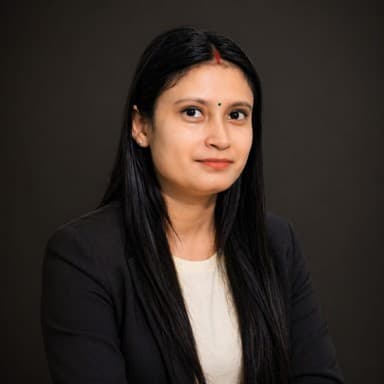
Priyanka Kumari
IB Maths
IB + IGCSE
4rating13 Yrs
Gurugram, All Areas in GurgaonHome / Online / Hybrid
IB Maths TutorIGCSE Maths Tutor
Check availability
Subhash Chowk, Gurugram (Gurgaon), Haryana
When you compare candidates for IB DP Computer Science home tuition in Subhash Chowk, Gurgaon, two tutors can both list a computer science degree and a few years of teaching experience, and still be very different fits — the real test is whether they can actually write clean pseudocode on a whiteboard and explain why a Java solution and an Internal Assessment (IA) product-plus-documentation are not the same task. If you are comparing an IB DP Computer Science home tutor in Subhash Chowk Gurgaon against another candidate, ask both to walk through a past-paper question live before deciding. IB Gram sets up exactly that: a parent-attended demo, home near Subhash Chowk or online, before any commitment.
School names are shown for local academic context only. IB Gram is an independent tutoring platform and is not affiliated with, endorsed by, or representing any school listed here.
Browse a sample of verified IB and IGCSE tutors for PYP, MYP, DP and IGCSE subjects. Matching considers syllabus fit, HL or SL level, preferred tutoring mode, schedule and the kind of support the student needs.
Explore IB tutor optionsIB Maths
IB + IGCSE

Mathematics
IB + IGCSE

Math AAHL
IB + IGCSE
 Australia
 United States+2 more
Subhash Chowk sits at the Sohna Road entry near Sector 32-33 in Gurugram (Gurgaon), Haryana, a junction most Gurgaon residents know for traffic rather than for its tutoring pool — but that pool is genuinely reasonable, drawing from South City 2 and the newer developments across New Gurgaon. A student here is rarely more than a short drive from Sector 32, Sector 33 or Sector 47, all of which fall inside what we treat as one workable zone for scheduling an IB DP Computer Science tutor. Sector 47 sits at the far edge of that zone, and a tutor already covering it typically adds only a few extra minutes to an evening route rather than requiring a separate booking.
Families in Malibu Towne, Orchid Petals and Vatika City make up a steady share of the Computer Science requests we get from this corridor, and one detail that keeps coming up is desktop access: a Computer Science IA genuinely needs a proper development environment, not a phone or a shared family laptop, so a home session where the student's own coding setup is already running tends to save the first fifteen minutes of every visit. A tutor arriving to find the family laptop mid-update or logged into a parent's account loses that time straight back, so confirming the setup the night before a first session is a small habit worth building early.
The Subhash Chowk junction itself is one of the busier intersections on this stretch of Sohna Road, and a tutor crossing it during evening rush can lose real time even for a short distance either side. We would rather flag that plainly when scheduling a recurring weekday slot than let a family assume a five-minute buffer is enough; ten to fifteen is more realistic, and online sessions sidestep the junction entirely on weeks it matters. Families booking a recurring Friday evening slot in particular should build in the extra buffer, since Friday evening traffic near Subhash Chowk tends to run heavier than a typical weekday.
A pattern worth naming directly: families in Orchid Petals and Vatika City sometimes assume a home tutor is the only option simply because that is what a neighbour used for a different subject, without realising Computer Science is one of the few DP subjects where online genuinely performs as well. A student whose actual coding setup is already configured correctly loses little by moving weekly theory sessions online, and the saved commute time is often better spent on an extra twenty minutes of pseudocode practice than on travel. We would rather raise this option directly during the first call than let a family default to home purely out of habit.
IB DP Computer Science looks, from the outside, like a subject a technically-minded student should manage alone — plenty of students already code for fun before they start the course. What actually trips them up is pseudocode fluency: the exam does not accept a solution written in Python or Java syntax, it wants the IB's own pseudocode conventions, and students who have taught themselves to code informally often resist this until quite late, treating it as a formality rather than a skill worth practising on its own, right up until a mock paper marked against the real scheme makes the gap impossible to ignore.
The Internal Assessment compounds this. It is not just a coding project — it is a product plus a substantial piece of documentation covering client meetings, success criteria, design, development, and evaluation, and students who are strong programmers frequently underestimate how long the documentation half takes. Starting the IA in earnest only after most of the product is built, rather than documenting as they go, is the single most common reason students end up rushing the evaluation section in the final week. A student who has been documenting honestly throughout, even briefly after each coding session, rarely faces this particular crunch.
There is a limit to what a tutor can fix once an IA is genuinely late: rebuilding proper documentation for work already done is possible but slower and more painful than documenting from the start would have been. HL students carry the additional weight of abstract data structures and a deeper treatment of computer organisation, which a purely self-taught coder has often never formally studied, however comfortable they are with programming itself, and this particular gap tends to surface only once a HL-specific past paper is attempted properly.
A concrete illustration: a Paper 1 question might present a short stack-based algorithm and ask the student to trace its output step by step, tracking exactly what the stack holds after each operation. A self-taught coder who has built stacks in actual code before, but never had to represent one on paper as a sequence of states, will often get the logic right but lose marks on the working itself, since the mark scheme credits the visible trace, not just a correct final answer pulled from mental arithmetic. This is precisely the kind of gap that rarely surfaces until a timed paper forces it into the open.
The International Baccalaureate (IB) Diploma Programme (DP) Computer Science syllabus, offered at Standard Level (SL) and Higher Level (HL), opens with system fundamentals — hardware, software, and how a computer actually processes an instruction — before moving into computer organisation and networks, topics that surprise students expecting the course to be mostly programming. These sections are conceptual and definition-heavy rather than code-heavy, and students who dive straight into programming practice without covering them properly tend to lose marks on exactly the theory questions they assumed were the easy ones, and this particular loss is avoidable with even modest, deliberate review of the definitions rather than programming practice alone.
Object-oriented programming forms the backbone of the applied sections, tested through pseudocode that models classes, inheritance and encapsulation rather than through a specific programming language's syntax. HL students go further into abstract data structures — stacks, queues, trees, hash tables — implemented and manipulated in pseudocode, which is where the pseudocode fluency gap mentioned earlier becomes most costly, since a student who thinks in Python syntax has to consciously translate every answer, a step that costs valuable time under exam pressure if it hasn't been practised until it becomes close to automatic.
The Internal Assessment solution needs a genuine client, a real product built to address that client's stated need, and documentation walking through the full development cycle with evidence at each stage — screenshots, testing records, evaluation against the original success criteria. It carries a substantial share of the final grade, and a tutor's job is often less about the code itself and more about structuring the documentation so every required criterion is visibly, explicitly addressed, since an examiner working through dozens of scripts rewards documentation that makes the marking process easy to follow.
Take object-oriented programming specifically: a typical exam question describes a small system, say a library membership tracker, and asks the student to design a class with appropriate attributes and methods, including encapsulation through private attributes and public accessor methods. Students who have only written classes informally in Python, without the discipline of explicitly marking attributes private and writing accessor methods, often submit a technically working design that loses marks for not demonstrating encapsulation explicitly enough on paper. The fix is mechanical rather than conceptual: a handful of practice questions specifically testing this convention closes the gap faster than most families expect.
Online usually wins for IB DP Computer Science near Subhash Chowk, home sessions still matter most for IA documentation review, and hybrid — online for weekly theory, home for IA milestones — is what most families here actually choose. Computer Science is one of the subjects where online tutoring genuinely holds up well: screen-sharing a code editor, live-debugging together, and reviewing pseudocode on a shared document all translate almost fully to a video call, which is not true of every subject on this list. For families near Subhash Chowk juggling the junction's traffic, that is a real advantage: online sessions can run reliably at a fixed time without the evening commute risk covered earlier.
Where a home session still earns its place is IA documentation review — sitting beside the student's own project, checking that screenshots, testing evidence and the success-criteria table are all actually present and correctly labelled, which is easier to do thoroughly on the student's own machine than through a shared screen with intermittent lag. It is also useful during the early client-consultation stage, where talking through the product idea benefits from being in the same room. Families in Malibu Towne specifically have mentioned preferring this in-person check precisely because a laggy screen-share makes it easy to miss a mislabeled testing screenshot.
Given the Subhash Chowk junction's traffic, most families we work with in this corridor default to online for weekly theory and pseudocode sessions, reserving home visits for IA milestones — the initial planning stage, a mid-point documentation check, and a final review before submission. It is not the only workable pattern, but it is the one that best balances traffic reality against where in-person attention actually adds value, and a family with a strong preference either way should say so during matching rather than defaulting to what most others choose.
A specific scenario worth naming: a student whose school computing lab access is limited to class time only, with no after-hours or weekend availability, genuinely needs their own development environment working reliably at home regardless of whether sessions themselves happen online or in person. In that situation, an early home session focused purely on getting the setup right, correct software versions, a properly configured project folder, saves recurring friction across every session that follows, online or otherwise. Skipping this step to save one session's fee tends to cost more time later than it saves upfront.
Two tutors can both hold a computer science degree, both list years of IB teaching experience, and still perform very differently in front of your child. The test that actually separates them is simple: ask each to work through a real past-paper pseudocode question, out loud, in front of you. A tutor who is genuinely comfortable with IB pseudocode conventions will do this fluently; one who mostly teaches informal coding will hesitate or slip into Python syntax without noticing, a tell that is much harder to fake than a polished resume or a confident description of past results.
This is exactly what we build the parent-attended demo session around for Computer Science specifically — not a general chat about experience, but a live walk-through of a past IA-style problem or a pseudocode question pulled from a recent paper. You get to watch the explanation happen, not just hear a description of how someone would explain it. If the fluency or the teaching style is not there, we suggest someone else at no cost, and we would rather make that switch early than have a family discover the mismatch three sessions in.
Beyond the pseudocode test, we also match on where in the IA cycle your child actually is — client identified, product being built, or documentation underway — since a tutor strong on theory and past papers is not automatically the right fit for structuring a half-finished IA's documentation. Tutor availability depends on current schedules, tighter close to IA submission windows, so an early conversation gives us more room to match well rather than match fast, particularly in the weeks immediately before a school's own internal IA checkpoint.
A related situation we see fairly often near Subhash Chowk: two tutors both quote similar experience levels, but one has taught primarily at schools running a technically ambitious IA culture while the other has mostly supervised modest, well-documented projects. Neither approach is wrong, but the fit matters, since a technically cautious student paired with a tutor who pushes ambitious scope can end up more stressed than supported, while an ambitious student paired with an overly cautious tutor may be held back unnecessarily. Asking a candidate tutor directly about the kind of IA projects they typically guide students toward reveals this difference faster than a general qualifications conversation does.
The first session usually starts with the same pseudocode test used in the demo, but deeper: a short set of past-paper style problems across a few topics to see exactly where translation from 'how the student thinks' to 'how IB wants it written' breaks down. Alongside that, the tutor checks the IA's actual state, honestly, including whether documentation has been started at all, since that single detail changes the entire plan for the month, since a student mid-build needs momentum-focused sessions while one who hasn't started needs scoping help first.
Weeks two and three usually run two tracks in parallel: regular pseudocode and theory practice covering system fundamentals, networks and OOP, alongside structured IA documentation work if the project is underway. For a student who has been coding without documenting, this is often the point where a tutor introduces a simple habit — screenshot and write a paragraph after every meaningful coding session — rather than trying to reconstruct months of undocumented work retroactively, this habit alone often prevents the worst of the final-week documentation scramble that catches so many students off guard.
By week four, most students are noticeably faster at converting their own coding instincts into correct pseudocode, even if theory recall is still catching up — the practical skill tends to move first. If a student is still slipping into Python or Java syntax under exam conditions after a month of consistent practice, that is worth flagging directly rather than assuming another few weeks will fix it on its own; sometimes the drill needs to change, not just continue, since repeating an exercise that isn't working rarely produces a different result on its own.
For students at schools scheduling their internal Computer Science mock in the December-January window, the first month of tutoring often has to double as mock preparation rather than a purely diagnostic stretch, since the mock date arrives regardless of how much groundwork has been laid. We would rather tell a family upfront that the first month's pace will be faster and more exam-focused than usual in this situation, covering fewer topics in more depth rather than the full syllabus broadly, since a rushed survey of everything tends to help less on a mock than solid command of a narrower set of topics.
Fees for IB DP Computer Science tutoring near Subhash Chowk vary by mode, whether sessions focus on theory and past papers or IA documentation support, and the tutor's own depth of IB-specific experience versus general coding-tutor experience — the latter is more common and usually costs less, but is not automatically the better fit if your child's real gap is pseudocode fluency rather than coding itself. We do not quote a flat rate without knowing which of these applies, and this is worth clarifying directly with a prospective tutor rather than assuming a lower rate automatically signals lower quality across the board.
This is really the same comparison problem raised earlier: a tutor who charges more but is demonstrably fluent in IB pseudocode and has actually supervised IA documentation before is often better value than a cheaper tutor who is a strong general programmer but new to the syllabus's specific demands. We cannot promise this trade-off works out for every family, only that it is the comparison worth making before price becomes the deciding factor, particularly for a family choosing between two otherwise similar-sounding options with meaningfully different rates.
We will not guarantee a grade outcome tied to any fee — the IA in particular is graded on documentation quality and process as much as code, and that depends on the student's own consistency between sessions, not the tutor alone. Sessions focused on close IA documentation review sometimes run a little higher than general theory sessions, reflecting the closer one-to-one attention involved, and it is worth asking specifically about that difference when comparing tutors, since this detail is not always volunteered upfront and can meaningfully change the total cost of an IA-heavy term.
A cost comparison worth making directly: a family choosing between a tutor charging a premium for genuine IB Computer Science experience and a cheaper general programming tutor should weigh how much of the actual gap is pseudocode fluency versus raw coding ability. If the gap is genuinely just coding practice, the cheaper generalist option may serve perfectly well. But if the real problem is translating working code into exam-ready pseudocode, or structuring IA documentation to the mark scheme's expectations, the more expensive, IB-specific tutor is usually the better value despite the higher hourly rate, since a generalist rarely closes that particular gap efficiently.
Students near Subhash Chowk most often come to us from Delhi Public School Sector 45, Suncity School, Matrikiran High School, Salwan Public School or GD Goenka World School — named here only because it helps a tutor understand the student's existing classroom pace, not as any claim of connection to these schools. IB Gram is not affiliated with, endorsed by, or representing any school, board or exam body named on this page, including the IB Organization, and a family whose child attends a school not listed here should simply say so during the first call.
Salwan Public School and Delhi Public School Sector 45 both run sizeable Computer Science cohorts, and in our experience the subject sometimes sees more year-to-year teacher turnover than other DP subjects, simply because CS teachers with strong industry skills have options outside teaching, which can mean students arrive having covered topics at different depths depending on who taught them which year. GD Goenka World School and Suncity School tend to have more established, longer-running CS labs and IA supervision processes, which can mean a smoother first term for a student transferring in from a school with less established computing infrastructure.
Matrikiran High School has a smaller Computer Science cohort in our experience, which sometimes means less individual attention available during regular class time simply due to how timetabling works, rather than any fault of the teaching. Whichever school your child attends, the more useful question for us is not the school's name but how far along the IA is and whether pseudocode is already comfortable, since that shapes the tutor recommendation far more than the school does, and we would rather ask directly than assume based on the school's general reputation alone.
GD Goenka World School's Computer Science cohort in this corridor has, in our experience, tended to run its internal IA checkpoint slightly earlier in the year than several neighbouring schools, which means students there sometimes need IA support to start sooner relative to the calendar than a family might expect based on friends at other schools comparing notes. This is exactly the kind of detail that makes asking for the specific school-set date more useful than assuming a generic DP2 timeline applies evenly across every school in the Subhash Chowk cluster, since two students in the same tutoring group can genuinely be working to different real deadlines.
Getting started means telling us where your child's IA actually stands, whether pseudocode still feels like translation work rather than second nature, and whether home sessions near Subhash Chowk or online fit your week better. We will suggest a tutor and set up the pseudocode-and-IA demo described earlier, with a parent present, before anything is confirmed or paid for, and there is no charge for that first conversation regardless of what you decide afterward.
If your child's school IA deadline is already close, say so immediately — the plan shifts from steady skill-building to triage: making sure documentation exists and is complete before polishing code that already works. Families further from the deadline have more room to build pseudocode fluency properly first, which tends to make the eventual documentation phase considerably less stressful when the deadline finally does arrive. Tutor availability tightens as school IA deadlines approach, so earlier conversations simply give us more options to match well.
If you are already talking to another tutor or agency, we would genuinely encourage the comparison test from earlier: ask both to solve a pseudocode problem live. It is the fastest honest way to see past a qualifications list, and we are comfortable being judged by it. There is no obligation until after your family has sat through the demo session and decided it is the right fit, and we would rather earn that decision through a demonstration than through a sales pitch.
A first call from this corridor sometimes starts with a parent describing frustration rather than a clear technical gap, something like 'he says he understands it but keeps losing marks and I don't know why'. That is a completely usable starting point. Diagnosing exactly where the disconnect sits, pseudocode notation, theory recall, or IA documentation, is what the first tutor session is actually for, and a parent is never expected to arrive with that diagnosis already worked out before calling about an IB DP Computer Science tutor near Subhash Chowk.
Ask them to solve a real past-paper pseudocode question out loud, in front of you, rather than just describing their experience. A tutor genuinely fluent in IB pseudocode conventions will do this comfortably; someone who mainly teaches informal coding often slips into Python or Java syntax without noticing, or hesitates on the IB-specific structure. We build our own demo session around exactly this for Computer Science, and we would rather a family judge us by that same standard than by a list of credentials alone.
The junction is genuinely one of the busier points on this stretch of Sohna Road, and a tutor crossing it during evening rush can run ten to fifteen minutes behind on a bad day. We flag this honestly when scheduling rather than promising a slot we might not reliably hit, and for Computer Science specifically, moving weekly theory sessions online sidesteps the issue almost entirely, since the subject works well over video and traffic becomes irrelevant to the session itself.
It needs to walk through the full development cycle for a real client and product: initial client meeting notes, a clearly defined problem and success criteria, design decisions, development evidence such as screenshots or code excerpts, testing records against the success criteria, and an evaluation section reflecting honestly on how well the final product meets the original need. Missing or thin evidence at any one of these stages, more than weak code itself, is usually what costs marks, which is why documenting as the build happens matters more than most students initially assume.
Almost certainly, yes. Strong informal coding ability and IB pseudocode fluency are related but not the same skill, and students who code comfortably in Python or Java often resist writing IB-style pseudocode because it feels like an unnecessary extra step, right up until exam pressure makes the translation gap obvious. Practising pseudocode specifically, not just more coding, is usually the highest-leverage thing a confident coder can do before Paper 1 and Paper 2, and it is a faster fix than most families expect once it is named clearly.
To some extent, yes, though it is slower and more frustrating than documenting from the start would have been. A tutor can help reconstruct a development narrative from whatever evidence still exists — version history, saved drafts, memory of key decisions — but some detail is usually lost for good. If your child is in this position, tell us early so we match a tutor experienced specifically with IA rescue, not just general CS teaching, since the two require noticeably different approaches to the remaining weeks.
Online works unusually well for this subject compared to most others — screen-sharing a code editor and a shared pseudocode document covers most weekly needs without much loss. Home sessions add the most value around IA milestones, when reviewing a student's actual project files and documentation in one sitting is more thorough than doing it over a laggy screen-share. Most Subhash Chowk families end up mixing both rather than picking one exclusively, and that mix tends to shift naturally as the IA moves through its own stages.
Yes, most of the tutors we match into this corridor already cover Malibu Towne along with Orchid Petals and Vatika City, since the distance between them is short and the junction traffic affects all three similarly. We would still confirm the specific building and preferred timing when we set up the demo, since society entry and parking can add a few extra minutes worth planning around, particularly for a first visit before the tutor and security desk both know the routine.
That is a good problem to have, and it happens. At that point we would look at practical fit — whose schedule matches yours more reliably, who your child seemed more comfortable asking follow-up questions to, and who has more specific experience with your child's current IA stage. We are happy to set up a second demo with the other tutor if the first comparison genuinely does not settle it, since getting this decision right matters more than getting it quickly.
No. Computer Science IA grading depends on documentation quality, process evidence and the student's own consistency between sessions, none of which a tutor fully controls. What we can reasonably offer is a tutor matched to the actual gap, whether that is pseudocode fluency or documentation structure, and honest updates on where things stand, without inventing a number or a promise we cannot stand behind, even when a family understandably wants more certainty than we can honestly provide.
Generally yes. Most tutors covering the Subhash Chowk corridor already treat Sector 47 as part of the same evening route rather than a separate booking, since it sits close to the main Sohna Road entry point. The one thing worth confirming directly is exact timing around the Subhash Chowk junction itself, since a tutor heading further into Sector 47 factors in slightly more travel time than a session staying closer to the main junction.
We ask each shortlisted tutor directly which syllabus version and past papers they are currently teaching from, since IB periodically updates the case study and adjusts emphasis across topics, and practising from an outdated paper set can leave a student under-prepared for the actual current format. This is a fair, specific question to ask any tutor directly during the first session, and a tutor confident in their current material should be able to answer it without hesitation.
If you are comparing IB Computer Science tutors and everyone looks qualified on paper, ask for the live pseudocode test before you decide. Tell us your child's IA stage and whether home near Subhash Chowk or online suits you better, and we will set up a parent-attended demo — no guaranteed grade, no invented tutor count, just an honest comparison.
Book a free academic consultation