Compare
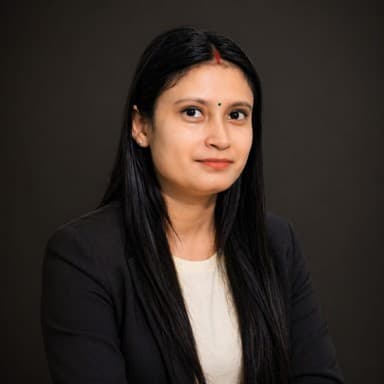
Priyanka Kumari
IB Maths
IB + IGCSE
4rating13 Yrs
Gurugram, All Areas in GurgaonHome / Online / Hybrid
IB Maths TutorIGCSE Maths Tutor
Check availability
South Close, Gurugram (Gurgaon), Haryana
IB DP Computer Science home tutor in South Close, Gurgaon is a search that usually starts after a mock exam, not before term one. A student who managed case study questions and short-answer sections in class meets a Paper 2 problem asking for working pseudocode under time pressure, and the marks disappear. This page sets out what actually separates a 5 from a 7 in this syllabus, how a tutor working from South Close or online across Nirvana Country and South City 2 typically structures sessions, and what changes in the first month before any longer commitment is made. No grade is promised anywhere here, only what the syllabus demands and how a tutor can help meet it.
School names are shown for local academic context only. IB Gram is an independent tutoring platform and is not affiliated with, endorsed by, or representing any school listed here.
Browse a sample of verified IB and IGCSE tutors for PYP, MYP, DP and IGCSE subjects. Matching considers syllabus fit, HL or SL level, preferred tutoring mode, schedule and the kind of support the student needs.
Explore IB tutor optionsIB Maths
IB + IGCSE

Mathematics
IB + IGCSE

Math AAHL
IB + IGCSE
 Australia
 United States+2 more
The gap between a 5 and a 7 in IB DP Computer Science rarely comes down to raw intelligence. It comes down to pseudocode fluency: the ability to read a described algorithm, trace it by hand, and then write structurally correct pseudocode under exam conditions, with no compiler to catch a missing bracket or an off-by-one loop. A student can understand object-oriented programming perfectly in a classroom exercise with a laptop open and still freeze on paper when asked to trace a linked list traversal or write a recursive function from a written specification. That gap between coding with tools and reasoning without them is where marks are lost, and it rarely shows up until a mock, by which point a student may already believe the subject is going well.
The Internal Assessment (IA) is the other place strong students stall, and for a different reason: it looks like a coding project, so students treat it like a hobby build, tinkering with features instead of documenting design decisions. The IA is graded as much on the written commentary — client requirements, a record of tasks, a test plan mapped against success criteria, a genuinely evaluated final product — as on whether the program runs. A student who starts coding in November and only opens a blank documentation file in January is already behind, because the criteria reward evidence of an iterative design process, not a finished app produced overnight. Tutors working with Gurugram students on this subject see the same pattern nearly every session: strong code, thin documentation, criteria left unaddressed.
Part of the difficulty is structural rather than personal. A Computer Science classroom at a school such as Pathways World School or GD Goenka World School might have fifteen to twenty-five students working through networks, computer organisation and object-oriented programming at a shared pace, with limited time for any one student's specific misunderstanding of, say, how a stack differs from a queue in the abstract data structures unit for Higher Level. IB Gram is an independent tutoring platform and is not affiliated with, endorsed by or representing any school named on this page; these schools are mentioned only because they are part of the local IB community families here already recognise. A teacher covering the syllabus on schedule cannot pause a unit for one student's confusion without slowing the rest of the class, which is simply what a shared timetable allows rather than a fault in the teaching.
Honesty matters here: a tutor cannot make the syllabus shorter, and no session schedule turns a rushed February start into a comfortable one. Networks, computer organisation, object-oriented programming and abstract data structures for Higher Level are each dense enough to need repeated exposure, not a single revision weekend. What a tutor changes is the feedback loop — a student's pseudocode gets checked line by line instead of only at the mock — and that difference compounds over months, not days. Families in South Close who start in Class 11 rather than a few months before Paper 2 generally see a steadier build, simply because there is more time for the feedback loop to work before it has to be tested.
The IB DP Computer Science syllabus for the Diploma Programme (DP) sits across several linked topics rather than isolated chapters: system fundamentals, computer organisation, networks, object-oriented programming, and — for Higher Level (HL) students only — abstract data structures, which goes deeper into recursion, trees and hash tables. Standard Level (SL) students sit Paper 1 and Paper 2; HL students add Paper 3, which draws on a pre-released case study students must have studied closely before the exam rather than met for the first time on the day. Each paper rewards a slightly different skill: Paper 1 tests structured short answers across the core topics, Paper 2 leans on problem-solving and pseudocode, and Paper 3 tests how well a student has internalised the specific case study released in advance.
System fundamentals and networks are often where marks are given away needlessly, because they reward precise terminology more than problem-solving. A question on network topologies or the layers involved in data transmission wants the correct term used correctly, not a paraphrase that gestures at the right idea. Computer organisation asks students to reason about how a processor fetches, decodes and executes an instruction, which is abstract enough that students who have only ever programmed in a high-level language sometimes struggle to picture it without a worked diagram redrawn by hand more than once. None of this is conceptually harder than object-oriented programming; it is simply less forgiving of vague answers, because the mark scheme wants specific vocabulary.
Object-oriented programming is usually the topic students enjoy most, because it maps onto code they have actually written — classes, inheritance, encapsulation — and Paper 2 rewards being able to trace a given class hierarchy and predict output correctly. Abstract data structures at Higher Level is where the syllabus gets genuinely harder: stacks, queues, trees and hash tables, plus the recursive algorithms that operate on them, need to be traced by hand on paper, not just implemented in an IDE with autocomplete doing half the thinking. A student who can implement a binary search tree in Python but cannot trace an in-order traversal step by step on a blank sheet will lose marks on exactly the questions HL Paper 2 tends to ask.
The IA sits outside the paper structure entirely: a student-chosen product built for a real or realistic client, assessed against criteria covering planning, design records, a development overview, functionality mapped to success criteria, and evaluation. It is worth roughly a fifth of the final mark and is the one component a tutor can meaningfully shape from the first session, because unlike Paper 1 through Paper 3 it does not depend on exam-day recall. A well-scoped IA — achievable in the time available rather than ambitious beyond a school-term schedule — is usually a bigger factor in the final grade, every Diploma Programme subject being scored on the IB's 1 to 7 scale, than any single topic weakness in networks or system fundamentals.
South Close sits within a pocket of Gurugram (Gurgaon), Haryana, that includes Nirvana Country, South City 2 and the wider Sohna Road stretch running through Sector 49, Sector 50 and Sector 51. Families here are used to a particular kind of school-week logistics: a student coming home from a full day, often followed by a sport or music commitment, with a narrow window before dinner and homework close it off. A home tutor who already knows this pocket does not need a trial run to learn the traffic pattern between, say, Unitech Fresco and the South City 2 side of Sohna Road on a weekday evening — that local knowledge affects whether a 6 pm slot is realistic or whether 7:30 pm, after the evening rush eases, is the more dependable choice.
Within the South Close pocket, societies like Unitech Fresco and Unitech The Close sit close enough to each other that a tutor working with one family in the evening can often take a second session nearby without the commute eating into either slot — a scheduling detail that matters more than it sounds, since it is often the difference between a tutor accepting a weekday evening booking at all and turning it down for a family further out. An IB DP Computer Science tutor near Nirvana Country is, practically speaking, already covering South Close, because the two run together without any real boundary between them, and word travels between IB families there about which tutors actually turn up prepared rather than treat a session as unstructured homework help.
South Close is not a corridor with the heavy congestion that MG Road or Golf Course Road can carry at peak hours, but the Sohna Road stretch nearby does slow meaningfully between roughly 5:30 and 7:30 pm on a working day, which is precisely when most home tuition sessions would ideally start. This is not a dramatic problem, but it is real, and naming it plainly is more useful than pretending scheduling is effortless: a tutor based further up Sohna Road heading toward South City 2 in that window should be expected to sometimes run ten to fifteen minutes late, and families who build that buffer into their expectations tend to have a calmer arrangement than those who do not.
For a subject like IB DP Computer Science, the local traffic reality is one reason online sessions get requested almost as often as home visits from South Close and Nirvana Country families — a coding-heavy subject already assumes screen sharing for reviewing a student's IA build or stepping through pseudocode line by line, so the online format loses less than it would for a subject built around handwritten annotation. Even so, several families in this pocket prefer the first two or three sessions at home, partly to see how the tutor actually explains a stuck concept before agreeing to move fully online, and partly because South Close itself is compact enough that a home visit does not add meaningfully to a tutor's evening.
Among the schools families in the South Close pocket consider, Pathways World School and GD Goenka World School both run the Diploma Programme, and The Shri Ram School, Aravali is another this pocket's IB families mention often, though whether a specific student's own school offers Computer Science as a Group 4 option in a given year is a school-by-school, sometimes cohort-by-cohort matter worth checking directly with the school rather than assuming from this page. Lancers International School and Scottish High International School serve a broader catchment stretching toward Sohna Road and are also part of the same local conversation among IB parents, even for families whose children are not enrolled there, simply because so much of the tutoring word-of-mouth in this pocket runs through parent groups that cross school lines.
Computer Science tends to run as a smaller elective group than subjects like Business Management or Economics within any Diploma cohort, which sounds like it should mean more individual teacher attention — and to some extent it does — but it also means a school may run Higher Level and Standard Level Computer Science as a combined class, splitting attention between two different mark schemes and two different levels of syllabus depth inside one timetable slot. A tutor working one-to-one does not face that split; a session can stay at exactly the level, HL or SL, the individual student needs, for the full time, on the exact syllabus point where that student is currently stuck rather than where the group average sits.
A pattern tutors see repeatedly around mock season: a school teacher who is generous with after-class help in September becomes far less available in November and December, simply because that teacher is now also setting and marking mocks for the entire cohort, not only helping one student's IA. This is not a fault of the teacher; it is a calendar problem, and it is exactly the period a home tutor's fixed weekly slot becomes most useful, because it does not compete with the teacher's own marking load for time. Families who wait until this crunch period to start tutoring often find the first few sessions go toward catching up rather than building ahead, which is avoidable with an earlier start.
It would be inaccurate to claim every school in this catchment teaches Computer Science identically, or that a tutor's approach should be the same regardless of which school a student attends — a student at a school that leans heavily on Python from year one arrives at Higher Level with different habits than one taught primarily through pseudocode exercises, and a tutor who does not ask which is the case before the first session is guessing rather than teaching. Matching a tutor to a student's actual school background, not just their board and level, is a detail that gets skipped more often than it should.
Matching in South Close usually starts with a short conversation about specifics rather than a generic form: which topics inside system fundamentals, networks, object-oriented programming or abstract data structures are already a problem, whether the IA has been started, and whether Higher Level or Standard Level is the target, since the two diverge sharply in the final third of the course. A tutor is then proposed based on that specific profile rather than simply on availability, and the family gets to see the tutor's own approach in a first session before any longer commitment is asked for.
That first session is designed to be attended, not just scheduled and forgotten — a parent sitting in, even for the first fifteen minutes, gets to see whether the tutor actually diagnoses where the student is stuck on, say, tracing a recursive function, or simply starts working through a generic worksheet regardless of what the student already knows. This matters more for Computer Science than for many subjects, because a mismatch here is easy to miss for weeks: a tutor who is a strong programmer but rusty on exam-specific pseudocode conventions can look competent in a session while still not preparing a student correctly for what Paper 2 actually rewards.
If the first tutor is not the right fit — a mismatch in pace, or a gap between the tutor's own programming background and what the IA specifically needs — the match can be revisited rather than treated as fixed. This happens more often with Computer Science than with some other subjects precisely because the syllabus spans such different skills: a tutor strong in networks and system fundamentals is not automatically the strongest guide for object-oriented IA design, and being upfront about that difference saves a family weeks of a session that is not quite landing.
Tutor availability for a specific evening slot in the South Close pocket depends on level, subject depth needed and the tutor's existing weekday schedule, so a family asking for a fixed 6 pm Tuesday slot from week one should expect that to be reviewed against what is realistically available rather than guaranteed on the first call. Most families end up adjusting the requested slot by thirty minutes to an hour once actual scheduling is discussed, a minor compromise against getting matched with the tutor whose background actually fits the syllabus gap rather than whoever happens to be free at the exact requested hour.
Fees for an IB DP Computer Science home tutor in South Close are not fixed at a single rate; they vary by level, since Higher Level typically needs more session time than Standard Level given the added abstract data structures and Paper 3 case study work, by whether sessions are at home or online, by session length, and by how experienced the tutor is with this specific syllabus. There is no single number that applies across South Close, Nirvana Country and South City 2 equally, because a family needing twice-weekly IA-focused sessions in Class 12 has a different requirement from one wanting a once-a-week Class 11 foundation-building slot, and the two are not comparable on price without comparing what each actually buys.
Value in this subject is harder to judge purely by a rate per session than in some others, because the return depends heavily on whether the tutor's own programming background actually overlaps with what the IA needs. A tutor charging a premium rate but genuinely experienced in guiding IA client-based projects through planning, development records and evaluation may save a family more time, and more marks, than a cheaper tutor who is a competent general programmer but unfamiliar with how the IA criteria are actually graded. Judging value on session cost alone, without asking about the tutor's specific experience with this exact component, tends to be a false economy for this particular subject.
This page does not quote a fixed rupee figure, deliberately, because doing so would misrepresent a rate that genuinely depends on the specifics above rather than settle on a single number and present it as standard. What a family can reasonably expect to discuss upfront is the proposed session length, frequency, and whether the rate is reviewed differently for a short-term mock-preparation block versus an ongoing weekly arrangement across a full term. Both exist, and neither is inherently the better choice; it depends on how much time remains before the assessment in question.
Some South Close families look specifically for an IB DP Computer Science crash course in Gurugram in the weeks before a mock or the final exam, rather than an ongoing weekly arrangement, and that is a genuinely different service to price and plan than a term-long slot — a compressed block is usually higher intensity per week, front-loaded on exam technique and past paper practice rather than building new syllabus content from scratch. Being clear about which of the two a family actually needs, before a tutor is proposed, avoids paying for a pace that does not match the time actually available.
For IB DP Computer Science specifically, three modes are realistically available in South Close: home tutoring, online tutoring, and a hybrid mix of both. Online tutoring can work about as well as home tuition for most of the syllabus, because so much of the subject already happens on a screen — reviewing IA code, screen-sharing a pseudocode trace, walking through a network diagram together. Home sessions still tend to hold an edge for a student who is easily distracted working alone at a laptop, or for the first month while a tutor is still learning how a specific student thinks through a problem, while a hybrid arrangement, home sessions for concept-heavy units and online for routine practice, is what a number of families settle into once the initial fit is established.
A number of South Close families use the hybrid split for straightforward logistics rather than any pedagogical preference: a Tuesday evening slot might work better at home while a Thursday slot, squeezed between a sport commitment and dinner, works better online simply because it removes a tutor's commute from the equation entirely, which matters on evenings when every twenty minutes is already accounted for.
Online tutoring is not equally strong everywhere in this syllabus. Computer organisation, in particular, reasoning about how a processor fetches and executes instructions, benefits from a tutor being able to point at a hand-drawn diagram and redraw part of it live in a way that is somewhat clumsier over a shared screen than in person, even with a tablet and stylus in play. Families whose child is a visual learner on exactly this topic sometimes ask for that specific unit to be covered at home even when the rest of the term runs online, and that kind of mixed approach is reasonable rather than an admission that online tutoring has failed.
A more mundane factor decides this for some families than any pedagogical argument: home broadband reliability. A session built around live code review and screen sharing depends on a stable connection in a way that, say, reading through an essay draft together does not, and a household with patchy evening broadband in parts of South City 2 or the outer edge of Nirvana Country may find home visits simply more dependable regardless of the subject-specific argument for online sessions. Testing a connection at the actual session time, before committing to an online-only arrangement, is simpler than assuming daytime broadband speed will hold in the evening.
The first two or three sessions are usually diagnostic rather than instructional in the traditional sense — a tutor works through a mix of past paper questions spanning system fundamentals, networks and object-oriented programming to see exactly where a student's pseudocode breaks down, rather than assuming every student needs the same revision order. This sounds slow to some parents expecting immediate exam drilling from session one, but skipping this step usually costs more time later, because a tutor who starts drilling Paper 2 technique before locating the actual gap ends up reteaching material the student already understood.
If the IA has not yet been started, the first month is often where the client, problem and success criteria get properly scoped, arguably the single highest-leverage piece of work in the entire two-year course, because a poorly scoped IA idea, discovered to be too ambitious or too thin in March, is far harder to fix than to prevent in September or October. A tutor who has seen this pattern across multiple South Close students before knows which project ideas tend to run into trouble around week six of development, and can steer a student away from them before real time is lost.
By the end of the first month, a family should have a reasonably clear sense of two things: whether the tutor's explanations actually land with their child, since not every teaching style suits every learner, even a very capable one, and whether the pace matches what is realistically needed before the next assessment, whether that is a school mock, a coursework deadline, or the May or November exam session itself. If either of those feels off, that is the point to raise it directly rather than waiting through a full term hoping it resolves on its own.
One month is not long enough to fix a genuinely weak foundation in, say, abstract data structures at Higher Level if a student is starting from close to nothing on that unit; it is enough time to establish whether the tutor and student are working well together and whether real progress is visible on smaller, checkable things — a pseudocode trace that was wrong three weeks ago and is now right, an IA success criterion that has moved from vague to testable. Families expecting a dramatic mock-exam jump within four weeks are usually expecting more than any tutor, however good, can reliably deliver in that window.
Starting is deliberately kept simple, because the part that actually matters is the match itself, not the process of arranging it. Searches that lead here vary: IB DP Computer Science tuition in South Close, a one to one IB DP Computer Science tutor, doubt-solving classes, or straightforward past paper practice. Whatever the starting point, a short conversation establishes the level, the specific gap, IA status, and preferred mode, before any tutor is proposed.
The process from first contact to a confirmed match typically runs in four steps. 1) A parent shares the specific syllabus gap, the target level, and whether the IA has been started, either by call or message. 2) A tutor is proposed based on that specific profile, with their relevant background, competitive programming, professional software experience, or prior IB DP Computer Science teaching, explained upfront rather than left vague. 3) A first session is scheduled with a parent invited to attend for at least part of it, at home in South Close or online, with no obligation attached to that first session. 4) After the demo, the family confirms whether to continue, and only then is a regular weekly slot locked in around the student's actual school timetable.
Having a few things ready before the first session speeds up the diagnostic stage considerably: the student's most recent mock or class test paper if one exists, a rough sense of which topics feel shaky, system fundamentals, networks, object-oriented programming or abstract data structures, and, if the IA is underway, whatever has been drafted so far, even if it is incomplete or the student is embarrassed by its current state. A tutor working from an actual paper or an actual draft in the first session, rather than a verbal description of the problem, diagnoses the real gap far faster than a first session spent guessing.
There is no version of this process that promises a specific outcome, and any page that does should be read with some suspicion. What a family in South Close can reasonably expect is a tutor matched to the actual syllabus gap, pseudocode fluency, IA documentation, or a specific unit like abstract data structures, rather than a generic weekly session that treats IB DP Computer Science as interchangeable with any other subject on a tutor's roster.
IB DP Computer Science asks for more independent reasoning than IGCSE Computer Science, particularly through the Internal Assessment and the abstract data structures unit at Higher Level, both of which expect a student to design and justify decisions rather than follow a set structure. A student moving from IGCSE Computer Science in a Gurugram school usually finds the programming itself familiar but the expectation to trace pseudocode by hand, without an IDE, and to write extended justification for design choices in the IA genuinely new. This adjustment is manageable within the first term of Class 11 with the right structure, but is often underestimated because the subject name looks similar across both boards even though the assessment style differs substantially.
Yes, this is one of the more common starting points tutors see, and it is not a sign a student is behind, since many schools teach primarily in Python or another high-level language before introducing formal pseudocode conventions. The fix is mechanical and learnable: repeated practice converting working code into structured pseudocode and back, ideally against real past paper mark schemes so a student sees exactly what examiners accept. A student starting from zero pseudocode experience in early Class 11 has ample time to build this fluency before Paper 2 in Class 12, provided the practice is consistent rather than crammed into the final term.
Both options exist, and most tutors working this pocket cover Unitech Fresco, Unitech The Close and the wider South Close area for home visits alongside online sessions, with the choice usually coming down to the family's preference and the specific evening slot requested. A 6 pm slot on a weekday is more reliably met in person than a slot requested right at the edge of the Sohna Road evening traffic window, where a short delay is realistic rather than unusual. Families who want a guaranteed on-time start every week sometimes choose online for that reason alone, independent of any subject-specific argument.
The Internal Assessment is graded against published criteria covering planning, a record of tasks showing iterative development, the finished product measured against stated success criteria, and a genuine evaluation of what worked and what did not, rather than being graded purely on whether the code runs. A tutor can help substantially here, but the help looks like structured feedback on scoping, documentation and evaluation writing across several sessions, not a single session where a project idea is handed over fully formed. Families should expect IA-focused sessions to run over months rather than weeks for this reason.
The first session is treated as a no-obligation demo specifically so this can be raised honestly rather than endured out of politeness, and a different tutor can be proposed based on what the first session revealed, often a pacing mismatch, or a gap between the tutor's own background and the specific unit the student needs most help with. This is more common in Computer Science than in some subjects, since the syllabus spans networks, system fundamentals, object-oriented programming and abstract data structures, and not every strong tutor is equally strong across all four areas.
Neither background is automatically better; each solves a different problem. A tutor with strong professional programming experience often explains object-oriented programming and the IA's technical build with real fluency but should be specifically experienced with IB mark schemes to teach exam technique for Paper 1 and Paper 2 well. A tutor with a teaching background is often sharper on exam technique and pseudocode conventions but should be asked directly about their own coding depth if the IA needs a genuinely ambitious technical build. Asking about both, rather than assuming one type of background covers everything, avoids a mismatch.
Most Gurugram families start with one session a week, increasing to two during IA-heavy periods or in the months directly before mocks and the final exam, though this depends on the student's starting point and how much of the syllabus already feels secure. A student beginning in Class 11 with a reasonably solid foundation may manage well on one weekly session for most of the course; a student starting later, or one significantly behind on abstract data structures at Higher Level, usually needs two sessions to make up ground without either session becoming rushed.
Paper 3 is exclusive to Higher Level students and is built around a pre-released case study, a real or realistic scenario published by the International Baccalaureate (IB) months before the exam, that students are expected to have studied in real depth rather than encountered for the first time on exam day. Questions on Paper 3 test how well a student can apply the core syllabus concepts specifically to the details of that case study, which rewards close, repeated reading of the released material over generic revision. Tutors typically build a dedicated case study reading and application schedule once it is released each cycle.
Online sessions can cover the IA effectively for most of its development, since screen sharing lets a tutor review actual code and documentation drafts in real time, arguably clearer than reading a printout together. Where in-person sessions sometimes help more is in the early planning conversation, where a whiteboard or paper sketch of a system's structure can be quicker to iterate on together than a shared screen. Many South Close families run IA sessions online throughout, reserving home visits for the concept-heavy units instead, and either approach can work well provided the connection is stable.
Raise it directly and specifically, which topic, which paper, which skill still feels unchanged, rather than assuming the arrangement has failed outright, since a month is genuinely short for a subject this broad and progress on, say, abstract data structures may be real even if a mock score has not yet moved. If, after that conversation, the pace or explanation style still is not working, the tutor match can be revisited; sessions are not treated as a fixed, unchangeable commitment once entered into. Most adjustments needed at this stage are about pace or focus, not a full restart.
Yes, tutors working this pocket regularly serve students from South City 2 and Nirvana Country alongside South Close directly, and this local familiarity means less time is spent explaining basic logistics like typical evening traffic patterns or common school pickup timings, and more time available for the actual subject. It also means a tutor has often already worked with the syllabus interpretation used at nearby schools such as Pathways World School or GD Goenka World School, though every student's own preparation is treated individually rather than assumed from their school alone.
It is usually decided together, and that is often more useful than a family arriving with a fixed idea already chosen, because a tutor who has seen many South Close students' IA projects can flag early whether a proposed idea is realistically scoped for the time available or likely to balloon into something unmanageable by March. A tutor with no input into topic selection can only react to problems after they appear in the documentation; one involved from the planning stage can prevent several of them from happening at all.
If a mock has just shown a gap between what your child can code and what they can trace on paper, or the IA still needs proper scoping, the next step is a short conversation about the specific syllabus point, followed by a parent-attended demo session in South Close or online, with no obligation to continue until the fit is actually clear.
Book a free academic consultation