Compare
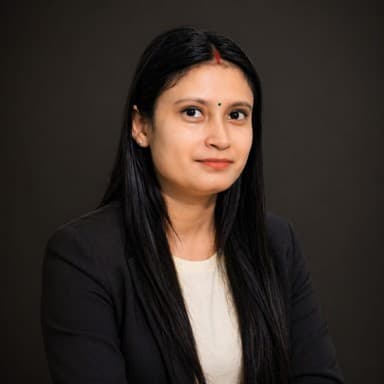
Priyanka Kumari
IB Maths
IB + IGCSE
4rating13 Yrs
Gurugram, All Areas in GurgaonHome / Online / Hybrid
IB Maths TutorIGCSE Maths Tutor
Check availability
Gurgaon
Knowing IB content and knowing exactly how it is marked are not the same skill, and the gap shows most at Higher Level, in the Extended Essay, and inside MYP's own criteria. This page sets out what subject depth looks like across Gurgaon's PYP, MYP and DP classrooms, and when a highly specialised tutor is more than your child needs.
Matched by programme, subject, level, weak areas and your school's calendar.
Math AA, Math AI, Physics, Chemistry, Economics, English and more, to the current syllabus.
Online worldwide around school hours, with home and hybrid options where tutors are local.
Clear updates on what was covered, what needs practice and the next step.
School names are shown for local academic context only. IB Gram is an independent tutoring platform and is not affiliated with, endorsed by, or representing any school listed here.
An expert IB tutor in Gurgaon is someone whose depth shows at the hardest end of the syllabus, not just across the easier middle of it, and IB Gram's home tuition service is built around surfacing that kind of depth before a family commits to a home tutor. Knowing IB content well is not the same as knowing exactly how a Higher Level Paper 3 question is marked, how MYP's four criteria convert into a final grade, or what an Extended Essay examiner actually looks for in a research question. Home tutoring stays the lead format here, a tutor working at your table in Gurugram (Gurgaon), Haryana, through real past papers and mark schemes, with online and hybrid lessons available when a very specific specialist is not within easy reach. What follows separates genuine subject expertise from broad general teaching, states plainly where that depth matters most across PYP, MYP and DP, and says honestly when a highly specialised tutor is more than your child needs right now.
When a parent searches specifically for an expert IB tutor in Gurgaon, the request is usually sharper than a general tutoring search: a family whose child is deep into Higher Level content, wrestling with an Extended Essay research question, or stuck on how MYP criteria actually convert into a grade, wants someone who has genuinely worked at that level, not a generalist willing to try. IB Gram's matching process for this kind of request runs in three steps. 1. The family shares the programme stage (PYP, MYP or DP), subject, HL or SL where relevant, and the specific difficulty, whether that is content, an IA, TOK, or the Extended Essay, through a query or a free consultation call. 2. IB Gram shortlists from its verified tutor profiles, filtering for depth at the actual level requested, checking whether a tutor's experience genuinely reaches Higher Level or the hardest MYP criteria bands rather than stopping at an easier middle ground. 3. A demo or trial session is arranged, usually working through a genuine past paper question or a piece of the student's own IA or EE draft, so the family can judge depth directly rather than take a claim on trust. None of this is guaranteed in advance. IB Gram cannot promise a highly specific specialist, an HL Maths AA examiner with Extended Essay supervision experience, say, is free on a particular evening, and matches stay subject to tutor availability and schedule. What the process does promise is that whoever reaches the shortlist has already been checked for depth at the level the family actually asked for. If the match does not show the depth expected once tested in a trial, the family can ask for a different one rather than continuing with a mismatch.
Programme stage, subject and HL or SL are shared upfront so shortlisting starts from real depth.
Verified profiles are filtered for depth at Higher Level or the hardest MYP bands, not the syllabus generally.
The trial session works through a real past paper question or a piece of the student's own draft.
IB Gram cannot guarantee a highly specific specialist is free on a particular evening.
A different match can be requested if the trial does not show the expected depth.
Browse a sample of verified IB and IGCSE tutors for PYP, MYP, DP and IGCSE subjects. Matching considers syllabus fit, HL or SL level, preferred tutoring mode, schedule and the kind of support the student needs.
Explore IB tutor optionsIB Maths
IB + IGCSE

Mathematics
IB + IGCSE

Math AAHL
IB + IGCSE
 Australia
 United States+2 more
Subject expertise means something different depending on which IB programme stage your child is actually in, and an expert tutor should be fluent in the one that matters right now rather than speaking about the IB in general terms. The Diploma Programme (DP) is a two-year course, DP1 and DP2, of six subjects across six groups, three or four taken at Higher Level (HL, 240 recommended teaching hours) and the rest at Standard Level (SL, 150 hours), with each subject graded 1 to 7. Theory of Knowledge (TOK) and the Extended Essay (EE) together add up to 3 more points, taking the maximum to 45, with 24 points as the minimum for the diploma, subject to the IB's own failing conditions, and Creativity, Activity, Service (CAS) completed alongside. Exam sessions run in May, the session most Gurgaon IB schools use, and in November; May results are released in early July. The Middle Years Programme (MYP) covers five years, MYP 1 to 5, roughly ages 11 to 16, across eight subject groups, and every subject is assessed against four criteria, A to D, each scored 0 to 8, with the criterion total out of 32 converting to a final grade of 1 to 7 through the IB's grade boundaries. The Personal Project sits in MYP 5, with a Community Project in MYP 3 or 4, and MYP eAssessment in MYP 5, on-screen examinations plus ePortfolios, is optional and decided school by school. An expert tutor at this level should be able to explain criterion-based marking specifically, not just describe MYP as 'IB for younger students'. The Primary Years Programme (PYP), for ages 3 to 12, organises learning around six transdisciplinary themes, who we are, where we are in place and time, how we express ourselves, how the world works, how we organize ourselves, and sharing the planet, through units of inquiry and the ten attributes of the IB learner profile, ending in a PYP exhibition in the final year, with no external examinations at this stage.
DP runs six subjects across six groups, three or four at HL and the rest at SL.
TOK and the Extended Essay add up to 3 points on top of the six subject grades.
MYP grades every subject against four criteria, A to D, each scored 0 to 8.
The Personal Project sits in MYP 5; the Community Project sits in MYP 3 or 4.
PYP has no external examinations and ends in a PYP exhibition in the final year.
Most Gurgaon IB schools enter students for the May DP exam session.
Some IB subjects punish shallow knowledge faster than others, and this is where an expert tutor's depth actually earns its place. IB Mathematics splits into Analysis and Approaches (AA) and Applications and Interpretation (AI), each offered at HL or SL, and a tutor who is genuinely expert in AA HL will not automatically be equally strong in AI SL; the two courses reward different thinking, proof and modelling against real-world data respectively, and an expert tutor should be able to say plainly which of the two they are strongest in rather than claiming equal mastery of both. IB Physics, Chemistry and Biology each carry their own internal assessment (IA) built around a student's own investigation, and expert-level tutoring here means knowing what raises an IA from a mid-band script to a high-band one: a genuinely testable research question, appropriate data handling, and honest treatment of uncertainty, not just more pages of content. A tutor who has only taught content and never guided an IA through from question to write-up is missing exactly the part of the course where marks are hardest to earn. English A and English B sit at opposite ends of the language spectrum, English A for students working in the language at a literary, analytical level and English B for those developing it as an additional language, and an expert tutor in one is not automatically strong in the other; ask directly which one a prospective tutor has actually taught to HL. TOK and the Extended Essay deserve their own scrutiny too, since both are assessed on structure and reasoning as much as on content: a TOK essay is marked on how a claim is examined from more than one angle, and an EE is marked partly on how well a student's research question is actually answerable within its word limit, expertise here means knowing the assessment criteria in detail, not simply being a well-read generalist.
AA rewards proof-based thinking; AI rewards modelling against real-world data, and depth differs between the two.
A strong IB Physics, Chemistry or Biology IA needs a genuinely testable research question, not just content.
English A suits literary, analytical work; English B suits students developing the language as an additional one.
A TOK essay is marked on examining a claim from more than one angle, not just content recall.
An Extended Essay is partly marked on whether its research question is actually answerable in the word limit.
Expertise is only useful if it actually reaches your home on a weekday evening, so corridor matters here as much as it does for any other search. Golf Course Road, covering DLF Phase 5, DLF Phase 1, Sectors 42, 43, 53 and 54, Ardee City and Wazirabad, is home to a dense cluster of high-rise societies, DLF The Magnolias, The Aralias, Park Place, The Crest and The Belaire among them, each with its own gate procedure and visitor sign-in, so an expert home tutor who already teaches regularly in this belt saves real lesson time compared with one navigating an unfamiliar society for the first time. Golf Course Extension Road, running through Sectors 56, 57, 58, 59, 60, 62 and 65, Sushant Lok 3, Ghata and Gwal Pahari, with societies including M3M Golf Estate, Ireo Grand Arch and Ireo Skyon, has grown quickly, and the specific specialists a family needs, an HL AA Maths tutor with Extended Essay supervision experience, for instance, are not always based directly in this corridor. Evening traffic between Golf Course Extension Road and older parts of the city can stretch a trip that looks short on a map, which is one honest reason online sessions are worth considering for a very specific specialist based elsewhere. Sohna Road, spanning Sectors 47 to 50, Nirvana Country, South City 2, Rosewood City, Uppal Southend, Vatika Chowk and Badshahpur, with societies such as Central Park Resorts, Orchid Petals, Vatika City, Malibu Towne, Vipul Greens and The Close, is long and varied enough that a tutor's familiarity with the specific stretch matters: the drive from Badshahpur to Vatika Chowk at 6 pm is not the same as the reverse, and an expert tutor who already knows which end of Sohna Road a family sits on plans travel time realistically rather than optimistically.
Golf Course Road covers DLF Phase 5, DLF Phase 1, Sectors 42, 43, 53 and 54, Ardee City and Wazirabad.
Societies include DLF The Magnolias, The Aralias, Park Place, The Crest and The Belaire.
Golf Course Extension Road spans Sectors 56 to 60, 62 and 65, plus Sushant Lok 3 and Gwal Pahari.
M3M Golf Estate, Ireo Grand Arch and Ireo Skyon sit along Golf Course Extension Road.
Sohna Road runs from Sector 47 through Nirvana Country, Rosewood City and Badshahpur.
A tutor's familiarity with a specific stretch of Sohna Road affects realistic travel time.
Families at international schools across Gurgaon, among them Pathways World School Aravali, Pathways School Gurgaon, Lancers International School, Scottish High International School, GD Goenka World School, Heritage Xperiential Learning School, The Shri Ram School Aravali and DPS International Edge, work through a school year with a fairly predictable structure, even though each school sets its own specific dates. IB Gram is an independent platform and is not affiliated with any school named here, the International Baccalaureate, Cambridge International Education or Pearson Edexcel; these names appear only so a family can recognise the kind of calendar their child moves through. Most Gurgaon IB schools enter students for the May exam session, with November used by a minority of schools and by retake candidates, and each school sets its own DP2 mock examination dates, usually several months before May. An expert tutor should already understand how that timeline compresses through DP2: IA deadlines across several subjects clustering in a similar window, TOK essay and exhibition deadlines sitting alongside subject coursework, and the Extended Essay needing sustained attention months before the mocks even start, not a rush in the final weeks. A tutor without depth across this calendar often treats IA, TOK and EE as separate, unrelated fires to put out, when an experienced eye plans them together from early in DP1. Past papers, mark schemes and subject reports come through the school or the IB's own official channels, and they show precisely how marks are awarded, which is where subject expertise and calendar awareness meet: an expert tutor uses these to plan backward from the actual exam session rather than working through a textbook in isolation from how the IB currently assesses it. Command terms, define, describe, explain, evaluate, discuss, to what extent, set the depth each answer needs, and a tutor should be able to explain the difference between them without hesitation. As with dates, always confirm specifics with your child's own school coordinator rather than relying solely on a tutor's estimate.
International schools across Gurgaon set their own DP2 mock dates, usually months before May.
IA, TOK essay and Extended Essay deadlines often cluster in a similar window across DP2.
Past papers, mark schemes and subject reports come through the school or the IB's own channels.
Command terms such as evaluate, discuss and to what extent set the depth an answer needs.
Confirm specific dates with the school's own coordinator rather than relying on a tutor's estimate.
Home tuition is the natural starting point for most families searching for an expert IB tutor in Gurgaon, because a tutor sitting with your child's actual IA draft, past paper or TOK essay outline can see exactly where the reasoning breaks down in a way that is harder to catch remotely. This matters particularly at DP2, when a student is juggling coursework deadlines across several subjects at once and needs someone who can look at the actual document in front of them, not a general description of the problem. Online lessons open up a genuinely different pool of specialists, which matters more here than almost anywhere else, because true HL-level expertise in a specific subject, AA Maths at HL with Extended Essay supervision experience, for example, is scarce enough that the closest genuine match may simply not live within a reasonable drive. An expert tutor working online through a shared whiteboard, with a student's IA or EE draft shared in advance rather than read cold, can mark and annotate work just as precisely as one at your table, provided the setup, a laptop, a stable connection, materials ready beforehand, is right. Hybrid arrangements are common at this level of specialisation: home sessions through most of the term for steady subject teaching, and an online session with a very specific specialist when the topic calls for it, an EE research question review, for instance, or a TOK exhibition consultation. In one honest sentence: home tuition gives the closest, most immediate reading of a student's actual written work, online tutoring gives access to genuine subject-specific expertise regardless of location, and for DP2 students juggling IA, TOK and EE deadlines together, a hybrid plan built around what each deadline actually needs is usually the most realistic answer.
Home sessions let a tutor see an actual IA draft or TOK essay outline directly.
Online opens access to scarce HL-level specialists who do not live within reasonable driving distance.
Share an IA or EE draft in advance so an online tutor is not reading it cold.
Hybrid plans often mix steady home sessions with an online specialist for one specific deadline.
For DP2, the right format often depends on which deadline, IA, TOK or EE, is closest.
An expert one-to-one tutor and a coaching centre batch answer different needs, and the choice usually comes down to how much individual, criteria-level feedback your child's IA, TOK or Extended Essay work actually needs. A verified expert home tutor suits a student stuck at the hardest end of the syllabus; a batch suits a student building general content knowledge who already manages independent work well.
| What matters | Home tutor through IB Gram | Coaching centre batch | Live online group class | Tutor found by word of mouth |
|---|---|---|---|---|
| Attention per student | Full attention on one student, focused on the exact HL or MYP criterion in question. | Split across ten to twenty students covering the general syllabus. | Split across a virtual room, harder to focus on one student's IA. | Depends entirely on the individual tutor, unverified. |
| Syllabus fit | Matched to HL or SL and the exact MYP criterion band needed. | Usually pitched at a general level across HL and SL together. | Tied to one fixed level for the whole class. | Varies, with no guarantee of HL-specific depth. |
| Travel and time in Gurgaon | Tutor travels to your home along your own Gurgaon corridor. | Family travels to a fixed centre, adding to evening traffic. | No travel, but a fixed slot across the group. | Depends on where the tutor happens to be based. |
| Scheduling flexibility | Sessions can shift around IA, TOK and EE deadlines as they approach. | Fixed batch timing, rarely adjusted around one student's deadlines. | Usually fixed to a published class schedule. | Flexible only if the tutor personally agrees to it. |
| IA, EE and TOK help within academic integrity rules | Guides structure and reasoning without writing or completing the work itself. | Rarely built into a group batch beyond general guidance. | Limited to guidance shared with the whole class. | Varies, with no check on how the line is handled. |
| Feedback to parents | Regular, specific updates on criteria and deadlines from one tutor. | Occasional, generic progress notes shared across the batch. | Usually limited to attendance and test scores. | Depends entirely on that individual tutor's habits. |
| How the tutor is chosen and checked | Profile verified for HL-level or EE-supervision experience before shortlisting. | Centre staffing is not something a parent can inspect. | Platform-assigned, with limited visibility into the teacher's background. | Based on referral alone, with no independent verification. |
| Trial before committing | A demo or trial session is arranged before you commit. | Rarely offered; batches usually start on a fixed date. | Sometimes a free class, but not matched to your child's IA or EE. | Depends on whether the tutor personally offers one. |
| Cost structure | Priced for one-to-one specialist attention, generally the higher end. | Usually the lower cost per hour among these four options. | Mid-range, priced for group access rather than individual time. | Sometimes negotiated directly and lower, but with no verification behind it. |
| Who it suits best | A student stuck at the hardest end of HL content, an IA, TOK or the EE. | A student building general content knowledge who manages independent work well. | A student who wants a recorded, repeatable format for general content. | A family with a trusted personal referral already in hand. |
Claimed expertise is easy to state and hard to verify from a written profile alone, so testing it directly matters more here than almost anywhere else, given how much rides on getting IA, TOK and EE support right. IB Gram verifies tutor profiles before shortlisting, checking documented experience at the actual programme stage, subject and level requested, HL versus SL in particular, rather than accepting a general claim of IB experience. There is more a parent can check directly in a trial. Ask a prospective tutor to talk through a specific assessment component, how an IB Physics IA is marked against its criteria, say, or how a TOK essay's use of a real-life situation is assessed, and listen for whether the answer is specific and criteria-based or generally reassuring. Ask how many students they have actually taken through HL, not SL, in this exact subject, since HL depth and SL familiarity are genuinely different things. Ask, too, whether they have supervised Extended Essays before, and in which subject group, since EE supervision experience shows a tutor understands independent research at a level ordinary subject teaching does not always require. The trial lesson is the real test. Bring an actual past paper, an IA draft, or a TOK essay outline, and watch whether the tutor engages with the specific document, pointing out where a claim needs stronger evidence or where a research question is too broad to answer within the word limit, rather than giving general encouragement. That specific, document-level engagement is usually the clearest signal of genuine expertise you will get in a single session.
Ask how an IB Physics IA or similar component is actually marked against its criteria.
Ask how many students a tutor has taken through HL, not just SL, in this exact subject.
Ask whether the tutor has supervised Extended Essays before, and in which subject group.
Bring an actual past paper, IA draft or TOK outline to the trial session.
Watch for specific, document-level feedback rather than general encouragement.
'Expert' is a strong word, and it is worth being precise about what it should mean rather than letting it become a marketing label. Real subject expertise for the IB shows up at the hardest end of the syllabus, not across the easier middle of it: an HL Maths AA student stuck on a genuinely difficult proof question, a DP2 student whose IA research question is too vague to be marked well, or a TOK essay that states a claim but never examines it from a second angle. A tutor who is comfortable through the easier two-thirds of a course but starts hedging once the questions get genuinely hard is not, in the sense that matters here, an expert. Knowing content well and knowing how that content is actually assessed are two different skills, and the gap between them is where a lot of otherwise capable tutoring falls short. A tutor can know IB Chemistry content thoroughly and still not know precisely how an IA's 'personal engagement' criterion is assessed, or know IB English literature well and still not know exactly what separates a 6 from a 7 on a Paper 2 comparative essay. Genuine expertise means being able to look at a piece of a student's actual work and say, specifically, which criterion or mark band it currently sits in and exactly what would move it up one band, not simply 'this is good' or 'this needs work'. It is equally honest to say that a highly specialised tutor is sometimes more than a student needs. A Grade 9 MYP student building foundational confidence in a subject does not need an EE-supervision-level specialist; a patient, broadly capable tutor who explains clearly and keeps the student engaged is often the better and more available match. Save the narrowest, deepest specialists for where the syllabus genuinely gets hard: HL content in DP2, a stalled IA, a TOK essay that needs restructuring, or an EE research question that is not yet answerable. Matching the level of expertise to the actual difficulty in front of the student, rather than defaulting to the most impressive-sounding tutor available, is usually the better decision.
Genuine expertise shows at the hardest end of a syllabus, not across its easier middle third.
Knowing content and knowing how it is marked against specific criteria are different skills.
An expert can name the exact criterion or mark band a piece of work sits in, and why.
A Grade 9 or early MYP student often needs patience and clarity more than deep specialisation.
Save the narrowest specialists for HL content, a stalled IA, or an EE research question in trouble.
Progress with a genuinely expert IB tutor should be visible in specific, checkable ways rather than a vague sense of things improving. In the first month, look for your child starting to use the right vocabulary: naming a specific MYP criterion, describing what a command term like 'evaluate' actually demands, or explaining precisely why an IA research question needs narrowing, rather than saying a subject is generally 'hard'. That shift in vocabulary usually means a tutor is teaching towards how the work is actually assessed, not just towards content. Over a first term, roughly eight to ten weeks depending on school breaks, expect steadier internal assessment marks or mock scores on the specific criteria the tutor has focused on, along with visible drafts, an IA that has moved through more than one version, a TOK essay outline that has been genuinely restructured rather than lightly edited. An expert tutor should also be telling you, honestly, where the remaining gaps are: a student who is strong on content but weak on evaluation, say, or strong analytically but weak on writing to the word limit. A tutor who never names a specific weakness across a full term usually is not looking closely enough at the actual criteria. It is worth being honest about limits too. No tutor, however expert, can guarantee a particular grade, a 7, or any specific score, and a family should be sceptical of any claim otherwise. A student who is not completing drafts between sessions, or who started IA or EE work very late, will not close that gap in a single term regardless of the tutor's depth. If progress genuinely stalls across two terms with no change in the student's own effort or circumstances, raise it directly and specifically with IB Gram rather than assuming a tutor switch alone will fix something that may sit elsewhere, in workload, subject choice, or confidence.
Watch for your child naming a specific criterion or command term rather than calling a subject 'hard'.
A first term should bring a genuinely restructured IA draft or TOK outline, not a lightly edited one.
An honest expert tutor names a specific remaining weakness, not just general encouragement.
No tutor, however expert, can guarantee a particular grade or score.
Late-started IA or EE work will not close a gap in a single term regardless of tutoring.
Starting with an expert IB tutor in Gurgaon is straightforward once the specific need is clear, and being specific is what actually gets your family a genuine specialist rather than a generalist. Send a query or book a free consultation, and be ready to say the programme stage, PYP, MYP or DP, the subject, HL or SL if relevant, and exactly where the difficulty sits: content, an IA, TOK, the Extended Essay, or a specific criterion. IB Gram will ask about your child's school and its calendar too, since DP2 in particular runs on a tight, overlapping set of deadlines that shapes how a tutor should plan. From there, IB Gram shortlists from its verified tutor profiles, filtered for genuine depth at the level requested, and arranges a demo or trial session before your family commits to anything ongoing. Bring an actual past paper, an IA draft, or a TOK essay outline to that first session if you have one; an expert tutor should be able to engage with it immediately rather than starting from a general introduction. Ask directly about HL versus SL experience in this exact subject, and about EE supervision experience if that is where the need sits. Lessons can run at home, online or hybrid depending on your corridor and how specific the specialist needs to be, and this stays flexible rather than fixed at the outset. If the first match does not show the depth expected once tested in a trial, you can ask for a different one. Availability depends on level, subject and schedule and cannot be guaranteed in advance, particularly for the narrowest specialists, but the process itself, query, shortlist, trial, decision, is built to get real subject depth in front of your child as directly as possible.
Say the exact programme stage, subject, HL or SL, and where the difficulty sits before your query.
Bring an actual past paper, IA draft or TOK outline to the trial session if you have one.
Ask directly about HL versus SL experience in this exact subject.
Ask about Extended Essay supervision experience if that is where the need sits.
A different tutor can be requested if the first match does not show the expected depth.
IB Gram is an independent tutoring platform and is not officially affiliated with any school named on this page, the International Baccalaureate, Cambridge International Education or Pearson Edexcel.
It means depth that holds up at the hardest end of the syllabus, HL content, a genuinely difficult IA, a TOK essay that needs restructuring, not just broad familiarity with the course. A tutor can know IB content well across the board and still not be an expert in this narrower sense if they start hedging once questions get genuinely hard. Ask a prospective tutor to work through a difficult HL question or a stuck IA draft in the trial lesson, and watch whether they engage specifically with where the difficulty actually sits, rather than giving a general explanation of the topic.
No, and the gap between the two is where a lot of tutoring falls short. A tutor can know IB Chemistry thoroughly and still not know precisely how an IA's personal engagement criterion is assessed, or know English literature well and still not know exactly what separates a 6 from a 7 on a comparative essay. Genuine expertise means being able to look at a specific piece of work and say which criterion or mark band it sits in and what would move it up, not just whether it is generally good or needs work. Ask directly how a tutor would mark a specific piece of your child's actual work.
When the difficulty is foundational rather than at the hardest end of the syllabus. A Grade 9 or early MYP student building basic confidence in a subject usually needs a patient, broadly capable tutor who explains clearly and keeps them engaged, not an EE-supervision-level specialist. Save the narrowest specialists for where the syllabus genuinely gets hard: HL content in DP2, a stalled IA, a TOK essay that needs restructuring, or an EE research question that is not yet answerable. Matching the level of expertise to the actual difficulty in front of the student is usually the better decision than defaulting to the most impressive-sounding tutor available.
Test it in the trial lesson with an actual document. Bring a past paper, an IA draft, or a TOK essay outline, and watch whether the tutor engages with the specific content, pointing out where a claim needs stronger evidence or a research question is too broad, rather than giving general encouragement. Ask how many students they have taken through HL, not just SL, in this exact subject, and whether they have supervised Extended Essays before. IB Gram verifies documented experience at the level requested before a tutor is shortlisted, but the trial remains the clearest confirmation for your particular child.
Usually yes, subject to tutor availability and how closely a tutor's coverage already matches your corridor. Tutors experienced along Golf Course Road, Golf Course Extension Road and Sohna Road typically factor evening traffic into their scheduling already, and IB Gram tries to match families with a tutor whose existing coverage fits their sector rather than assuming any specialist can travel across the city twice a week. If the specific specialist your child needs is not available for home visits in your exact sector, online or hybrid becomes the honest alternative.
Not for the whole session, and most families with older DP2 students find it works better to stay nearby rather than sit in throughout, since students at this stage are usually working towards independence in how they manage IA and EE deadlines. It helps to check in briefly before or after a session to hear how a draft or a difficult topic is progressing. Study space matters here too: a quiet desk with past papers, the IA or EE draft, and any relevant mark scheme ready makes more difference than direct supervision during the lesson itself.
There is no fixed number that guarantees quality, so ask about the proportion of their teaching that has actually been at HL in this specific subject, rather than a single combined figure across HL and SL. A tutor with a smaller number of HL students in one subject, taken through consistently including EE or IA supervision, often demonstrates more relevant depth than a tutor with a longer but more general IB teaching history. Use the trial lesson, working through an actual HL question or IA draft, to confirm the depth matches what is claimed.
Sometimes, though it depends on the specific overlap in expertise, since IA supervision within a subject, TOK's cross-disciplinary reasoning, and EE research skills are related but distinct. A subject specialist with genuine IA experience in that subject is a natural fit for that IA, but TOK and EE often benefit from a tutor with broader supervision experience across subjects, since both are marked on reasoning and structure as much as on content. Tell IB Gram specifically which of the three is the priority, and whether all three are needed, so the shortlist reflects that rather than assuming one tutor covers everything equally well.
Ask IB Gram for a different match, and be specific about where the gap showed, whether it was HL content, IA guidance, or EE supervision, so the next match can be chosen with that in mind. This is a normal part of finding a genuine specialist rather than an unusual complaint. Depth that looks strong on a written profile does not always hold up once tested against an actual difficult question or a stuck IA draft in a trial lesson, and switching before committing to a full term protects your family from a mismatch that would otherwise cost real time close to deadlines.
For most subjects, yes, provided the draft is shared in advance and the tutor is not reading it cold during the session. An expert tutor working online through a shared document and a whiteboard can mark and annotate an IA or EE draft just as precisely as one sitting at your table, and online often opens access to a genuine subject specialist who does not live within a reasonable drive. What it does not replace as easily is the informal, in-person conversation some students find easier when talking through a stuck research question, so some families along Golf Course Extension Road choose a hybrid pattern, mostly online with an occasional home session before a major deadline.
Send a query or book a free consultation, and say exactly where the difficulty sits: HL content, an IA, TOK, or the Extended Essay. IB Gram shortlists verified tutors with genuine depth at that level, then arranges a demo or trial session before you commit. Lessons can run at home, online or hybrid, and a different match can be requested if the first trial does not show the expected depth.
Book a Free Consultation