Compare
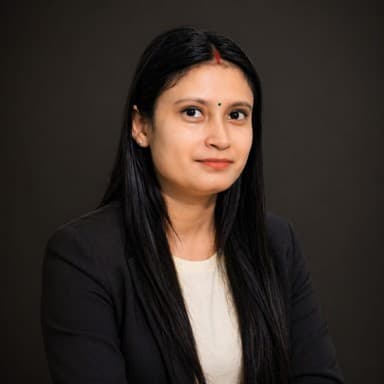
Priyanka Kumari
IB Maths
IB + IGCSE
4rating13 Yrs
Gurugram, All Areas in GurgaonHome / Online / Hybrid
IB Maths TutorIGCSE Maths Tutor
Check availability
Gurgaon
This page is for a parent trying to judge what 'best' can honestly mean when choosing an IB home tutor in Gurgaon: the evidence worth checking about the person, not a ranking, and a simple way to score a trial session for a PYP, MYP or DP student.
Matched by programme, subject, level, weak areas and your school's calendar.
Math AA, Math AI, Physics, Chemistry, Economics, English and more, to the current syllabus.
Online worldwide around school hours, with home and hybrid options where tutors are local.
Clear updates on what was covered, what needs practice and the next step.
School names are shown for local academic context only. IB Gram is an independent tutoring platform and is not affiliated with, endorsed by, or representing any school listed here.
The best IB home tutor in Gurgaon is not a name on a ranked list, it is whichever verified person's trial session actually shows they can teach your child's exact programme and level at home. Home tutoring remains the format most Gurgaon families start with, since a tutor sitting across the table can mark real work against IB's own criteria and watch how a student responds, something no star rating can substitute for. Because IB spans the Primary Years Programme, the Middle Years Programme and the Diploma Programme, 'best' has to be judged against the tutor's own experience at the actual stage a student is in, not a generic label. This page sets out what can genuinely be checked about a tutor, why leading-provider claims cannot be verified, and a simple way to score a trial session honestly.
A best IB home tutor in Gurgaon search almost never means the same tutor for two different families, because what counts as the best fit depends on the child's programme stage and the specific gap that needs closing, not a fixed ranking that applies to everyone. IB Gram starts by asking which programme, Primary Years Programme (PYP), Middle Years Programme (MYP) or Diploma Programme (DP), which grade, and which subjects genuinely need a specialist rather than general homework support. From there, IB Gram asks about the school's own pacing, any Higher Level (HL) or Standard Level (SL) choices already made for a DP1 or DP2 student, and whether there is a specific deadline approaching, an MYP Personal Project, a DP2 mock, or the May exam session. This detail is matched against verified tutor profiles for the exact programme and level; an IB DP tutor in Gurgaon families need for HL Economics is a different search from an MYP tutor in Gurgaon families need for a Criterion B task, even though both might be typing the identical phrase. A free trial session is arranged before anything is committed to, because the single most useful piece of evidence about whether a tutor is the right fit is watching them teach the actual student, not reading a profile summary. Lessons then run at home, online or hybrid, subject to tutor availability, and if the tutor is not the right match the family can ask IB Gram for someone else without repeating the whole intake conversation from scratch.
1. Tell IB Gram the programme, grade and subjects the student needs specialist help in.
2. Share the school's pacing, HL or SL choices already made, and any approaching deadline.
3. Verified tutor profiles are shortlisted for the exact programme, level and subject.
4. A free trial session lets you judge the tutor directly, not a profile.
5. Hours and format, home, online or hybrid, are confirmed after the trial, subject to availability.
6. A different tutor can be requested at any point if the fit is wrong.
Browse a sample of verified IB and IGCSE tutors for PYP, MYP, DP and IGCSE subjects. Matching considers syllabus fit, HL or SL level, preferred tutoring mode, schedule and the kind of support the student needs.
Explore IB tutor optionsIB Maths
IB + IGCSE

Mathematics
IB + IGCSE

Math AAHL
IB + IGCSE
 Australia
 United States+2 more
No, and assuming otherwise is one of the more common mistakes families make when comparing tutors. A Primary Years Programme (PYP) student, ages 3 to 12, has no external examinations and learns through six transdisciplinary themes and units of inquiry; the best tutor here is someone genuinely patient with a wandering seven-year-old's attention, comfortable with inquiry as a method, building toward the PYP exhibition in the final year, not a subject specialist in the way an older student needs. For a Middle Years Programme (MYP) student, MYP 1 to 5, roughly ages 11 to 16, the best tutor is someone who can mark a student's actual work against the four assessment criteria, A to D, each scored 0 to 8, and explain precisely which criterion is weak rather than giving a vague verbal grade; the criterion total out of 32 converts to a final 1-7 grade through the IB's own boundaries, so criterion literacy is not optional. Support for the Personal Project in MYP 5, or the Community Project in MYP 3 or 4, is a further, separate skill worth checking for directly. The Diploma Programme (DP) is where the stakes feel highest to most families, and rightly so. DP runs two years, DP1 and DP2, six subjects across six groups, three or four at Higher Level (240 recommended teaching hours) and the rest at Standard Level (150 hours), graded 1 to 7, with Theory of Knowledge (TOK) and the Extended Essay (EE) adding up to 3 more points toward a 45-point maximum, 24 being the minimum for the diploma. A tutor who is excellent with a DP1 student building HL habits is not automatically the best choice for a DP2 student eight weeks from the May session and needing fast, focused past-paper work instead.
PYP (ages 3-12): best tutor is patient with inquiry, not a subject specialist.
MYP (MYP 1-5): best tutor marks against real criteria A-D, not a vague grade.
DP (DP1 and DP2): six subjects, HL at 240 hours, SL at 150 hours, graded 1-7.
TOK and the Extended Essay add up to 3 points; 24 points is the diploma minimum.
A DP1-strong tutor is not automatically right for a DP2 student near May.
Subject depth is one of the genuinely checkable things about a tutor, and it deserves a direct question rather than accepting 'IB experience' as a blanket claim. For a DP subject, ask specifically whether the tutor has taught it at Higher Level or only at Standard Level; HL Mathematics: Analysis and Approaches, for instance, goes considerably further into proof and rigour than SL, and a tutor whose own depth stops at SL content will struggle to stretch a strong HL student in the final months before an exam, however good they are elsewhere. Theory of Knowledge (TOK) and the Extended Essay (EE) need a genuinely different kind of tutor, someone comfortable with the assessment criteria for an essay or presentation rather than a syllabus of content, since TOK is marked on ways of knowing and justification rather than facts, and the EE marks a 4,000-word piece of independent research against criteria on focus, methodology, argument and reflection. A tutor who teaches IB Chemistry content very well is not automatically the right person to guide a TOK essay, and it is worth asking directly which of these two quite different skills is actually on offer. For MYP subjects, real depth means knowing the four assessment criteria for that specific subject group, since criteria differ meaningfully between, say, MYP Sciences and MYP Individuals and Societies. Command terms, define, describe, explain, evaluate, discuss, to what extent, recur across MYP and DP alike and set how much depth an answer needs; a tutor who can explain the difference between 'describe' and 'evaluate' clearly in the first session is showing exactly the kind of checkable competence that separates real depth from a confident general claim.
Ask directly whether HL experience is genuine HL depth, not relabelled SL teaching.
TOK and the Extended Essay need assessment-criteria fluency, not just subject content.
MYP criteria A-D differ by subject group; a strong tutor names the exact weak criterion.
Command terms set answer depth across MYP and DP; a good tutor explains them clearly.
A best IB home tutor Manesar families can realistically book has to be judged partly on geography before anything else: can this specific tutor reach IMT Manesar, Hero Honda Chowk, Sector 33, Sector 34 or Sector 37 on a weekday evening, given that NH-48 traffic can stretch what should be a short trip. A tutor who is an excellent fit on paper but based far from this corridor is not the best choice for this particular family, whatever a general profile might suggest, and IB Gram weighs the tutor's own base alongside subject fit when shortlisting here. The Golf Course Road corridor, covering DLF Phase 5, DLF Phase 1, Sector 42, Sector 43, Sector 53, Sector 54, Ardee City and Wazirabad, along with societies such as DLF The Magnolias, DLF The Aralias, DLF Park Place, DLF The Crest and DLF The Belaire, has a dense concentration of families running structured DP schedules. A best IB home tutor Golf Course Road families arrange usually books an earlier evening slot here, ahead of the corridor's own peak commute traffic, so the first twenty minutes of a session are not lost. Golf Course Extension Road, spanning Sector 56 through Sector 60, Sector 62, Sector 65, Sushant Lok 3, Ghata and Gwal Pahari, and societies including M3M Golf Estate, Ireo Grand Arch and Ireo Skyon, includes pockets, particularly toward Ghata and Gwal Pahari, that sit further from the main road network. A best IB home tutor Golf Course Extension Road families need may need to accept a slightly later start on a bad-traffic evening, or agree in advance to switch that week to online. Across Gurugram (Gurgaon), Haryana, registering the tutor at the society gate ahead of time saves real minutes at every one of these corridors.
Manesar and NH-48 south: IMT Manesar, Hero Honda Chowk, Sectors 33, 34, 37; judge the tutor's own base first.
Golf Course Road: DLF Phase 1 and 5, Sectors 42-54, Ardee City, Wazirabad; DLF Magnolias, Aralias, Park Place, Crest, Belaire; book early evening slots.
Golf Course Extension Road: Sectors 56-65, Sushant Lok 3, Ghata, Gwal Pahari; M3M Golf Estate, Ireo Grand Arch, Ireo Skyon.
Ghata and Gwal Pahari sit furthest from the main road network in this corridor.
Registering the tutor at the society gate in advance saves time at every corridor.
Families at schools such as Pathways World School, Aravali, Pathways School Gurgaon, Lancers International School, Scottish High International School, GD Goenka World School, Heritage Xperiential Learning School, The Shri Ram School, Aravali and DPS International Edge deal with a broadly similar IB calendar rhythm, even though each school sets its own exact dates. IB Gram is an independent platform and is not affiliated with any school named here, the International Baccalaureate, Cambridge International Education or Pearson Edexcel; the names above are included only so a Gurgaon parent recognises the calendar being described. A best IB home tutor Gurugram families choose still has to fit around this calendar, whichever corridor they are in. Most Gurgaon IB schools enter DP students for the May session, with November used by a minority of schools and by retake candidates, and each school sets its own DP2 mock examination dates, usually several months before May. A tutor who is genuinely the best fit in September, focused on building content and confidence, is not necessarily judged the same way in February, when a DP2 student is almost entirely in past-paper and mock-review mode; a family judging a tutor only by the first month risks missing this shift. MYP and PYP families face a different calendar pressure: unit assessments through the term, the Personal Project deadline in MYP 5, and, for PYP, the exhibition in the final year, each needing its own kind of preparation rather than steady content coverage. A tutor who visibly adjusts what a session focuses on as these dates approach, rather than running the same format from September to July regardless, is showing one of the more reliable, checkable signs among IB tutors in Gurgaon that they are actually the right fit, not just a confident personality.
May is the main DP exam session for most Gurgaon IB schools; November suits a minority and retakes.
DP2 mock dates, set by each school, usually fall several months before May.
Judging a tutor only by the first month can miss how the plan should shift later.
MYP's Personal Project and PYP's exhibition each need dedicated preparation near their deadline.
IB Gram is an independent platform, not affiliated with any school, board or examination body named here.
Home tutoring is the starting point for most families evaluating IB home tutors in Gurgaon, and the reasoning holds up: a tutor sitting across the table can watch exactly how a student sets out an HL proof, check a lab diagram against a real notebook, and work through a printed past paper without a screen in between. For CAS reflections or Extended Essay drafting, a home session also makes it easier to talk through a messy first draft with a pen in hand. IB online tutor Gurgaon families sometimes choose fits a specific gap well: a Higher Level specialist who happens to teach only online, a family managing travel across two corridors on the same evening, or a DP2 student whose only open slot is a late one after CAS commitments. A shared digital whiteboard covers most of what a home session does for content and practice, and the honest limit is that a tutor cannot lean over and point at one line of working the way they can in person, and a patchy connection on a stormy Gurgaon evening can eat into the session. Judging the same tutor across formats is worth doing deliberately rather than assuming quality transfers automatically: a tutor who is excellent in person may be noticeably less engaging on a screen, and the reverse also happens. A hybrid arrangement, home tuition as the default with occasional online sessions around travel or illness, suits a large share of Gurgaon families, and what should not change between formats is the substance of the plan, content, practice and papers, in roughly the same proportion regardless of where the student is sitting.
Home sessions suit proof-writing checks, lab diagrams and printed past-paper work best.
Online sessions suit a specialist HL tutor who is not locally based.
Judge the same tutor in both formats before assuming quality transfers automatically.
Hybrid, home as default with online as a fallback, suits most Gurgaon families.
Every option below suits some families and not others. A single verified home tutor gives programme-specific matching and criterion-literate feedback focused on one student, a coaching centre batch gives structure at a lower cost per hour, a live online group class gives access to specialists without travel, and a tutor found by word of mouth can work well but carries no independent verification at all. Judge each against what this particular student needs this term.
| What matters | Home tutor through IB Gram | Coaching centre batch | Live online group class | Tutor found by word of mouth |
|---|---|---|---|---|
| Attention per student | One student, full attention, every single session | Attention divided across everyone in the batch | Attention divided across the live class, often more people | Whatever that individual tutor naturally gives, unverified |
| Programme and level fit (HL/SL, MYP criteria) | Programme, level and often examining background matched directly | One level taught to a mixed-ability batch | One fixed level across the whole class | Only as accurate as what the tutor tells you |
| Travel and time in Gurgaon | Travel is the tutor's, or none if online | You travel to a fixed centre location | No travel for either side | Depends entirely on where that tutor lives |
| Scheduling flexibility | Built around this student's school and CAS calendar | One timing for the whole batch, non-negotiable | Set by the platform, same for everyone | Usually informal, works until it does not |
| IA, EE or Personal Project guidance | One-to-one, within academic integrity rules, ongoing | Rarely built into a shared batch structure | Rarely built into a shared class structure | Entirely dependent on that tutor's own background |
| Feedback to parents | Specific, regular updates on this student alone | A shared update covering the whole batch | Usually available only if you ask for it | However that one tutor chooses to communicate |
| How the tutor is chosen and checked | Verified and matched by IB Gram directly | Whoever the centre happens to staff that batch with | Whoever the platform assigns to that class | A referral, with no independent check behind it |
| Trial before committing | Standard, free, before anything is booked | Occasionally one trial session is offered | Often a free introductory class exists | Rarely offered; easy to feel obligated after one chat |
| Cost structure | Priced for individual time, one student | Typically cheaper per hour, cost split across the batch | Often the cheapest per hour of the four options | Unpredictable, sometimes negotiated on the spot |
| Who it suits best | A student who needs the pace set around them alone | A student who works fine alongside others at a similar level | A student chasing one specialist without the travel | A family that already trusts whoever referred the tutor |
Every profile a family sees has already been checked against specifics: which programme, PYP, MYP or DP, which subjects, and for DP, whether the teaching experience was genuinely at Higher Level or only Standard Level. Where a tutor has examining or moderating experience for a board, that is noted too, since seeing how marks are actually awarded from the other side of the process is a real, checkable signal of depth that a general listings search for IB tutors in Gurgaon rarely surfaces. Parents should still verify some things directly in the trial session, since no amount of platform checking replaces watching a tutor teach the specific student. Ask to see how they mark a piece of work against real MYP criteria or a DP mark scheme, rather than accepting a verbal grade; ask what programme and level they have actually taught, not just tutored generally; and treat the trial as a genuine audition rather than a courtesy step before hours get booked. No certificate settles the question either. An IB workshop certificate confirms a tutor attended training, not that they can hold a distracted fourteen-year-old's attention through a Criterion B task, and a teaching qualification from a different curriculum does not automatically transfer to IB's own criterion-based marking. This is exactly why identifying the best IB home tutor for a given family cannot be done from a profile alone; it can only be confirmed by watching that specific person teach that specific student.
Programme, level and, where relevant, examining or moderating experience are checked before shortlisting.
Ask the tutor to mark real work against MYP criteria or a DP mark scheme in the trial.
A subject degree or workshop certificate does not confirm teaching ability at a specific level.
Treat the trial session as the actual audition, not a formality before booking hours.
Years of general tutoring experience and years of IB-specific experience are not the same thing, and conflating them is one of the easier ways a family ends up with a tutor who is confident but not actually well matched. A tutor who has taught CBSE or ICSE students for a decade may be an excellent teacher generally, but IB's criterion-based MYP marking, HL and SL structure, and IA, TOK and Extended Essay deadlines are specific enough that general experience alone does not transfer cleanly, and it is fair to ask directly how many years were spent teaching IB specifically, not tutoring broadly. Examining or moderating experience for a board is a stronger, more checkable signal than years alone, because it means the tutor has seen from the marking side exactly how points are awarded and lost, which usually shows up in how precisely they can explain a mark scheme point to a student. Breadth across levels matters too: a tutor who has only ever taught SL Biology cannot speak with the same confidence about HL depth, and a family should ask plainly which levels, not just which subject, the experience actually covers. A highly specialised, deeply experienced tutor is not automatically the right choice for every student, either. A DP1 student just settling into a subject sometimes needs a patient generalist who builds confidence steadily, more than an intensely specialised examiner-level tutor whose natural pace suits a DP2 student eight weeks from May. Judging what makes the best IB home tutor in Gurgaon for a specific family means matching the kind of experience to what the student needs right now, not defaulting to whichever tutor sounds most impressive on paper.
General tutoring experience and IB-specific experience are not the same thing; ask which this is.
Examining or moderating experience is a stronger, more checkable signal than years alone.
Ask which levels, not just which subject, a tutor's experience actually covers.
A highly specialised tutor is not automatically right for a student who is just settling in.
In the first few weeks, progress with a new tutor rarely looks dramatic, and expecting it to is one of the more common ways families misjudge a genuinely good match too early. The early signal worth watching for is a student who can explain, in their own words, why a piece of MYP work lost marks against a criterion, or a DP student who starts using command terms correctly in their own written answers, both small but real signs that the tutor's feedback is actually landing. By around two months in, ask for something more specific than 'doing well': which criterion or command term the student has genuinely improved on, and which one is still weak. A tutor who can answer that precisely, with an example from a real piece of work, is showing the kind of tracked, honest progress that separates a genuinely good match from simply a pleasant hour each week. If the answer stays vague after two months, that is worth raising directly with the tutor rather than assuming it will resolve on its own. No tutor, however experienced or well matched, can guarantee a particular grade or a specific IB score, and any claim to the contrary should be treated as a warning sign rather than reassurance. What a genuinely good IB home tutor can honestly deliver is criterion-literate feedback, an honest term-by-term read of what is improving and what is not, and a plan that changes as the student's stage changes, subject to tutor availability throughout.
Early progress looks like correct self-explanation of lost marks, not a jump in a score.
By two months, expect a specific criterion or command term named as improved, and one still weak.
No tutor can guarantee a grade or IB score; treat any such promise as a warning sign.
A vague progress update after two months is worth raising directly with the tutor.
Getting started is one message: the programme, PYP, MYP or DP, the grade, the subjects that need specialist attention, and anything specific already known, an HL or SL choice, an upcoming Personal Project, a DP2 mock date. IB Gram uses this to ask a few follow-up questions about the school's pacing and any examining-level depth the family wants, before shortlisting verified tutors matched to the exact programme and level. Families searching for the best IB home tutor near me are really asking this same programme-and-level-fit question, wherever in Gurgaon they happen to be typing from. Before the first session, it helps to have the student's most recent assessed work on hand, a marked MYP task or a DP past paper attempt, so the tutor can see the actual gap rather than working from a grade description alone. A free trial session is then arranged, at home, online or hybrid depending on what suits the family and corridor, subject to tutor availability, with nothing committed to beyond that single session. The first real session usually opens with a short diagnostic conversation about what the student finds hardest, giving something concrete to plan around from the first minute. Judge the trial against the checkable evidence covered above, programme and level actually taught, criterion literacy, and how the student responds, rather than a confident sales pitch. If this particular tutor is not the right fit, IB Gram will shortlist a different verified match for the same request rather than leaving the family to start over, since there is no single best IB home tutor in Gurgaon for every case, only the closest checked match for this one.
Message IB Gram with the programme, grade, subjects and anything specific you already know.
Bring recent assessed work, a marked task or a past paper attempt, to the trial.
A free trial session runs at home, online or hybrid, subject to tutor availability.
Judge the trial on programme fit, criterion literacy and student engagement, not a sales pitch.
IB Gram is an independent tutoring platform and is not officially affiliated with any school named on this page, the International Baccalaureate, Cambridge International Education or Pearson Edexcel.
No, there is no single best IB home tutor in Gurgaon that fits every student, because the right fit depends on programme, level and the specific gap a student has, which differs household to household. Any claim naming one universal best tutor is marketing language, not something independently checked. What can genuinely be judged is whether a specific tutor has taught the exact programme and level a student needs, whether they hold examining or moderating experience where relevant, and how a trial session with that particular student actually goes. IB Gram's approach is to verify and match for the individual request rather than promise a universal best.
It shows the tutor has seen the marking process from the inside, how points are genuinely awarded and lost against a real mark scheme or set of criteria, which is a more checkable signal than years of general teaching alone. A tutor with this background can usually explain precisely why a specific answer lost marks, rather than giving a vague 'be more detailed.' Not every strong tutor has examining experience, and its absence does not disqualify anyone, but where it exists, it is worth asking about directly and treating as a genuine plus.
Ask directly which specific topics or papers the tutor has taught at Higher Level, not just whether they 'do HL,' and, in the trial session, ask them to work through a genuinely HL-level past paper question with the student. A tutor whose depth actually stops at Standard Level tends to become noticeably less precise or more hesitant once the content moves past SL boundaries, which a trial session usually reveals within the first twenty minutes if you are watching for it.
Not necessarily. Years of general teaching experience matter less than years spent specifically on IB's own structure, criterion-based MYP marking, DP's HL and SL split, TOK and the Extended Essay, since a long career on a different curriculum does not automatically transfer. A tutor with fewer overall years but focused IB-specific and examining experience can be a stronger match than someone with a longer general career, so ask what proportion of that experience was actually IB.
Yes, home tutoring across Golf Course Road, Manesar, Golf Course Extension Road and the wider Gurgaon corridors is the format most families start with, subject to tutor availability and a realistic travel window. IB Gram weighs a tutor's own base against the family's corridor when shortlisting, since evening traffic on NH-48 near Manesar or the peak commute along Golf Course Road can stretch a short trip. If a specific evening consistently runs into travel trouble, switching that week to online while keeping the same tutor is usually the simplest fix.
Most families are not in the room for the entire session, though introducing the tutor at the start and checking in briefly at the end works well for the first few weeks. A parent present the whole time can make a student more self-conscious about visibly getting something wrong, which works against what focused one-to-one time is meant to achieve. What matters more than presence is a quiet space with a table, since IB work, MYP diagrams, DP past papers, TOK notes, needs room to spread out.
Ask which programme and level they have taught, whether that includes genuine HL depth if relevant, whether they hold any examining or moderating experience, and how they would mark a specific piece of the student's recent work. A tutor who answers with specifics, naming a criterion, a command term, a mark scheme point, is showing far more than one who answers only in general terms about being 'experienced with IB.' These questions matter more before the trial than after it, since they shape what you watch for during the session itself.
Not for every student. A deeply specialised tutor, often examiner-level, tends to suit a DP2 student close to May who needs fast, precise exam technique, but can move too quickly for a DP1 student still building basic confidence in a subject. For a student just settling in, a patient generalist with solid IB grounding is sometimes the better match, so the right level of specialisation depends on where the student actually is, not on which tutor sounds most impressive.
The family can ask IB Gram for a different match at any point, and the process restarts from the shortlist rather than the very beginning, since the programme, grade and subject details are already on file. Being specific about what was not working, pace, personality, or depth pitched at the wrong level, helps IB Gram shortlist a genuinely better fit rather than simply another name. A trial session with the new tutor happens before anything further is committed to.
Yes, the Golf Course Extension Road corridor, including Sector 56 through Sector 65, Sushant Lok 3, Ghata and Gwal Pahari, is covered for home tutoring, subject to tutor availability for the specific evening requested. Parts of this corridor, particularly toward Ghata and Gwal Pahari, sit further from the main road network, so IB Gram tries to match a tutor whose own base makes the corridor realistic rather than promising an exact arrival time regardless of traffic.
No. An IB workshop certificate confirms a tutor attended training, not that they can hold a distracted student's attention through a real criterion-based task, and a teaching qualification from outside IB does not automatically transfer to its own marking structure. Certificates and degrees are a reasonable starting filter, but the trial session, watching the tutor actually teach the specific student, is the only real evidence of fit, which is why IB Gram treats the trial as essential rather than optional.
Message IB Gram with the programme, grade and subjects, including any HL or SL choices and upcoming deadlines. A free trial session, at home, online or hybrid and subject to tutor availability, comes before any commitment, judged against the checkable evidence above rather than a ranking. If the match is not right, IB Gram will shortlist a different verified tutor for the same request.
Book a Free Consultation