Compare
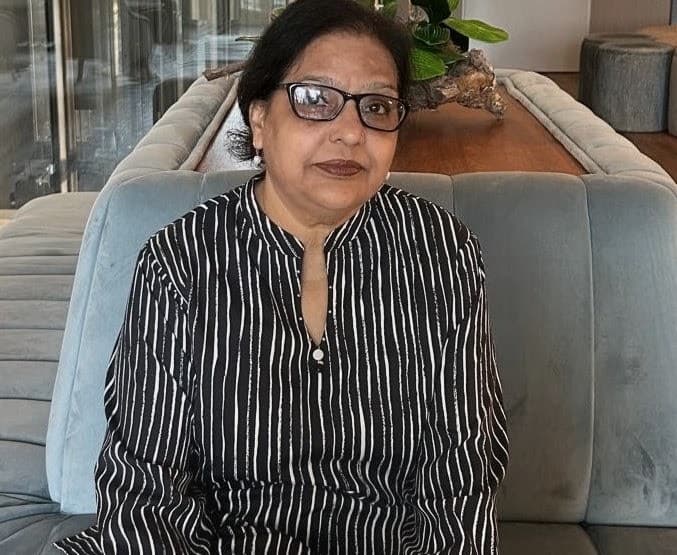
Mangla Bhardwaj
Hindi A
IB + IGCSE
4rating40 Yrs
Gurugram, All over GurgaonHome / Hybrid / Online
IB Hindi tutorIB DP Hindi teacher
Check availability
One-to-one tutors for Cambridge IGCSE Hindi as a Second Language 0549 and the Edexcel International GCSE Hindi route where a school offers it, covering Devanagari accuracy, formal written register, the listening exercises and the optional speaking component, taught online worldwide in your own time zone or at home in selected Indian cities.
Matched by programme, subject, level, weak areas and your school's calendar.
Math AA, Math AI, Physics, Chemistry, Economics, English and more, to the current syllabus.
Online worldwide around school hours, with home and hybrid options where tutors are local.
Clear updates on what was covered, what needs practice and the next step.
Almost every parent who contacts IB Gram about IGCSE Hindi says a version of the same thing: the child speaks Hindi every day, at home, with grandparents, with the driver, with half the class in the corridor, and the report card still says 5 or 6. That is not a contradiction. Cambridge IGCSE Hindi as a Second Language 0549 assesses written Devanagari, formal register, reading comprehension under time pressure and structured listening, none of which a household conversation trains. Our IGCSE Hindi tutors start by separating what the student already has, which is usually fluency and vocabulary range, from what the paper is actually marking. Sessions run online worldwide in your family's own time zone; home tutoring exists only in India, and only in cities where a tutor is currently free.
Four pieces of information decide the match, and "we need a Hindi teacher" is not one of them. IB Gram asks which syllabus the school teaches and the code on the entry, which grade the student is in, whether the school is entering them for the speaking component, and what the student's Hindi actually looks like today: do they read comfortably, do they write in Devanagari at all, and is the household language Hindi, a regional language, or English. That last answer changes the tutor more than anything else. A student whose Hindi is fluent but unwritten needs someone who can correct script and register without patronising them. A student who genuinely started late needs a tutor with the patience to build from the akshar chart while still working on 0549 task types, because the exam will not wait for the foundations to finish. The first session is diagnostic. The tutor has the student read a short unseen passage aloud, write a paragraph by hand, and attempt one past-paper exercise, then reports where the marks are going: script, register, grammar, comprehension or exam technique. That note goes to you in writing after the session, so you can see the reasoning rather than accept a verdict. Fees depend on the tutor's experience, the grade and how often sessions run, and the rate for a specific tutor is quoted in writing before you book. If the fit is wrong, we change the tutor.
Tell us the syllabus code on the entry, usually 0549, and the grade
Say whether the school is entering the student for the speaking component
Describe the real starting point: reads fluently, reads slowly, or barely reads Devanagari
First session is diagnostic: read aloud, write by hand, attempt one past-paper exercise
A written note after every session, naming what improved and what did not
Rates quoted in writing before booking; free trial lesson; tutor changed if the fit is wrong
Learn with verified tutors matched for IGCSE Hindi, with strong exam support, fast feedback, and structured preparation.
Hindi A
IB + IGCSE
In Grade 9, the work that pays is script fluency and reading stamina. A student who reads a page of unvowelled Devanagari prose at a comfortable pace, and writes a paragraph without stopping to reconstruct a conjunct, has removed the ceiling from everything that follows. This is also the right year to fix gender and postposition habits, because they are still correctable before they harden into exam writing. Reading outside the textbook helps here, and a tutor will usually suggest a newspaper column or a graded storybook rather than more worksheets. Grade 10 is when task types take over. Note-making, summary, functional writing and the extended piece each have their own shape, and students lose marks by writing a good piece of the wrong kind. Summary in particular defeats strong speakers, because compressing a passage into your own Hindi is much harder than understanding it. Listening practice should start properly this year, with recordings played once at exam pace rather than replayed until the answer appears. Grade 11 is exam craft. Time on the reading and writing paper is tight for a slow writer, so timed sections, planning in thirty seconds and knowing when to stop a composition become the agenda. If the school enters students for the speaking component, rehearsal of the presentation and the follow-up conversation belongs here too, well before the recording window.
Grade 9: reading stamina, handwriting speed, gender and postposition habits
Grade 10: the individual task types, especially note-making and summary in the student's own words
Grade 10: listening drilled at exam pace, played once, not on repeat
Grade 11: timed full papers, planning discipline and finishing the extended writing
Grade 11: speaking presentation and conversation rehearsal where the school enters it
Students arriving from CBSE or state-board Hindi get a bridging plan before anything else
Cambridge treats this subject as a second-language route, and the full title on the certificate is Hindi as a Second Language, syllabus 0549. That matters more than it sounds. It is written for learners who already have working Hindi and need to consolidate it for academic and everyday use, not for a literature candidate analysing Premchand or Mahadevi Verma. Nobody sits this paper to be examined on poetic devices, and a tutor who turns it into a literature course has misread the qualification. All candidates take a reading and writing examination and a listening examination. The reading and writing paper runs through several exercises of increasing demand, from short comprehension responses and matching through note-making and summary to functional writing and a longer extended piece. The listening paper is shorter, built from separate recorded exercises, and tests comprehension rather than transcription. Centres may additionally enter students for a speaking component, which is reported separately from the main grade; whether your school offers it is a school decision, so ask them directly rather than assuming. Pearson also runs an International GCSE in Hindi that some schools use instead. Availability of that route has moved around over the years, so confirm the exact code and series with your school before buying anything. Exercise counts, timings and weightings are revised between syllabus cycles, and the current syllabus document for your exam year is the only source worth trusting.
0549 is Hindi as a Second Language, not a Hindi literature qualification
A reading and writing examination plus a separate listening examination
Tasks range from short comprehension and matching to note-making, summary and extended writing
An optional speaking component, entered by the centre and reported separately from the grade
Pearson's International GCSE Hindi route exists in some schools; confirm the code with yours
Timings and exercise structure change between syllabus cycles, so check the document for your exam year
India is where this subject is densest, which is unsurprising and worth being specific about. Home tutoring is possible, city by city, where a tutor currently has in-person slots. Demand is heaviest in Gurugram around Golf Course Road, Sushant Lok and the DLF phases, in South Delhi around Vasant Kunj and Saket, and in Noida along the Expressway and Sectors 50 and 62. Mumbai families in Bandra, Juhu and BKC, Bangalore families in Whitefield, Sarjapur, HSR and Indiranagar, and Hyderabad, Pune and Chennai international-school families ask for it regularly. In Bangalore, Hyderabad and Chennai a particular pattern repeats: the household language is Kannada, Telugu, Tamil or Malayalam, Hindi is the school's chosen additional language, and the student has none of the home-speaking advantage a Delhi student takes for granted. Outside India the route travels with the diaspora. Gulf families in Dubai, Abu Dhabi, Doha and Muscat take Hindi in large numbers. It appears in Singapore and Hong Kong, in the UK where families keep an Indian language on the certificate, in East Africa around Nairobi, and across the United States and Canada. All of that is online, worldwide, in your own time zone. Home tutoring is not available outside India at all, and saying otherwise would waste your time.
Gurugram: Golf Course Road, Sushant Lok, DLF Phases 1 to 5, Sectors 43 and 56
Delhi and Noida: Vasant Kunj, Saket, Vasant Vihar, Noida Sectors 50 and 62 and the Expressway
Mumbai, Pune, Bangalore, Hyderabad and Chennai international-school belts
South Indian families for whom Hindi is a school language, not a home one
Gulf diaspora: Dubai, Abu Dhabi, Doha and Muscat, all online
Singapore, Hong Kong, the UK, Nairobi, the USA and Canada, online in your own time zone
Hindi departments vary a lot between international schools, more than maths or physics departments do. Some teach almost entirely in Hindi from Grade 9; others explain in English and switch only for tasks. Some drill grammar formally with tables and terminology; others work inductively through reading. Some set weekly handwritten composition; some set almost none. A tutor who ignores all of this hands the student a second system to hold in their head alongside the school's, which helps nobody. So sessions start from the school's current unit, the last marked piece and the teacher's written comments. Where the teacher's approach is working, the tutor reinforces it. Where it plainly is not, particularly on the ergative construction or on summary technique, the tutor says so in the written note and explains what is being tried instead, so nothing arrives as a surprise at a parent meeting. School calendars drive the plan. Internal assessments, mock weeks, the deadline for confirming entries and, where relevant, the window in which the speaking component is conducted all decide what a fortnight of sessions covers. Ask the school directly for those dates; they vary by centre and by year. One line that is not negotiable: tutors coach and rehearse, and they do not write, complete or co-author any piece of work that is submitted or assessed. If a student asks, the tutor will say no and tell you.
Start from the school's current unit, its worksheets and its last marked piece
Match the teacher's method where it works; explain in writing when trying something else
Plan around internal assessments, mocks and the school's entry confirmation deadline
Ask the school whether it runs the speaking component and when the window falls
Bridge the gap for students moving in from CBSE or state-board Hindi
Tutors never write, complete or co-author assessed work, and will tell you if asked
Online is the default and it suits this subject better than most people expect. Reading aloud, listening exercises and conversation all travel perfectly down a video call, and a shared document or tablet lets a tutor annotate the student's own Devanagari sentence while the student watches the correction happen. Recordings for listening practice play cleanly. Sessions are scheduled online worldwide in the family's own time zone, which is the only practical way to serve a family in Doha or London from a tutor base in India. The one real constraint is handwriting. A camera pointed at a page is a poor substitute for a tutor watching a pen move, and stroke order, letter proportion and matra placement are exactly the things a tutor catches by watching the hand. Our workaround is simple and it works: the student writes by hand, photographs the page immediately, and the tutor marks the image on screen in the same session. For students with genuinely poor script, the first few weeks benefit from a tablet and stylus so the writing appears live. Home tutoring is offered only in India, and only where a tutor is currently free near you. There is no centre, branch or campus to visit. A hybrid pattern also works well: in-person sessions for handwriting and speaking rehearsal, online for comprehension, marking and revision closer to the exam.
Online worldwide, in your own time zone, and the standard arrangement for this subject
Reading aloud, listening exercises and conversation practice work fully online
Handwriting is the genuine online limitation; we mark photographed pages inside the session
A tablet and stylus helps early script work by making the writing visible live
Home tutoring in India only, city by city, subject to a tutor being available
Hybrid: in-person for script and speaking, online for comprehension and revision
Families choosing Hindi support are usually weighing a private tutor against a neighbourhood Hindi batch, an app or recorded course, and whatever extra help the school's Hindi teacher can give. These are categories, not named providers, and the real differences on this subject are about script correction, register and honest marking rather than hours spent.
| What matters | One-to-one tutor (IB Gram) | Coaching-centre Hindi batch | App or recorded Hindi course | School Hindi teacher's extra help |
|---|---|---|---|---|
| Devanagari handwriting and matra correction | Watched as the student writes, or marked from a photographed page in the same session | Rarely individual; a batch marks answers, not letter formation | Almost never corrected, because nothing sees the student's handwriting | Occasional, limited by class size and marking load |
| Shifting from spoken Hinglish to formal written register | Targeted word-by-word substitution work on the student's own compositions | Usually taught as a vocabulary list to the whole group | Generic vocabulary drills with no view of how the student actually writes | Addressed in class feedback when time allows |
| Route and syllabus match | Matched to the second-language 0549 route, or the Edexcel route where the school uses it | Often one Hindi batch mixing CBSE, state board and IGCSE students | Usually built for general Hindi learning, not for this qualification | Exactly right, since it is the school's own syllabus |
| Listening practice at exam pace | Recordings played once, answers marked immediately, mistakes traced to cause | Sometimes run, usually replayed until the group gets it | Available but unmarked, so wrong answers go unexplained | Depends on the department's resources and lesson time |
| Speaking component rehearsal | Unscripted conversation practice where the school enters the component | Group format makes genuine one-to-one conversation practice rare | Not possible beyond scripted prompts | Handled by the school where it conducts the component |
| Feedback a parent can actually read | A written note after every session naming specific errors and next steps | Periodic test scores rather than diagnosis | Progress dashboards that measure activity, not accuracy | Termly reports and parent-teacher meetings |
Fluency in Hindi is the starting qualification, not the deciding one. Most adults in North India speak excellent Hindi and would still mark a 0549 composition inconsistently, because knowing a language and knowing what a second-language mark scheme rewards are separate competences. Before a tutor is put in front of a student, we look at whether they have taught this specific route, what their own written Hindi looks like, and whether they can explain a grammar point instead of only demonstrating it. Concretely, we ask a tutor to mark a sample piece of student writing and justify the marks. That exposes the common failure fast: a teacher who corrects everything, returns a page bleeding red ink and leaves the student no clearer about priority. We also check that they can distinguish an error that costs a mark from a stylistic preference of their own, because tutors trained on literature or on the CBSE Hindi syllabus often carry conventions the Cambridge route does not require. We check handwriting too, since a tutor modelling an unclear shirorekha or sloppy matras is teaching the student to lose marks. For families entering the speaking component, we check that the tutor can run a conversation that is genuinely unscripted. And we are straightforward about what a tutor will not do: coach, correct and rehearse, yes; write or co-author the student's work, never.
Evidence of teaching the second-language Hindi route, not just fluency in Hindi
A marked sample of student writing, with the marks justified out loud
Ability to prioritise errors rather than correcting every line at once
Awareness of where CBSE or literature habits diverge from what 0549 asks for
Clear model handwriting, since students copy what the tutor writes
A stated line on assessed work: tutors coach and never produce the student's writing
The trigger is rarely a failure. It is usually a surprise. A student who chats in Hindi without a second thought brings home a mock at 58 per cent, and nobody in the house can explain it, because the household test of "does she know Hindi" was passed years ago. When the script is unpicked question by question, the marks are almost always sitting in the same four places: matra errors scattered through otherwise sensible writing, a composition written in the register of a WhatsApp message, a summary exercise that copied whole lines from the passage instead of compressing them, and a listening section where the student answered what they assumed rather than what the recording said. The second common trigger is the opposite student. A family returns to Dubai or Bangalore after years abroad, the school requires an additional language, Hindi looks like the path of least resistance, and the child can follow a film but cannot read a headline. Both students are on the same 0549 syllabus and both need a tutor, but almost nothing about their first ten sessions should look alike. A tutor who runs one fixed Hindi course for both will bore the first and drown the second. The third trigger is timing. Schools often confirm entries and, where offered, speaking-component arrangements well before the exam session, and a family suddenly needs to know whether Hindi is still the sensible choice in Grade 11.
A mock result that makes no sense to a family who hears Hindi spoken at home daily
A returnee or expatriate student who understands spoken Hindi but cannot read fluently
A school entry or option deadline forcing a decision in Grade 9 or Grade 10
Composition marks capped by accuracy even when ideas and content are strong
A listening paper the student has never practised in a formal recorded format
Because the Hindi spoken in most Indian and Gulf homes is not the Hindi the paper rewards. Daily speech is Hindustani, comfortably mixed with English and with everyday Perso-Arabic borrowings, and it is perfectly good Hindi for living in. The examination asks for a formal written register: fuller sentences, a consistent level of politeness, and vocabulary drawn from the more Sanskritised end of the range. That gap is the single biggest tutoring problem on this subject, and it is invisible until somebody marks the student's writing. In practice it shows up as word choice. A student writes koshish where the piece wants prayaas, madad where sahaayata fits the tone, zyaada where adhik reads properly, shuru where aarambh or prarambh is expected, and ummeed where aasha belongs. None of these is wrong Hindi. All of them quietly signal an informal register to a marker reading a formal letter. Then there is outright code-switching: an English noun dropped in because the Hindi one never comes to mind, which is exactly how the student talks and exactly what the paper penalises. Register also governs address. Choosing aap and carrying the plural verb agreement through a whole formal letter, closing with bhavdeeya rather than a casual sign-off, opening a service letter with the conventional sewa mein and vishay lines: these are learnable in a handful of sessions and they change marks quickly.
Spoken Hinglish and Hindustani at home versus formal written Hindi in the exam
Swapping everyday words for their Sanskritised equivalents where the task demands formality
English nouns dropped into Hindi sentences out of habit, costing accuracy marks
Consistent aap register and plural verb agreement across an entire formal letter
Conventional letter furniture: sewa mein, vishay, mahodaya, bhavdeeya
Tone matched to task: a diary entry, a report and a formal request are not interchangeable
Reading Devanagari and writing it at speed under pressure are different skills, and students who only ever read lose marks for the second one. The most expensive error in this subject is the short i matra. It is written before the consonant and pronounced after it, so a student writing quickly puts it on the wrong letter, or muddles short i with long ii, and a word that was clear in the head arrives wrong on the page. The same goes for u and oo, and for e against ai and o against au, where a single stroke changes the word. Next come the nasal marks. Anusvara and chandrabindu are not interchangeable, and dropping either turns a plural or a nasalised verb form into something the marker has to guess at. Nukta dots matter too, especially in borrowed words. Then conjuncts: ksh, tra, gya and shra have to be formed rather than assembled letter by letter, and a student who draws them slowly runs out of time before the extended writing task. Handwriting itself is assessed only as legibility, but legibility is real money here. An uneven shirorekha, the headline running across the top of the word, makes a whole line hard to parse. Retroflex and dental pairs, and the three sibilants, get separated in one focused session and then drilled in context rather than in isolated lists.
The short i matra written before the consonant and sounded after it, the classic speed error
Long and short vowel matras confused under time pressure, changing the word entirely
Anusvara versus chandrabindu, and nukta dots on borrowed consonants
Conjuncts such as ksh, tra, gya and shra formed fluently rather than drawn
An even shirorekha and consistent letter size, so a marker is never guessing
Retroflex against dental consonants, and the three sibilants, drilled in real sentences
Hindi grammar punishes the fluent student in a very particular way, because speech lets a great deal slide that writing does not. Every noun carries grammatical gender, and adjectives and verbs have to agree with it. A student who says the right thing without thinking will still write meri ghar or laDka gayi when tired, and each slip is an accuracy mark. Words whose gender is not guessable from their ending, and the feminine plural verb endings, are worth a session of their own. Postpositions come next. Hindi puts ko, se, mein, par and the ka, ke, ki series after the noun, and the noun in front of them shifts into the oblique form, so laDka becomes laDke ko. Students who learned Hindi by ear often leave the direct form standing, which reads immediately as second-language writing even when the sentence is otherwise good. Then the construction nobody escapes: ergative ne. In perfective transitive sentences the subject takes ne, and the verb agrees with the object rather than the subject, so the past tense that felt automatic in speech becomes a decision on paper. Getting this right across a narrative composition, where most sentences are perfective, lifts accuracy marks visibly. We teach it through the student's own writing, marking one paragraph properly rather than handing over a rules sheet they will not reread.
Noun gender driving adjective and verb agreement in every written sentence
Feminine plural verb endings and nouns whose gender the ending does not reveal
Oblique forms before ko, se, mein, par and the ka, ke, ki possessive series
Ergative ne in perfective transitive sentences, with the verb agreeing with the object
Habitual, continuous and perfective aspect kept consistent across a long piece
Rules taught by marking the student's own paragraphs, not from a grammar handout
In most Indian international schools Hindi is one option in a list that also holds French, Spanish and German, and the choice is usually made in Grade 8 or Grade 9 with very little information. The common assumption is that Hindi is the easy grade because the child already speaks it. That assumption is half right and it is the half that causes trouble. A home speaker starts with a genuine advantage in listening, vocabulary and conversational confidence that a beginner in German will spend two years acquiring. They do not start with an advantage in script, register or written accuracy, and those are where the marks sit. Seen clearly, the trade is this. Hindi front-loads comprehension and back-loads writing. A European language front-loads everything and gives the student a small, controlled vocabulary in a script they already use. Neither is easier in the abstract; they are differently shaped. The student who does well in Hindi is the one who treats it as a subject with homework rather than a free period. There are second-order reasons too. Families staying in India, or expecting to return, often want the language kept on the certificate. Some schools require an Indian language. And for students heading towards IB Diploma language B, continuity matters more than starting fresh. We will give you a straight view for your child rather than a recommendation to take more Hindi tutoring.
The home-speaker advantage is real in listening and vocabulary, absent in script and register
Hindi front-loads comprehension and back-loads accurate writing; European languages do the reverse
Devanagari is a genuine extra workload that French, Spanish and German do not impose
Schools may require an Indian language, which narrows the decision anyway
Continuity matters for students heading towards IB Diploma language study
We will say plainly if we think another language suits your child better
No tutor can promise a grade, and anyone who does on this subject is selling something. What you can reasonably expect after about four sessions is evidence that the diagnosis was right and the work is landing in the correct place. The most visible sign is handwriting: a page written in week four should be more even, with matras placed correctly and conjuncts formed rather than drawn, and you can see that yourself without reading a word of the content. The second sign is register. Ask to see a short piece of formal writing. Count the English words in it, and look at whether the sign-off and opening conventions are there. In four weeks that shift is usually obvious, because it is the fastest-moving part of this subject. The third sign is in the session notes themselves: they should name specific errors and specific improvements, not general encouragement. If four notes in a row say the student worked well, the notes are not doing their job and you should say so. What will not have moved much by week four is reading speed and listening accuracy, which improve over months rather than weeks. A tutor who claims otherwise is managing you. IB Gram is an independent tutoring platform and is not affiliated with Cambridge International, Pearson Edexcel or the IB.
Handwriting visibly steadier, with matras and conjuncts correctly placed
Far fewer English words dropped into a formal Hindi piece
Session notes naming specific errors, not general praise
The student able to say what the marker wants from each task type
Reading speed and listening accuracy move over months, and honest tutors say so
No grade promises; an independent platform with no board affiliation
Getting started takes one message and about four lines of information. Tell us the syllabus code on the school's entry, which is normally 0549, the student's grade, whether the school runs the speaking component, and an honest description of where the Hindi is: reads and writes comfortably, reads slowly, speaks well but writes badly, or barely reads Devanagari at all. Add your city and time zone, and say whether you want online or, if you are in India, whether you would prefer someone at home. If you have a recent marked piece of writing or a mock script, photograph it and send it with the message. That single attachment usually saves a session, because the tutor can see the actual errors before meeting the student rather than spending the first half hour discovering them. We will come back with one or two tutors, their background on this specific route, and their rate in writing. The first lesson is a free trial, so you are deciding after seeing the tutor work, not before. Write to ibgram24@gmail.com or send a WhatsApp message to +91 7439 368 115. If the first tutor is not right, say so and we will change them without argument.
Send the code, the grade, the speaking-component answer and a plain description of the student's Hindi
Attach a photograph of a recent marked composition or mock script if you have one
Include your city and time zone, and whether you want online or home tutoring
Free trial lesson before you commit, with the rate quoted in writing beforehand
Reach us at ibgram24@gmail.com or on WhatsApp at +91 7439 368 115
IB Gram is an independent tutoring platform and is not officially affiliated with Cambridge International, Pearson Edexcel, Oxford AQA or the IB Organization. Syllabus codes are named only to describe what tutoring covers.
Because 0549 marks written Hindi, and speaking it at home trains almost none of what the paper wants. The examination asks for accurate Devanagari, a formal register, summary and note-making in the student's own words, and comprehension under time pressure. A fluent home speaker typically arrives with excellent listening and vocabulary but with matra errors, English words dropped into sentences, and a composition written in the tone of a text message. That gap is narrow but it is exactly where the marks sit, and it closes faster with a tutor than by speaking more Hindi at home.
Yes. The full title is Hindi as a Second Language, and 0549 is the syllabus code your school will use on the entry. It is designed for students who already have working Hindi and need to consolidate it for academic and everyday use, which is why it is built around practical communication rather than literary analysis. Candidates take a reading and writing examination and a listening examination, and a centre may additionally enter students for a speaking component that is reported separately from the main grade. Your school can confirm exactly which components it enters.
There is no published price list, because the fee depends on the tutor's experience and tier, the student's grade, and how often sessions run. A Grade 11 student working through timed papers before the exam session is a different job from a Grade 9 student rebuilding handwriting, and the rates differ accordingly. Once we suggest a specific tutor, their rate is given to you in writing before you book anything, so you are looking at a real number rather than a range. The first lesson is a free trial, so you see the tutor work before committing.
Matra errors first, especially the short i matra, which is written before the consonant but pronounced after it and lands on the wrong letter when a student writes quickly. Then missing or wrong nasal marks, anusvara used where chandrabindu belongs. Then gender agreement failures, where an adjective or verb does not match the noun. Then postposition errors, where the noun stays in its direct form instead of shifting to the oblique. And running through all of it, informal register: everyday spoken vocabulary and English words in a piece that asked for formal Hindi.
In perfective transitive sentences, Hindi marks the subject with ne and the verb then agrees with the object rather than the subject. Fluent speakers produce this correctly in conversation without thinking about it, but writing a long narrative composition forces conscious decisions sentence after sentence, and under exam pressure the agreement drifts. Since most narrative and recount tasks are full of perfective sentences, the error repeats throughout a piece and drags accuracy marks down. We teach it by marking the student's own paragraphs rather than handing over a rules sheet, because the habit has to form in their writing.
No. The speaking component is optional and it is the centre, meaning your school, that decides whether to enter students for it. Where it is taken, it is reported separately from the main grade rather than folded into it. Because practice only matters if the component is actually being entered, this is one of the first things we ask a family, and it is worth asking your school directly rather than assuming from what another school does. If your school does enter it, we build unscripted conversation practice into sessions well before the recording window.
Often yes, but the plan has to be honest about the starting point. A student who understands spoken Hindi but cannot read has a large advantage in listening and vocabulary and a real deficit in script, and the first months go into reading fluency and handwriting rather than exam technique. Starting in Grade 9 gives enough runway; starting midway through Grade 11 usually does not, and we will say so rather than take the booking. If the school will allow another language or another route, that conversation is worth having before committing.
Sometimes, and it depends entirely on whether a tutor is currently free in that area. Home tutoring is offered only in India, and demand is densest in Gurugram along Golf Course Road and the DLF phases, in South Delhi and Noida, and in the international-school belts of Mumbai, Bangalore, Hyderabad, Pune and Chennai. Even in those cities availability changes month to month, so tell us your locality and we will say yes or no plainly. There is no centre or branch to visit. Outside India, tutoring is online only.
Sessions are scheduled in your own time zone, not ours. Tutors are based in India, and the offset to the Gulf is small enough that after-school slots work easily for families in Dubai, Abu Dhabi, Doha and Muscat. Further afield, in Singapore, Hong Kong, the UK, Nairobi or North America, we match you to a tutor whose availability genuinely fits your evenings rather than asking a student to sit a lesson at an unreasonable hour. Reading aloud, listening exercises and conversation all work well online; only handwriting needs the workaround of photographing pages during the session.
It depends on where the effort goes, not on which is easier. Hindi gives a home speaker a real head start in listening and vocabulary, then asks for a script and a formal written register they have probably never practised. French, Spanish or German start a beginner from zero but use a familiar alphabet and a smaller controlled vocabulary. If the household speaks Hindi and the family expects to stay in or return to India, Hindi usually makes sense. If the student has no Hindi at all and is starting in Grade 9, the calculation is much closer.
Different in emphasis rather than in difficulty. CBSE Hindi courses carry more literature and more formal grammar terminology, while the Cambridge second-language route is built around practical communication: comprehension, note-making, summary, functional writing and listening. Students moving across often find the vocabulary demands lighter and the task formats unfamiliar, particularly summary written in their own words and the note-making exercise. They also have to unlearn some habits, such as reproducing memorised answers. A bridging plan of a few sessions on task types usually settles it before any exam preparation starts.
No, and we will not make an exception on request. Tutors coach, explain, rehearse and mark practice work, but they never write, complete or co-author anything that is submitted to the school or sent to the board. That includes compositions handed in for assessment and any preparation material a school treats as assessed. If a student asks a tutor to do it, the tutor declines and tells the family. This is not only an integrity position: a student whose practice writing was really the tutor's learns nothing and is exposed the moment they sit in an examination hall.
By running recordings once, at pace, exactly as the examination does, then marking the answers and tracing every error back to its cause. Most listening marks are lost in three ways: the student answers what they expected rather than what was said, they miss a number or a detail stated only once, or they are thrown by the more formal, news-style Hindi of a recording when their ear is tuned to conversational speech and film dialogue. Each of those needs a different fix, and replaying a clip until the answer emerges hides the problem rather than solving it.
We check teaching evidence on this particular route, not just fluency, because most Hindi speakers cannot mark a second-language script consistently. A prospective tutor marks a sample piece of student writing and justifies the marks, which quickly separates someone who prioritises errors from someone who covers a page in corrections. We check their own handwriting, since students copy what a tutor writes. We look at whether they carry literature or CBSE conventions the Cambridge route does not need. And we confirm they will coach rather than produce a student's assessed work.
Two a week is the common pattern for a student with a specific weakness, and one a week is often enough for maintenance and marked practice. Script rebuilding is the exception: a student who cannot write Devanagari at speed benefits from shorter, more frequent sessions early on, because handwriting improves with regular repetition rather than long blocks. Closer to the exam session the shape changes again, towards full timed papers with marking between sessions. The tutor will recommend a pattern after the diagnostic session, and it is a recommendation rather than a package you buy upfront.
Yes, and from fairly early on, because task familiarity is a large part of what this qualification rewards. Working through past exercises shows a student what a summary answer is expected to look like and how much a functional writing task actually wants, which is usually less than they assume. Mark schemes are read alongside, so the student sees how accuracy and content are credited separately. Exercise structure and timings are revised between syllabus cycles, so we work from the syllabus document for your exam year and tell you where an older paper no longer matches.
If the reason you are reading this is a Hindi mock that came back lower than a fluent speaker's family expected, send us four things: the syllabus code on the entry, usually 0549, the grade, whether the school runs the speaking component, and an honest line about whether your child reads and writes Devanagari comfortably. A photograph of a recent marked piece helps more than anything else you could send. We reply with one or two tutors, their experience on this route and their rate in writing, and the first lesson is a free trial. Email ibgram24@gmail.com or message +91 7439 368 115 on WhatsApp, adding your city and time zone if you are outside India.
Book a Free Consultation