Compare

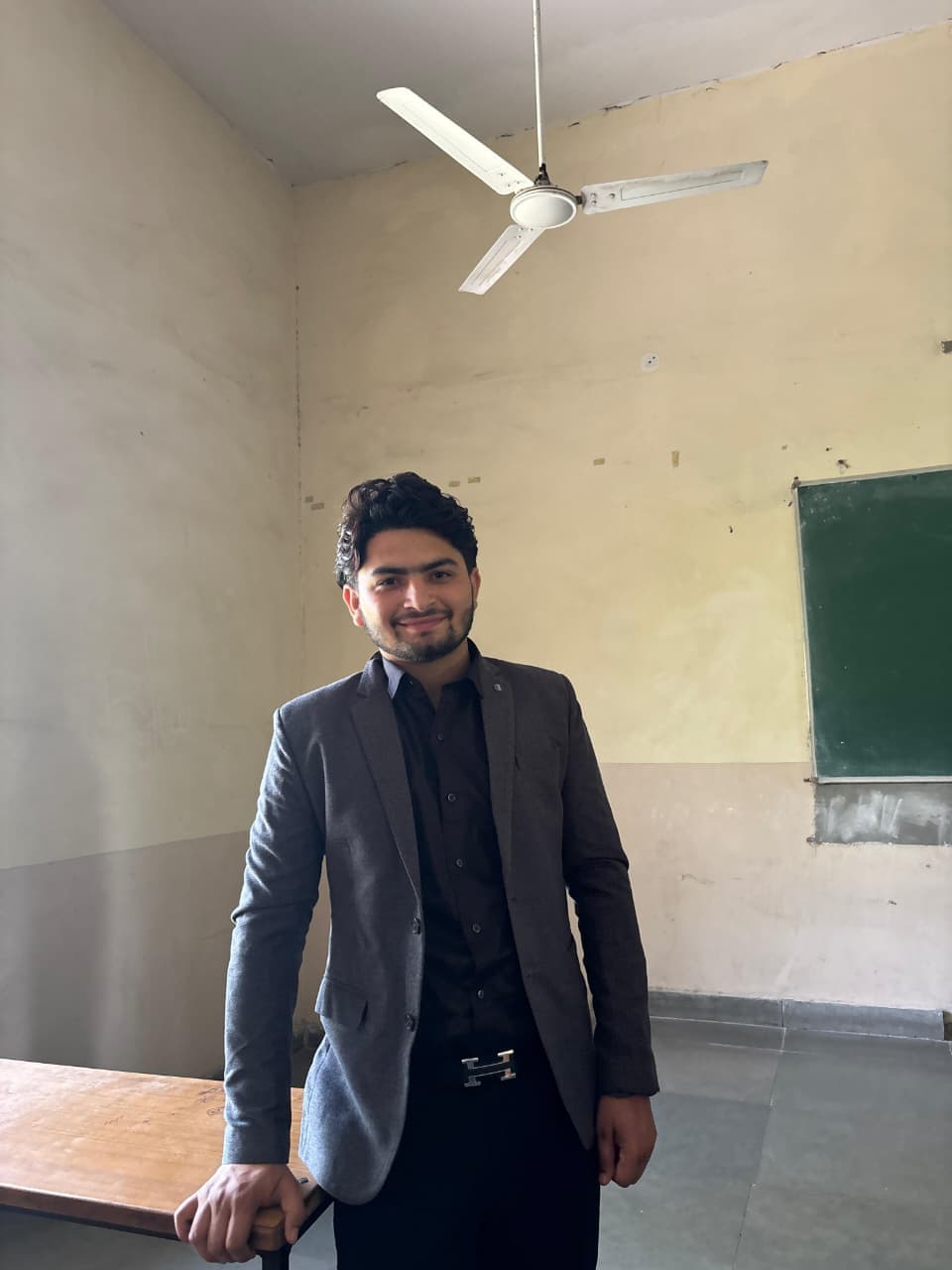
Abhinandan Pandey
Mathematics
IB + IGCSE
4.8rating12 Yrs
Gurugram, All over GurgaonHome / Online / Hybrid
Maths TutorScience Tutor
Check availability
One-to-one tutors for Cambridge IGCSE Geography 0460 and 0976 and the Edexcel International GCSE route, covering the three themes, topographical map extracts, graph and data questions and the fieldwork enquiry paper, taught online worldwide in your own time zone or at home where a tutor is free in your Indian city.
Matched by programme, subject, level, weak areas and your school's calendar.
Math AA, Math AI, Physics, Chemistry, Economics, English and more, to the current syllabus.
Online worldwide around school hours, with home and hybrid options where tutors are local.
Clear updates on what was covered, what needs practice and the next step.
Families who look for IGCSE Geography tutors rarely say the student is bad at the subject. They say something narrower. A mock came back with high marks on the short parts and almost nothing on the long ones. The map question was left half-finished because measuring a river's length ate eleven minutes. A report card said the writing is fluent but unsupported. Geography punishes fluency without evidence more than most humanities subjects do, and that is a fixable habit rather than a talent problem. IB Gram pairs Grade 9 to Grade 11 students with a tutor who already teaches the exact code on the school's timetable, because 0460, 0976 and the Edexcel route differ in grading and in the enquiry component schools choose.
Four details decide the match, and "we want Geography help" is not one of them. IB Gram asks for the syllabus code the school teaches, whether the centre enters students for the coursework component or the written enquiry alternative, the student's grade, and the specific thing that prompted the message. Those answers point to different tutors. Somebody who is excellent at rebuilding physical geography for a Grade 9 student who has never drawn a cross-section is not automatically the right choice for a Grade 11 student whose problem is that extended answers stop at description. Two or three tutors are then put forward with their genuine background: which boards they have taught, whether they have supervised a school fieldwork write-up or only the written enquiry route, and how comfortable they are with topographical extracts from tropical map series. The opening session is a diagnosis, not a lecture. The tutor puts a recent school test or a past-paper theme question in front of the student and watches what happens: whether the resource gets read, whether a named place appears, how long the student spends deciding, where the pen stops. That reading is written up and sent to you afterwards, so you can judge the reasoning instead of accepting a verdict. Fees vary with the tutor's experience, the grade and how often you meet, and are confirmed in writing before any booking. If the pairing is wrong, say so and it is changed.
Tell us the code first: Cambridge 0460, 0976 or the Edexcel International GCSE route
Say whether the school does school-based fieldwork or the written enquiry paper
First lesson is diagnostic and free, worked on a real script rather than a topic list
A written note follows every session, naming what was covered and what went wrong
Rates confirmed in writing beforehand; a different tutor arranged if the fit is poor
Learn with verified tutors matched for IGCSE Geography, with strong exam support, fast feedback, and structured preparation.
Mathematics
IB + IGCSE
Mathematics
IB + IGCSE
The course usually runs over two years, and the useful intervention changes completely across them. In Grade 9 the work worth doing is foundational and slightly dull. Students need to be able to read a contour pattern without translating it into words first, to recognise what a population pyramid is telling them, to plot and label a graph properly, and to write a clear paragraph that explains a process in sequence. Schools cover these once and move on. A tutor at this stage is mostly building habits that make the second year cheaper. Grade 10 is where content volume becomes the pressure. Plate margins, river processes, coastal landforms, weather instruments, ecosystems, migration, settlement hierarchy, industry, tourism, energy and water all arrive within a few terms, each with its own case study. The single most valuable thing a tutor does here is help the student build one organised case-study file as the year goes, rather than trying to assemble it in April from scattered notes. Grade 11 is examination craft. The content is broadly known by then and the marks are going to phrasing, resource use, structure and pace. Sessions tilt heavily towards marked past papers, band descriptors and rewriting weak answers, plus whichever enquiry route the school follows. A good tutor will also say honestly which topic is not worth rescuing so the hours go where marks actually exist.
Grade 9: contours, graph construction, sequencing an explanation, basic map work
Grade 10: build the case-study file alongside the syllabus instead of after it
Grade 11: timed papers, band descriptors, rewriting answers that stalled at description
Students arriving from CBSE, ICSE or a national board get a short bridging plan
Coursework or enquiry-paper preparation slotted around the school's own deadline
Cambridge publishes this subject as Geography 0460 and, for centres using nine-to-one grading, as 0976. The content is the same; the grade scale and sometimes the reporting differ, which matters when a family compares a sibling's results or a school report from a previous country. Pearson runs its own International GCSE Geography with a different topic structure again, so a tutor who names a Cambridge theme to an Edexcel student is already off the syllabus. The Cambridge course is built on three themes. Population and settlement covers population structure, migration, settlement patterns and urban growth with its attendant problems. The natural environment covers plate tectonics, rivers, coasts, weather and climate and ecosystems. Economic development covers agriculture, industry, tourism, energy, water and the environmental risks that come with them. Candidates meet the themes in a written theme paper, a separate geographical skills paper built around map extracts and data, and then either school-organised fieldwork assessed as coursework or a written enquiry paper taken in its place. Which of those last two your school uses is a genuine fork in the preparation, and plenty of parents do not know which one their child is entered for. Ask the department, because the answer changes what a tutor should be doing from about the middle of Grade 10 onward. Mark allocations and paper timings are printed on the papers your school holds and are the authority worth trusting.
0460 and 0976 share content; the grading scale is the difference to check
Three themes: population and settlement, the natural environment, economic development
A skills component built on topographical extracts, photographs, graphs and tables
Either school-based fieldwork coursework or a written enquiry paper in its place
Edexcel's International GCSE Geography follows a different topic list entirely
Online tutoring is available anywhere in the world, scheduled in the family's own local hours rather than Indian time. That is the main way this subject is taught, and for Geography it costs very little: map extracts, photographs and graph tasks all share cleanly on screen and can be annotated live while the student watches. Home tutoring exists only in India, and only in cities where a suitable tutor is currently taking in-person work. Demand is thickest in Gurugram, particularly around Golf Course Road, the DLF phases and Sectors 43 and 50, and across South-West Delhi in Vasant Vihar and Vasant Kunj. Noida's Sector 62 and Expressway schools send a steady stream, as do Mumbai families in Bandra and Juhu, and Bangalore parents in Whitefield, Sarjapur and HSR Layout. Hyderabad, Pune and Chennai are workable but thinner, and a request there may come back as online-only. We would rather tell you that on day one than keep you waiting on a maybe. Outside India everything is online. Geography is widely taken across the Gulf, so Dubai, Abu Dhabi, Doha and Muscat are frequent, alongside Singapore, Kuala Lumpur, Hong Kong and Bangkok. East and West African centres in Nairobi, Lagos and Accra are common too, and UK and European families sometimes use Indian tutors simply because the evening slots line up better than a local tutor's diary.
Online worldwide, in your own time zone, with live annotation of maps and graphs
Home tutoring is India-only and depends on a tutor being free in your city
Densest Indian coverage: Gurugram, South-West Delhi, Noida, Mumbai, Bangalore
Gulf, Singapore, Malaysia, Hong Kong, Bangkok and African centres taught online
No branches, campuses or centres anywhere; tutors travel to a home or teach online
A tutor who ignores what the department has planned creates work. Schools choose their own case studies, their own order of themes, their own textbook and their own enquiry route, and the student sits an examination shaped by those choices. So the first practical step is usually a look at the scheme of work, the topic tracker or simply the last three pieces of marked classwork. That matters especially for named examples. If the department has taught a particular river basin, a particular earthquake and a particular tourist region, a tutor who introduces a different set has doubled the memorisation load for no gain. The right move is to sharpen what the school already gave, adding the missing figures and dates rather than replacing the example. School calendars drive the schedule too. Mocks, internal assessments, fieldwork trips and coursework deadlines are fixed points, and tutoring should intensify before them and ease off afterwards rather than running at one flat rhythm all year. Where fieldwork coursework is involved, the boundary is simple and not negotiable. A tutor will help a student plan an enquiry question, think through sampling, understand how to present data honestly and critique a draft's reasoning. A tutor will not collect the data, write the write-up, produce the graphs or supply sentences to be copied. That work is the student's, it is assessed as the student's, and we will say so if asked.
Sessions built around the department's scheme of work and its chosen case studies
Existing school examples sharpened with dates and figures, not swapped for new ones
Intensity raised before mocks and enquiry deadlines, lowered after them
Tutors coach fieldwork thinking; they never collect data or write coursework
Marked classwork is the fastest way for a tutor to see the real gap
For this subject, mostly yes, and in two specific respects it is better. Map extracts, photographs, satellite images and data tables are shared and annotated on screen more easily than they are passed across a desk, and every annotated resource stays saved rather than disappearing into a notebook. Online sessions run worldwide in the family's own time zone. The usual pattern is a shared screen with the resource open, the student writing on paper and photographing their answer, and the tutor marking it live. Students who write slowly benefit from being asked to plan aloud before they write, which is easier to enforce online than it sounds. Home tutoring, where a tutor is available in an Indian city, suits younger students and those who drift when a screen is the only thing holding attention. Grade 9 students working on contours and sketch sections often do better with somebody beside them and a printed extract on the table. A hybrid pattern is common in the final year: a weekly online session for teaching and a fortnightly in-person session for timed papers under proper conditions. The one honest limitation is fieldwork. No tutor, online or at the kitchen table, can take a student to a river or a high street. What a tutor can do is prepare them beforehand and help them think about the data afterwards.
Online worldwide in your own time zone, with annotated resources saved after each session
Home tutoring available only in Indian cities where a tutor currently has capacity
Hybrid works well in Grade 11: online teaching plus in-person timed papers
Photographed handwritten answers are marked live rather than returned days later
Fieldwork itself belongs to the school; tutoring prepares for it and reflects on it
Most families are choosing between a private tutor, a local coaching batch, a recorded course and simply leaning harder on the school. Each is reasonable for some students. Here is how they differ on the things that decide Geography marks.
| What matters | IB Gram one-to-one | Coaching-centre batch | Recorded video course | School lessons alone |
|---|---|---|---|---|
| Extended answer marking | The student's own writing marked against band descriptors, usually in the same session | Model answers distributed to the group; individual scripts rarely marked in depth | None; the student self-assesses against a worked example | Marked, but turnaround is slow and a teacher has thirty scripts to get through |
| Case-study detail | Cards built around the school's chosen examples and tested under exam wording | A standard set of examples that may not match the department's | A fixed set in the video, learned passively | Taught in class; whether the student recorded them usably is unchecked |
| Map and measurement skills | Live annotation of extracts, with grid references and scale drilled to speed | Covered as a topic, with limited time per student on the actual measuring | Demonstrated on screen; the student's own errors go unseen | Usually one or two lessons, then assumed to be secure |
| Enquiry and fieldwork preparation | Coached on sampling, presentation and evaluation, never written for the student | Generic guidance, often aimed at the written alternative only | General advice with no response to the student's own enquiry | Led by the department, which knows the route but has little one-to-one time |
| Scheduling and location | Online worldwide in your own time zone; home tutoring in some Indian cities | Fixed batch timings at a fixed local venue | Watch whenever, with nobody noticing if the student stops | The school timetable, plus whatever help a teacher can give after hours |
| What you can see as a parent | A written note after each session and annotated scripts you can read | Periodic test scores for the batch | Completion percentages | Report cards and parent evenings at set points in the year |
A degree in geography is a starting point, not a qualification to teach this examination. The checks are deliberately practical and specific to what the papers demand. The first is board familiarity: has this tutor taught the code your school uses, and recently enough that they know the current theme requirements rather than a version from several years ago. The second is marking. A candidate tutor is asked to mark a real extended answer against the published descriptors and justify the band. People who cannot separate a level-two answer from a level-three one are the reason students receive praise for work that would not score. The third is the skills paper. Tutors are checked on topographical map extracts of the kind Cambridge uses, which are often of tropical and subtropical regions unfamiliar to students, and on the measurement tasks that go with them. A tutor who is slow with a six-figure reference will not teach it well. The fourth is enquiry literacy: sampling methods, questionnaire design, presentation choices and honest evaluation of limitations, whether the school follows the coursework route or the written alternative. Beyond subject skill, we look at whether the tutor writes a clear session note, keeps time and tells a parent an unwelcome truth. A tutor who reports everything as fine is not useful to anybody.
Recent teaching experience on the specific code, not geography in general
A live marking exercise against published band descriptors
Confidence with unfamiliar topographical extracts and measurement tasks
Enquiry literacy: sampling, presentation, limitations and evaluation
Clear written notes, reliable timekeeping and willingness to report bad news
Most often, three things: empty case studies, unread resources and answers that describe when the question asked for an explanation. Those account for the majority of lost marks we see in marked scripts, and none of them is about intelligence. The empty case study is the classic one. A student can define a squatter settlement, list four push factors and sketch the process of coastal deposition. Then a question asks them to refer to a named example, and what comes back is "in many LEDCs, people move to cities for work". That answer is not wrong. It is simply unmarkable at the top band, because the marks there are reserved for located detail: the place, the region or country it sits in, a date, a figure, a named cause and a named consequence. A student with four properly built case studies will outscore a student with fifteen half-remembered ones every time. The second problem is resource blindness. Papers hand over map extracts, photographs, tables, sketches and graphs, and weaker answers ignore them and write from memory instead. The third is the describe-explain confusion, where a question says explain and the answer lists what the diagram shows without ever reaching a because. A tutor's job is to make all three visible to the student in their own handwriting, not to lecture on them.
Case studies rebuilt as short, located fact cards rather than paragraphs to memorise
Answers scored against a real mark scheme so the student sees the band they landed in
Deliberate practice at quoting evidence from the given map, photo or table
Command-word drills: describe, explain, suggest reasons, compare, with reference to an example
Timing rehearsals so the longer parts are never the ones left blank
Marks in this subject are lost in small, repeatable places, and once a family can name them the conversation at home changes. The first is the long part at the end of a theme question. It carries the heaviest weight of any single part, and it almost always wants a named, located example with supporting detail. Students who write generally about rainforests instead of one named rainforest, or about drought instead of a named drought with a year attached, cap themselves several marks below what they knew. The second is the skills paper. Six-figure grid references given as four figures. Distance measured along a straight line when the question asked for a road that bends. A cross-section drawn without checking the vertical scale. Direction given as left instead of south-west. None of these require understanding geography; they require ten minutes of drilling that most classrooms never find time for. The third is data handling. Completing a graph from a table is free marks, and students still plot on the wrong axis or forget the key. Describing a trend without quoting a single figure from the graph is the same mistake as the empty case study, in a different costume. The fourth is timing. Answering two theme questions superbly and one badly is a far worse outcome than answering three of them solidly, and students rarely believe that until a marked paper shows it.
Extended parts need a named place, a date and a figure, not a general truth
Grid references, scale, gradient and direction are drillable in a handful of sessions
Every trend described should carry at least one quoted value from the resource
Three adequate answers beat two excellent ones and an unfinished third
Sketch maps and annotated diagrams earn marks when labels are specific
Nobody can promise a grade, and any tutoring service that offers one is managing your expectations rather than your child's work. What is reasonable to expect within a month is a set of visible changes you can check yourself, without needing to understand the syllabus. First, a case-study file that exists and is organised by theme, with places, dates and numbers in it. Open it and ask the student to talk you through one entry from memory. If a real place name, a year and a figure come out, the file is doing its job. Second, marked work. At least one theme question and one skills question should have come back annotated, with band comments rather than a bare score. You should be able to see a weakness named in week one being addressed in week four. Third, changed vocabulary at home. Students who are being taught well start using the language of the mark scheme without prompting, saying they need a named example or that they described when they should have explained. Fourth, fewer unfinished answers. This is the earliest measurable signal and usually the first to move. Grades follow these things at their own pace, over a term or two, and honest tutoring reports them rather than predicting them.
An organised case-study file with located detail you can spot-check yourself
Annotated scripts with band comments, not just a number at the top
The same named weakness tracked from one written note to the next
Fewer blank or half-finished extended parts in timed practice
No predicted grades offered, because they would not be honest
Case-study preparation goes wrong in a predictable way. A student produces beautiful two-page notes on a named city, reads them four times, and then writes nothing specific in the examination because nothing was ever retrievable under pressure. Length is the enemy here. The format that works is short and structured. One card per example. Where it is, with the country and region named. When the event or process happened, with a year. Two or three figures worth remembering. Three causes. Three consequences. One management response and whether it worked. That is it. A student can recall a card of that size in an examination; they cannot recall two pages of prose. The second rule is coverage rather than volume. Every theme needs a small number of reliable examples, not a museum. Physical topics need one properly known river, one coast, one tectonic event and one climate or ecosystem example. Human topics need one migration, one urban area and its problems, one industrial or tourism example, and one development contrast. The third rule is rehearsal in writing. A case study that has never been used in a timed answer is a case study that has not been learned. Tutors here run the same example through three differently worded questions, because that is what exposes whether the student knows the place or only knows the paragraph.
One card per example: location, date, figures, causes, consequences, response
A small set of reliable case studies beats a large set of vague ones
Each example rehearsed under three different question wordings
Every card carries at least two numbers the student can actually recall
Cards checked against the school's chosen examples before anything is memorised
Getting started is mostly a matter of sending the right four lines. Tell us the syllabus code on the school's timetable, the grade the student is in, whether the centre does fieldwork coursework or the written enquiry paper, and the specific thing that brought you here. That last one is more useful than a general description of ability, because "the long parts come back at half marks" and "the map question is never finished" lead to different tutors. If you have a recent marked script or mock paper, photograph it and send it too. Ten minutes with a real marked answer tells a tutor more than a long conversation about how the student feels about the subject. From there you receive two or three tutor options with their board experience and their rates in writing, and the first lesson is a free trial so both sides can test the fit before anything is committed. If you are outside India, include your city and time zone and a weekly slot will be proposed in your local hours rather than ours. Email ibgram24@gmail.com or send a WhatsApp message to +91 7439 368 115. A reply usually comes the same day, and if we do not have the right tutor free we will tell you plainly instead of matching you to whoever is available.
Send the code, the grade, the enquiry route and what specifically went wrong
Attach a photographed mock or marked classwork if you have one
Two or three tutor options come back with backgrounds and written rates
First lesson free, so the match is tested before any commitment
Email ibgram24@gmail.com or WhatsApp +91 7439 368 115 with your city and time zone
IB Gram is an independent tutoring platform and is not officially affiliated with Cambridge International, Pearson Edexcel, Oxford AQA or the IB Organization. Syllabus codes are named only to describe what tutoring covers.
Both 0460 and 0976, which share their content and differ mainly in the grading scale a centre reports against. Tutors also work with Pearson's Edexcel International GCSE Geography, which follows a different topic structure and needs a tutor who knows that route rather than a Cambridge specialist. Tell us the code printed on your child's school timetable or textbook in the first message, because matching without it means guessing, and a guess wastes the free trial lesson.
Usually evidence, not expression. Geography mark schemes reward located, specific detail, so a fluent paragraph about coastal erosion in general scores below a plainer paragraph that names a stretch of coast, a year, a figure and a management scheme. The second common cause is answering a different command word than the one asked, typically describing a pattern when the question wanted the reason for it. Both show up clearly once a tutor marks the student's own script against the published descriptors.
By sharing the extract on screen and annotating it live while the student does the same on a printed or on-screen copy. Grid references, distance along a winding route, gradient, cross-sections, direction and describing distributions are all drillable, and most students fix them in three or four focused sessions. The advantage online is that every annotated extract is saved afterwards, so revision in Grade 11 uses the student's own marked-up maps rather than a clean copy they have never worked on.
Fewer than most students think, and each one known far better. A workable set is roughly one reliable example per major topic within each theme, held as short cards with a location, a date, two or three figures, causes, consequences and a management response. Beyond that, extra examples start competing for recall instead of adding to it. The examples should be the ones the department taught, sharpened with the missing detail, rather than a fresh set introduced by a tutor.
Yes, with a firm limit. A tutor will coach the student on framing a hypothesis, choosing a sampling method, deciding how to present data, reading their own results honestly and evaluating the limitations of what they collected. A tutor will not collect data, draw the graphs, write any section of the write-up or supply sentences to be copied in. That work is assessed as the student's own, and any tutor willing to blur that line is putting your child's entry at risk.
In your local hours, not in Indian time. Tutors are based in India and are used to working across offsets, so Gulf, Southeast Asian, African, UK and European families are usually offered after-school slots that sit in ordinary Indian morning or evening hours. Send your city and time zone in the first message and a specific weekly slot is proposed in your own clock time. Outside India, tutoring is online only; there is no in-person option anywhere beyond Indian cities.
Often, but it depends on a tutor having in-person capacity near you at that moment. Coverage is densest in Gurugram around Golf Course Road and the DLF phases, in South-West Delhi around Vasant Vihar and Vasant Kunj, and in Mumbai around Bandra and Juhu. Bangalore, Noida, Hyderabad, Pune and Chennai are also served, though availability moves as tutors' schedules change. If nothing suitable is free near you, you will be told directly and offered online instead rather than kept waiting.
Usually within a few days, because the time goes into confirming the details rather than finding somebody. Send the code, the grade, the enquiry route and the reason you are looking, and two or three tutor options come back with their backgrounds and rates in writing. The free trial lesson can normally be booked in the same week. A narrow request, such as an in-person tutor in a thinly covered city or an unusual time zone, can take longer, and you will be told that upfront.
One focused session a week is the usual baseline through Grade 9 and Grade 10, assuming the student does the set work in between. In Grade 11, or in the run-up to mocks, two a week is common and is often split into one teaching session and one paper-marking session. More than that rarely helps by itself, because the limiting factor becomes independent recall practice rather than contact time, and a tutor who says so is being straight with you.
They cover the same subject content; the difference lies in the grade scale a centre reports. Schools using numeric grading may be entered for 0976, while others use 0460, and some international schools switch between them as their reporting changes. For tutoring the practical implication is small, but naming the code still matters because it tells us which past papers and mark schemes to use and rules out a mismatch with the Edexcel route entirely.
The assessment culture, more than the content. Students arriving from Indian national boards often have solid factual knowledge and lose marks on command words, on resource-based questions and on the expectation that every generalisation carries a named example. The first sessions are best spent translating: what explain demands beyond describe, why a figure quoted from a graph earns credit, and how much located detail a top-band answer needs. Tutors who have handled this transition start there rather than reteaching topics already known.
No, and nobody honestly can. What is measurable is the work itself: annotated scripts, a case-study file with real detail in it, fewer unfinished extended answers and the same named weakness closing across a month of written session notes. Those are the things you can inspect yourself after four weeks. Grades follow improved work over a term or two, and a service that promises a specific grade is selling reassurance rather than reporting what is happening on the page.
Tell us and a different tutor is arranged, without any expectation that you persist out of politeness. The first lesson is a free trial precisely so the match can be tested before commitment, and most later mismatches are about pace or personality rather than competence. Raising it in week two costs nothing. Raising it in month three costs a term of preparation, which in Grade 11 is the part of the year that mattered most.
No. A tutor will work through the topic, explain what a question is asking, mark an attempt and coach the student through the rewrite. A tutor will not produce work that is handed in as the student's own, whether that is a homework essay, a fieldwork write-up or any assessed enquiry. If a student asks, the tutor will decline and explain why. This is a boundary we hold rather than a policy we mention once.
No. IB Gram is an independent tutoring platform and is not affiliated with, endorsed by or partnered with Cambridge International, Pearson Edexcel, Oxford AQA or the International Baccalaureate Organization. Syllabus codes such as 0460 and 0976 are named only to describe accurately what tutoring covers. The awarding bodies remain the sole authority on syllabus content, entry rules and assessment arrangements, and anything that matters for an entry should be confirmed with your school or with the board.
If the reason you are reading this is a mock that stalled on the long parts, an unfinished skills paper or a fieldwork enquiry with a deadline attached, send four things: the syllabus code, the grade, whether the school does coursework or the written enquiry route, and what went wrong. Tutor options come back with their board experience and rates in writing, the first lesson is a free trial, and the tutor can be changed if the fit is not right. Email ibgram24@gmail.com or message +91 7439 368 115 on WhatsApp, adding your city and time zone if you are outside India.
Book a Free Consultation