IGCSE Subject Choices: How to Pick the Right Subjects
Choosing IGCSE subjects can affect future IB, A-Level, and university pathways. Learn how to pick subjects based on strengths and goals.
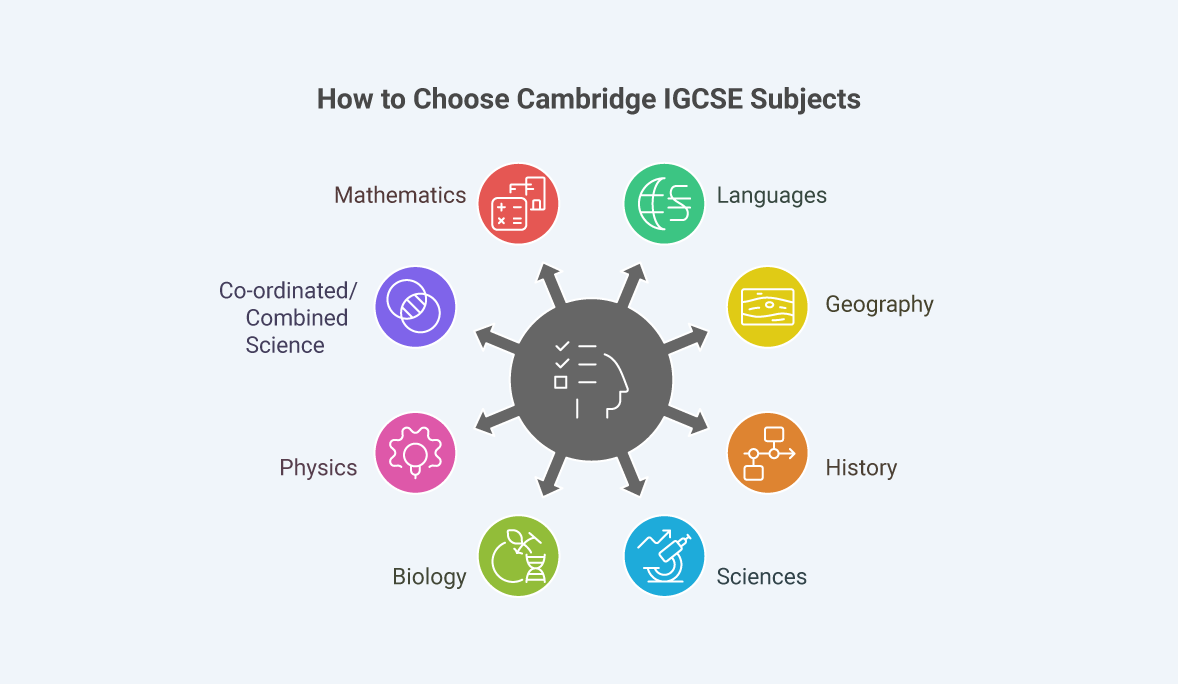
Choosing IGCSE subjects is an important decision because it can influence future academic pathways, including IB, A-Levels, university courses, and career options. While the decision may feel stressful, it becomes easier when students consider their strengths, interests, goals, and workload.
The best subject choices are not simply the hardest or most popular subjects. They are the subjects that support your future plans and allow you to perform well.
Start with compulsory subjects
Most schools require students to take core subjects such as English, Mathematics, and Science. These subjects are important because they provide a foundation for future study.
Strong performance in core subjects is valuable for almost every academic pathway.
Think about future goals
If you already have a career direction, use it to guide your choices.
Students interested in medicine, engineering, computer science, architecture, or science-related careers should usually choose strong Science and Mathematics options.
Students interested in business, economics, law, psychology, or humanities may benefit from subjects such as Economics, Business Studies, History, Geography, or Global Perspectives.
Keep options open
Many students do not know exactly what they want to study later. In that case, choose a balanced subject combination.
A good mix of sciences, humanities, languages, and creative subjects can keep future options open.
Choose subjects you enjoy
Interest matters because you will spend a lot of time studying each subject. If you enjoy a subject, you are more likely to stay motivated and perform well.
However, interest should be balanced with ability and future relevance.
Consider your strengths
Think about where you perform well. Are you strong in problem-solving, writing, memorisation, analysis, creativity, or practical work?
Choose subjects that match your skills. For example, students who enjoy data and logic may like Computer Science or Economics, while students who enjoy writing may prefer English Literature, History, or Global Perspectives.
Understand the workload
Different subjects have different workloads. Some require coursework, practical work, essays, projects, or regular problem-solving.
Before choosing, ask teachers about assessment style and difficulty level.
Do not copy your friends
Choosing subjects because your friends chose them is a common mistake. Your goals, strengths, and interests may be different.
Make decisions based on your own future, not someone else’s timetable.
Ask for advice
Speak to teachers, counsellors, parents, and older students. They can explain subject content, exam difficulty, and future usefulness.
Good advice can help you avoid poor choices.
Check IB or A-Level requirements
If you plan to study IB or A-Levels after IGCSE, check whether certain subjects are recommended. For example, taking IGCSE Chemistry and Biology may help if you want to take IB Biology or Chemistry later.
Final advice
IGCSE subject choices should be based on interest, ability, future goals, and balance. Take time to research your options, ask questions, and choose subjects that give you the best chance of success.
Need a tutor for this subject?
Share your city, programme stage and subject — the IB Gram advisor team replies with a small, honest shortlist.