Planning the IB DP Core: CAS, EE and TOK without the panic
A working timeline for DP families to keep CAS, the Extended Essay and Theory of Knowledge on track from Year 1 to mocks.
Planning the IB DP Core: CAS, EE and TOK Without the Panic
The IB DP Core often gets pushed to the side when subject teaching becomes intense. At the beginning of the Diploma Programme, students are usually focused on Higher Level subjects, Internal Assessments, tests, predicted grades and university plans. CAS, the Extended Essay and Theory of Knowledge can feel like background tasks—important, but not urgent.
That is exactly where the problem begins.
The DP Core is not difficult because students are unable to do it. It becomes difficult because students leave it too late. CAS evidence piles up. The Extended Essay research question remains vague. TOK exhibition work is rushed. The TOK essay suddenly arrives at the same time as mock exam preparation. What should have been manageable becomes stressful.
The good news is that the DP Core can be handled calmly with a clear timeline. Students do not need to panic, overwork or sacrifice subject grades. They need to plan early, complete small tasks consistently and avoid letting CAS, EE and TOK collide with mocks.
This guide gives a practical timeline for IB DP students and families from DP Year 1 through the start of Year 2. The aim is simple: keep the core under control before it becomes a crisis.
What Is the IB DP Core?
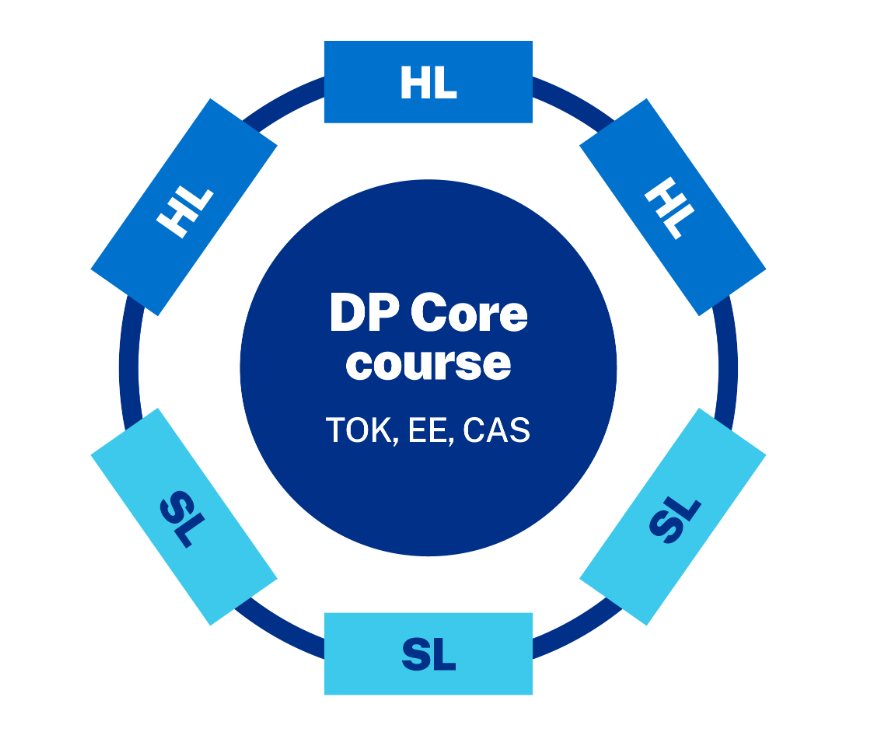
The IB Diploma Programme includes six academic subject groups and the DP Core. The core is made up of three required components: CAS, the Extended Essay and Theory of Knowledge.
CAS stands for Creativity, Activity, Service. It encourages students to take part in meaningful experiences outside normal academic study. CAS is not about collecting random certificates. It is about showing ongoing engagement, reflection and personal growth.
The Extended Essay, often called the EE, is an independent research project that ends in a paper of up to 4,000 words. It gives students a chance to explore a topic in depth and develop research, writing and argument-building skills.
Theory of Knowledge, or TOK, asks students to think about knowledge itself. Instead of only asking what we know, TOK asks how we know it, why knowledge claims are accepted, and how perspectives shape understanding.
Together, CAS, EE and TOK are meant to make the IB Diploma more than a set of exams. They develop reflection, independence and intellectual curiosity. However, they only work well when students manage them over time.
Why Students Panic About the DP Core
Most DP Core stress comes from timing, not ability.
Students often start DP Year 1 with good intentions. They plan to record CAS reflections every week, choose an EE topic early and stay ahead in TOK. But once subject work becomes demanding, the core is delayed. One missed CAS reflection becomes ten. One vague EE idea stays vague for months. One TOK draft is postponed until the deadline feels frighteningly close.
The core also creates stress because it is different from normal subject work. In a subject class, students usually know what chapter to study or what test is coming next. In the core, especially CAS and EE, students need more independence. They must make choices, organise evidence, communicate with supervisors and revise their own work.
This independence is valuable, but it can be uncomfortable. That is why a timeline matters. A good timeline turns a large, unclear responsibility into smaller steps.
The Best Rule: Start Small, Start Early
The easiest way to manage the IB DP Core is to avoid treating it as one huge project. CAS, EE and TOK should be handled in small, regular actions.
For CAS, this means gathering evidence and writing reflections throughout the programme instead of trying to reconstruct everything later.
For the EE, this means choosing a subject, finding a supervisor, narrowing the topic and forming a research question before pressure builds.
For TOK, this means taking class discussions seriously, saving useful examples and drafting early instead of waiting for the final deadline.
Students who do a little each month often feel far less stressed than students who attempt everything at once.
DP Year 1, First Term: Build the Foundation
The first term of DP Year 1 should be used to understand expectations and set up systems. Students do not need to complete the core immediately, but they should know how each part works.
For CAS, students should begin experiences early. These can include creative projects, sports, fitness routines, volunteering, community engagement, leadership roles, tutoring, environmental projects or school initiatives. The key is balance. CAS should include creativity, activity and service over time.
A common mistake is choosing CAS activities only because they sound impressive. CAS works better when students choose experiences they can continue. A weekly activity with honest reflection is often better than a dramatic one-time event with no follow-up.
For the Extended Essay, students should begin thinking about possible subjects. They do not need a final research question in the first month, but they should notice what genuinely interests them. Good EE topics usually come from a subject the student enjoys and can research realistically.
For TOK, students should begin collecting real-life examples from classes, news, history, science, art, politics, technology and personal experiences. These examples can become useful later for TOK discussions, the exhibition or essay planning.
By the end of the first term, the student should have a CAS log system, a rough EE subject shortlist and a basic understanding of TOK expectations.
DP Year 1, Second Term: Make the EE Real
The second term of DP Year 1 is when the Extended Essay should become real. This does not mean the final essay must be written. It means the student should move from “I might write about something in economics” to a focused subject area and possible research question.
A weak EE topic is usually too broad. For example, “climate change” is too large. “The impact of social media on teenagers” is too general. “Artificial intelligence in education” is interesting but still too wide.
A stronger EE direction is narrower, researchable and connected to a specific IB subject. The student should be able to answer: What exactly am I investigating? What sources or data can I use? Which subject criteria will this fit? Can I build an argument rather than just describe information?
This is also the time to speak to teachers and request a supervisor. A good supervisor can help the student avoid topics that are too broad, too vague or not suitable for the subject.
For CAS, students should continue regular experiences and reflections. By now, students should not be trying to “find CAS”; CAS should already be part of weekly life.
For TOK, students should pay attention to how arguments are built. TOK is not about giving opinions randomly. It is about exploring knowledge questions, claims, counterclaims, perspectives and implications.
DP Year 1, Third Term: Lock the Research Question
By the final term of DP Year 1, the Extended Essay research question should be close to final. This is one of the most important steps in the entire DP Core timeline.
A clear research question saves time. A vague research question creates confusion, wasted reading and weak writing.
A strong EE research question should be focused enough to answer within the word limit. It should invite analysis rather than simple description. It should fit the chosen subject. It should be realistic for a school student to research.
For example, instead of asking, “How does advertising affect consumers?” a student might ask a more focused question about how a specific brand uses emotional appeals in a specific campaign. Instead of asking, “What causes inflation?” a student might investigate a particular policy, country or time period using available data.
During this term, students should also begin reading and note-taking. The goal is not to copy information into a document. The goal is to understand the debate, identify useful evidence and begin forming an argument.
CAS should continue steadily. Students should check whether they have enough variety across creativity, activity and service. They should also make sure reflections are meaningful rather than repetitive.
For TOK, students should review exhibition requirements and practise connecting objects or examples to knowledge questions. Even if the final exhibition deadline is later, early practice reduces panic.
The Summer Between DP Year 1 and DP Year 2
The summer break is a valuable opportunity, but it should not become a punishment. Students need rest. They also need to avoid entering DP Year 2 with an untouched EE.
The ideal summer goal is to complete a serious Extended Essay draft or at least a strong partial draft. This does not need to be perfect. It needs to exist.
A good summer EE plan may include:
Finalising the research question Completing key reading or data collection Building a clear outline Writing the introduction Drafting the main analysis sections Preparing citations and bibliography properly Listing questions for the supervisor
Students should not leave all EE writing for DP Year 2. Year 2 brings Internal Assessments, university applications, predicted grades, TOK deadlines and mocks. An unfinished EE becomes much heavier when added to that workload.
CAS should also continue during summer if possible. This can be a good time for service projects, creative work, internships, sport or personal challenges. However, students should record evidence and reflections while the experience is fresh.
DP Year 2, First Term: Draft, Revise and Submit Calmly
The first term of DP Year 2 is when the core must become organised and deadline-driven. Students should not still be deciding their EE topic at this stage. They should be revising, improving and preparing for submission.
For the Extended Essay, the student should work closely with supervisor feedback. Revision should focus on argument, structure, evidence, analysis and clarity. Students should check whether the essay actually answers the research question. They should also make sure citations are complete and consistent.
For TOK, students should prepare seriously for the essay. The TOK essay is not a normal opinion essay. It requires careful thinking about knowledge, examples, perspectives and implications. Students should choose the prescribed title that they can genuinely discuss with depth, not just the one that sounds easiest.
A strong TOK essay plan should include:
A clear interpretation of the title Two or more relevant areas of knowledge Specific examples Claims and counterclaims Awareness of different perspectives A conclusion that answers the title
CAS should now be checked carefully. Students should review their portfolio and ask: Is there enough evidence? Are the reflections meaningful? Have I shown growth? Have I completed sustained engagement rather than isolated activities?
This is the time to fix gaps before mocks begin.
Before Mocks: Prevent the Collision
The biggest DP Core mistake is allowing EE, TOK and CAS to collide with mock exam preparation. Mocks matter because they often influence predicted grades and university applications. Students should not be writing major core drafts for the first time during mock season.
Before mocks, the EE should be close to finished or already submitted internally. The TOK essay should at least have a strong plan and partial draft. CAS should be mostly complete, with only final reflections or checks remaining.
This does not mean every school will follow the exact same internal timeline. Schools set their own deadlines, and students must follow them. But the principle is universal: do the heavy core work before mock pressure is at its peak.
CAS Planning: What Students Should Do Weekly
CAS becomes easy when it is recorded regularly. It becomes painful when students try to remember six months of activity at once.
A simple weekly CAS routine can take 15 to 20 minutes. Students should upload evidence, write a short reflection and connect the experience to personal growth. Evidence may include photos, certificates, planning notes, screenshots, videos, attendance records or feedback from others.
A useful CAS reflection answers questions such as:
What did I do? Why did it matter? What challenge did I face? What did I learn about myself or others? How did I show commitment, initiative or collaboration? What would I do differently next time?
CAS reflections do not need to be long every time. They need to be honest and specific. “I enjoyed this activity” is not enough. A better reflection explains what changed, what was difficult and what the student learned.
Extended Essay Planning: How to Avoid a Weak EE
A weak EE usually begins with a weak research question. Students should spend time narrowing the question before writing too much.
The EE should not be a long report. It should be an argument based on research. Students need to analyse, compare, evaluate and explain. Simply collecting information is not enough.
Students should avoid topics that are too broad, too personal, impossible to research or not clearly linked to an IB subject. They should also avoid relying only on basic websites. Stronger essays usually use academic sources, primary texts, data, experiments, interviews, archives or carefully selected evidence, depending on the subject.
A good EE structure usually includes an introduction, context, methodology or approach, analysis sections and conclusion. The exact structure depends on the subject, but the essay should always guide the reader clearly.
The student should also manage citations from the beginning. Leaving references until the end creates unnecessary stress and increases the risk of missing sources.
TOK Planning: How to Make TOK Less Confusing
TOK can feel abstract because it does not behave like a normal subject. Students may ask, “What am I supposed to write?” The answer is that TOK is about knowledge, not just the topic.
For example, a TOK essay is not simply about science, history or art. It is about how knowledge works in those areas. What counts as evidence? How do experts justify claims? How do perspectives influence interpretation? What are the limits of certainty? How do methods shape conclusions?
Students can make TOK easier by building a bank of examples. Good examples may come from scientific discoveries, historical debates, ethical dilemmas, legal decisions, artistic interpretation, indigenous knowledge, mathematics, technology or personal experience.
A strong TOK response does not just mention examples. It uses them to explore the title. The student should always ask: How does this example help me answer the knowledge question?
A Month-by-Month IB DP Core Timeline
Here is a practical timeline students can adapt to their school calendar.
Month 1: Understand CAS, EE and TOK expectations. Set up folders, portfolio systems and a simple calendar.
Month 2: Begin regular CAS experiences. Start noting possible EE subjects and interests.
Month 3: Meet teachers informally about EE ideas. Save useful TOK examples from class and real life.
Month 4: Choose a likely EE subject. Continue CAS evidence and reflections.
Month 5: Narrow the EE topic. Start preliminary reading and check whether the topic is researchable.
Month 6: Confirm the EE supervisor if possible. Draft possible research questions.
Month 7: Finalise or nearly finalise the EE research question. Build a reading list or data plan.
Month 8: Start serious EE research. Create an outline and begin organised notes.
Month 9: Write early EE sections. Check CAS balance across creativity, activity and service.
Month 10: Review TOK exhibition or essay expectations according to the school calendar. Keep useful examples.
Summer: Complete substantial EE drafting. Continue CAS if meaningful opportunities are available.
DP Year 2 Month 1: Revise the EE with supervisor feedback. Organise citations and structure.
DP Year 2 Month 2: Prepare TOK essay planning and drafting. Check CAS portfolio gaps.
DP Year 2 Month 3: Finalise major EE revisions. Continue TOK essay work.
DP Year 2 Month 4: Complete TOK draft or school-required submission stage. Keep CAS reflections updated.
Before mocks: Make sure EE is close to complete, TOK is not being started from zero and CAS evidence is organised.
This timeline may vary by school, but the logic stays the same: do not let the core become a last-minute emergency.
What Parents Should Watch For
Parents do not need to manage every detail of CAS, EE and TOK. In fact, the DP Core is meant to develop independence. But parents can still help by watching for warning signs.
A student may need support if they cannot explain their EE research question, have no CAS evidence after several months, are avoiding supervisor meetings, do not understand TOK deadlines or keep saying “I will do it later.”
Parents can help by asking calm, practical questions:
What is your current EE research question? When is your next supervisor meeting? What CAS evidence did you upload this month? Which TOK task is coming next? What is one thing you can complete this weekend?
The goal is not to create fear. The goal is to keep small tasks moving.
Common DP Core Mistakes to Avoid
The first mistake is treating CAS as a checklist. CAS is not just about logging hours or collecting proof. It should show engagement, reflection and growth.
The second mistake is choosing an EE topic because it sounds impressive rather than because it is researchable. A simple, focused question often produces a stronger essay than a grand but vague topic.
The third mistake is ignoring supervisor feedback. The supervisor cannot write the essay for the student, but feedback can prevent major problems.
The fourth mistake is starting TOK too late. TOK writing needs time because the first idea is rarely the best idea.
The fifth mistake is leaving citations until the final week. Referencing should be built into the research process.
The sixth mistake is allowing the core to take over subject revision. CAS, EE and TOK matter, but students must still protect their subject grades.
Final DP Core Checklist
Before the main pressure of DP Year 2 begins, students should be able to answer yes to most of these questions:
Have I recorded CAS experiences consistently? Do I have evidence for creativity, activity and service? Have I written meaningful CAS reflections? Is my EE subject confirmed? Is my EE research question focused? Have I met my EE supervisor? Have I completed serious research or data collection? Do I have a clear EE outline or draft? Do I understand the TOK exhibition and essay requirements? Have I saved useful TOK examples? Do I know my school’s internal deadlines? Have I planned around mocks and university applications?
If the answer to several questions is no, the student should act immediately—not panic, but act.
Final Thoughts
Planning the IB DP Core is not about doing everything early for the sake of being perfect. It is about protecting the student from unnecessary stress later.
CAS should be built through steady weekly evidence and honest reflection. The Extended Essay should begin with a focused research question, early supervisor guidance and serious drafting before DP Year 2 becomes crowded. TOK should be approached gradually, with examples, discussion and early planning rather than last-minute confusion.
The DP Core becomes manageable when students treat it as a long-term process, not a final deadline. With a calm timeline, CAS, EE and TOK can support the IB experience instead of overwhelming it.
Doing this calmly is the whole point.
Need a tutor for this subject?
Share your city, programme stage and subject — the IB Gram advisor team replies with a small, honest shortlist.